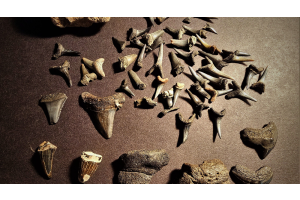
The massive teeth of the prehistoric Megalodon continue to fascinate collectors, paleontologists, and fossil enthusiasts alike. These ancient giants of the sea left behind more than just legends. They left behind fossilized teeth that range dramatically in size, color, and condition. We offer a curated selection of fossil specimens, each verified and sourced with care, helping collectors understand what to expect in terms of size, authenticity, and rarity. But one question surfaces repeatedly among those new to the world of fossil collecting: how big is a megalodon tooth?
Average Size vs. Exceptional Finds
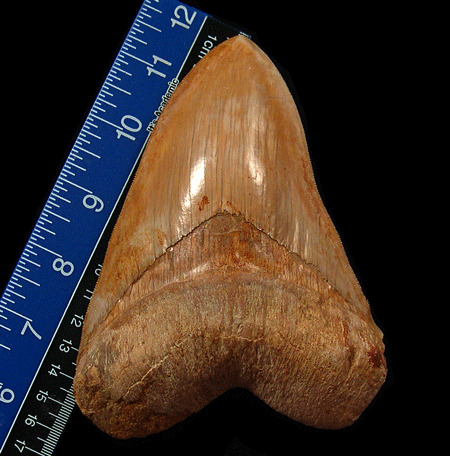
Megalodon teeth vary significantly in size. Most fossilized specimens range from 3 to 5 inches in length, with the majority falling around the 4-inch mark. While a 4-inch tooth is impressive in its own right, it’s considered relatively common in today’s fossil market.
Teeth exceeding 5 inches begin to enter rare territory. At 6 inches and beyond, they become truly exceptional. A 6-inch Megalodon tooth isn’t just a large fossil. It reflects a shark that may have exceeded 50 feet in length. For context, this size threshold is often the benchmark for what collectors and fossil vendors refer to as "museum-grade" or "investment-grade" specimens.
How Measurements Are Taken
It’s important to understand that the standard measurement for a Megalodon tooth is taken along the slant height. This is the distance from the tip of the tooth to the end of the longest root corner. It provides a consistent and accurate way to compare specimens.
The width and thickness can also influence overall value, but slant height remains the industry norm for classification. Some collectors new to the space mistakenly measure the vertical height of the tooth, which can result in misleading size estimates.
Rarity of 6-Inch Teeth
The rarity of 6-inch teeth cannot be overstated. Less than 1% of all Megalodon teeth discovered fall into this size category. What’s even rarer is finding a tooth that exceeds 6 inches while maintaining exceptional preservation, such as minimal erosion, intact root, and well-preserved enamel.
Color and origin also influence value. Some coastal locations, such as South Carolina or North Carolina, produce teeth in darker shades or with unique mineral patterns due to local sediment conditions. However, size remains the primary factor determining rarity and price.
Understanding the True Size of a Megalodon Tooth
When people ask how big a megalodon tooth is, they’re often surprised to learn that the largest ever recorded measures just over 7 inches. A tooth of this magnitude would have belonged to one of the largest Megalodons to have ever lived, potentially exceeding 60 feet in length. These teeth are exceedingly rare and often found in private collections or museums.
Most commercially available large specimens fall into the 5 to 6.25-inch range. While anything over 5 inches is considered valuable, teeth approaching or exceeding the 6-inch mark are typically accompanied by certificates of authenticity and premium pricing. For collectors, understanding these size ranges helps set realistic expectations and guides more informed purchasing decisions.
Factors That Affect Value Beyond Size
1. Condition
Size alone doesn’t guarantee a high value. Chips, cracks, root damage, and enamel erosion all decrease the value of a tooth. A 6-inch tooth in poor condition may not be worth more than a well-preserved 5-inch tooth.
2. Symmetry
Symmetrical teeth, meaning those with even lobes and centered tips, are more desirable. This quality often influences visual appeal and collectibility.
3. Color
Color results from mineral content in the sediment where the tooth fossilized. Unique hues such as blue-gray or marbled brown can increase desirability.
4. Locality
Certain regions are known for producing large or high-quality Megalodon teeth. Fossils from well-documented sites often command a premium.
Common Myths About Tooth Size
There’s a widespread assumption that all Megalodon teeth were massive. In reality, the shark lost and regrew thousands of teeth throughout its lifetime. Many of these were smaller due to their position in the jaw. Posterior teeth, for example, were shorter and narrower, while anterior (front) teeth were the largest.
Another myth is that 6-inch teeth are the norm for serious collectors. While desirable, they are not common and can be financially out of reach for many. A well-preserved 4.5 to 5-inch specimen still holds excellent display value and historical significance.
Best Practices for New Collectors
If you’re new to collecting Megalodon teeth, here are a few tips to help ensure you’re getting value for your investment:
● Buy from trusted sources: Look for vendors who provide accurate measurements, clear provenance, and high-resolution images of both sides of the tooth.
● Review grading descriptions: Terms like “collector-grade,” “museum-grade,” and “investment-grade” should be supported by detailed condition reports.
● Understand restoration: Some large teeth are lightly restored (such as small chips filled), while others are heavily reconstructed. Know what you’re buying.
High-Quality Fossils Are Still Accessible
Not everyone needs to start with a 6-inch specimen. Many collectors begin with smaller teeth that exhibit beautiful enamel and minimal wear. These fossils still carry the wonder of ancient oceans without the premium price tag associated with the larger specimens.
What matters most is understanding what you’re buying. Whether it’s a 3.5-inch tooth from North Carolina or a 6.1-inch giant from South Carolina, accuracy and authenticity should guide your purchase.
Final Thoughts on Size and Rarity
When considering rarity and real-world examples, how big is a megalodon tooth? Most teeth range between 4 to 5 inches, which are still impressive by fossil standards. However, it's the elusive 6-inch and larger specimens that truly stand out. These rare finds gain even more value when preserved with minimal damage and supported by historical context.
For those interested in starting or expanding a fossil collection, Buried Treasure Fossils offers a trusted selection of Megalodon teeth suited for both new enthusiasts and seasoned collectors. With a focus on authenticity, detailed condition grading, and reliable sourcing, every specimen is chosen with care and precision.
Explore our premium Megalodon tooth collection today and add a rare, scientifically measured fossil to your collection. Shop now.