

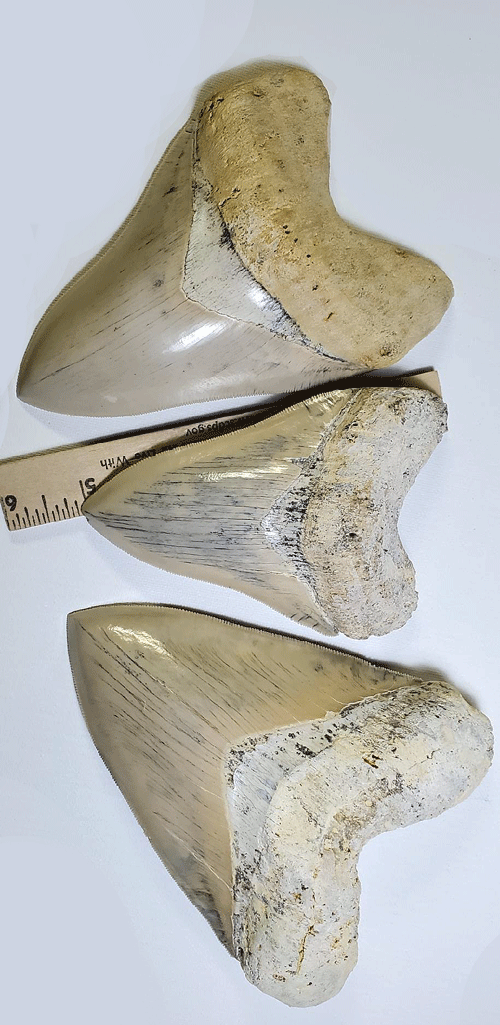
Megalodon teeth carry a timeless silence from the depths—fossils that bridge ancient oceans with modern curiosity. These relics, millions of years old, ignite the imagination of fossil collectors and marine enthusiasts alike. But where fascination grows, so too does the risk of deception. We’ve seen how easy it is to fall for a shiny surface or a convincing pitch. That’s why learning how to buy megalodon tooth specimens with confidence matters just as much as finding the tooth itself.
Let’s explore the details that help collectors move with confidence, care, and clarity in a market full of both wonder and risk.
The Allure of the Ancient Predator’s Smile
A real Megalodon tooth is more than just a fossil—it’s a piece of history, a connection to a 60-foot predator that once ruled the oceans. These teeth can span over 7 inches long and come in a variety of colors and conditions, depending on where and how they were fossilized.
But this demand creates fertile ground for misrepresentation. Fake fossils, enhanced specimens, and even composite teeth (created from pieces of multiple fossils) are often passed off as real or “museum-grade” to command higher prices. Understanding the tricks behind these fakes helps guard your investment—and your enthusiasm.
How to Spot a Fake Megalodon Tooth
Fraudulent teeth are often cast in resin or made from stone composites and painted to mimic natural coloration. They might look convincing at first glance, especially online or under strategic lighting, but with a closer look, their story unravels.
Pay attention to the enamel. Real teeth will show natural weathering, fine pitting, and subtle grooves. They rarely look “too smooth” or unnaturally glossy. The bourlette—a dark band between the root and enamel—is a key feature. If it’s missing, oddly textured, or painted on, the tooth may not be genuine.
Another warning sign: molded serrations that are uniform or dull. Authentic serrations vary in sharpness and depth, especially in older teeth, reflecting the wear of millions of years. No two are identical.
Restoration vs. Deception: Know the Difference
Not every modified tooth is a scam. Restoration—when done transparently—can preserve the integrity of a fragile specimen and offer collectors a more complete visual representation. But that transparency is key. Ethical sellers will clearly disclose if a tooth has been repaired or restored and describe the extent of work done. They’ll note if the tip was reattached or if the root was filled to compensate for erosion. The deception begins when such work is hidden or described in vague terms like “museum quality” without clarification.
This is why buying from verified and trusted sources matters when you're ready to buy megalodon tooth fossils, knowing where your money goes—and what you’re truly receiving—matters just as much as the fossil itself.
Understanding Market Value: What Is a Tooth Worth?
Megalodon teeth range in price from a few dollars to several thousand, depending on size, condition, color, and rarity. It’s tempting to chase size alone, but condition often carries more value. A 5-inch tooth with full serrations, a complete bourlette, and no restoration can be worth more than a larger specimen with heavy damage. Teeth found in locations like South Carolina or Indonesia may offer rich color variations, but those from deep-sea dredging or phosphate pits may show more wear.
Prices that seem “too good to be true” often are. If a seller lists a 6-inch tooth with perfect features for a suspiciously low price, caution is warranted. Authenticity, clarity of sourcing, and seller reputation all contribute to real value. Before you buy megalodon tooth pieces, compare listings across reputable sites and read detailed descriptions.
Questions Every Buyer Should Ask
Before buying, ask questions—even if they feel obvious. Where was the tooth found? Was it restored or altered? Can the seller provide close-up images of the bourlette and serrations? How long have they been dealing with fossils? Experienced, honest dealers won’t hesitate to answer or provide more photos. They’ll explain geological context, age estimates, and material specifics. Lack of detail or rushed communication should raise a flag.
Take time to research the seller's history and reviews. A strong reputation builds trust over the years, and the best sellers are those who invite scrutiny and transparency.
Buying Online vs. In Person: Navigating the Pros and Cons
Online marketplaces open the world of fossil collecting to anyone—but they also widen the risks. Lighting tricks, photo angles, and selective image cropping can all disguise flaws or restoration. When purchasing online, insist on high-resolution, well-lit images from multiple angles. Videos can be helpful, too. When buying in person—at fossil shows or from dealers—use your senses. Feel the weight. Study the edges. Notice temperature; real fossils retain the ambient temperature longer than resin replicas. Take your time.
Certificates of Authenticity: Helpful but Not Absolute
Certificates of authenticity (COAs) may offer reassurance, but they are only as reliable as the person issuing them. A certificate from a well-known fossil dealer carries weight. One printed from a random website does not. Trust is built not on a piece of paper, but on consistency, reputation, and full disclosure. Think of COAs as part of the story, not the final word. Your understanding of morphology, preservation, and provenance—remains your best defense.
Trust, Curiosity, and Caution: A Collector’s Mindset
Fossil collecting is a deeply personal pursuit—part science, part poetry. And like all meaningful journeys, it rewards those who move carefully. There’s no shame in asking questions, in slowing down, in skipping a tooth that doesn’t feel right. Each Megalodon tooth carries a story that outlives us. The goal isn’t just to acquire something old—it’s to honor the path it took to reach your hands.
Conclusion: What We’ve Learned
Learning how to buy megalodon tooth fossils is about more than avoiding scams. It’s about building a relationship with history, with geology, and with your own sense of wonder. In a market filled with excitement and risk, caution and curiosity belong side by side. We believe the most satisfying fossil finds come from transactions rooted in honesty, knowledge, and respect. Take your time. Trust your instincts. Let each question bring you closer to understanding—not just the tooth, but its journey.
When you're ready to buy megalodon tooth pieces, let your purchase reflect not just what you want to collect, but how you want to collect it.
Discover authentic Megalodon teeth backed by expert knowledge—shop confidently and bring a real piece of history into your collection today.






