

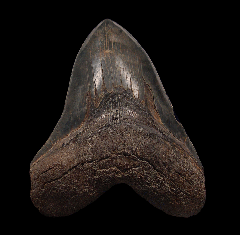
Sharks have always captured human imagination, but few marine predators inspire as much awe as the Megalodon and the modern Great White. Fossil evidence allows scientists and enthusiasts alike to explore how these apex predators hunted and survived. Among the most fascinating comparisons involves jaw strength, feeding mechanics, and sheer power, especially when examining the megalodon shark jaw through fossilized teeth and bite force estimates. This comparison reveals not just differences in size, but dramatic contrasts in evolutionary adaptation and hunting dominance.
Understanding Jaw Power Through Fossils
To appreciate jaw strength, paleontologists rely heavily on teeth. Sharks constantly shed teeth, leaving behind an extraordinary fossil record. These fossils provide direct insight into jaw size, muscle attachment, and feeding behavior. In the case of the Megalodon, massive serrated teeth immediately point toward an animal built for crushing large prey. Researchers use these teeth to reconstruct the megalodon shark jaw, estimating how wide it opened and how forcefully it closed.
Megalodon Jaw Strength: A Prehistoric Powerhouse
The Megalodon lived during the Miocene and Pliocene epochs and reached lengths of up to 60 feet. Its jaw structure dwarfed that of any shark alive today. Scientific models estimate its bite force at up to 180,000 newtons, making it the strongest bite force of any known animal. This immense power allowed the megalodon shark jaw to crush whale bones, sever fins, and dismantle large marine mammals with ease. Fossil whale bones bearing deep bite marks confirm this feeding strategy and highlight Megalodon’s role as a dominant predator.
Great White Shark Jaw: Efficient but Smaller
In contrast, the Great White shark, while still formidable, operates on a much smaller scale. Growing to about 20–30 feet, the Great White delivers a bite force estimated around 18,000 newtons. Its jaw excels at slicing flesh rather than crushing bone. Serrated teeth help tear through seals and fish efficiently, reflecting an evolutionary focus on agility and precision. While powerful, the Great White jaw simply cannot match the raw mechanical force seen in the megalodon shark jaw.
Size Scaling and Evolutionary Differences
Jaw strength scales directly with body size and muscle mass. As sharks grew larger over evolutionary time, jaw power increased exponentially. The Megalodon evolved to exploit a niche that involved hunting massive prey, especially early whales. Meanwhile, the Great White adapted to modern oceans with faster prey and changing ecosystems. Fossil teeth clearly demonstrate this scaling difference, with Megalodon teeth exceeding seven inches and Great White teeth rarely surpassing three inches. These size variations directly reflect jaw capability and feeding style.
What Fossil Teeth Reveal to Collectors and Learners
Fossilized shark teeth offer more than visual impact; they tell a story of prehistoric ecosystems. At Buried Treasure Fossils, extensive collections of authentic Megalodon and Great White teeth allow enthusiasts to explore these differences firsthand. Each tooth showcases adaptations in serration, thickness, and curvature, all tied to jaw strength and feeding behavior. Holding a Megalodon tooth brings the scale of the megalodon shark jaw into clear perspective, transforming abstract science into tangible history.
Why Jaw Comparisons Matter
Comparing jaw strength helps scientists understand extinction, survival, and adaptation. The Megalodon’s massive jaw required enormous food resources, making it vulnerable to environmental changes. The Great White’s more efficient jaw and smaller size allowed it to persist. These lessons highlight how evolutionary balance determines long-term survival in changing oceans.
Conclusion: Power, Perspective, and Prehistoric Legacy
When comparing these iconic predators, the answer becomes clear: the megalodon shark jaw stood in a league of its own, delivering unmatched power through size, structure, and bite force. Fossil evidence continues to educate students, collectors, and shark enthusiasts about how evolution shaped the ocean’s greatest hunters. Exploring authentic fossil specimens offers a deeper connection to this prehistoric story, and adding a real Megalodon or Great White tooth to a collection allows that legacy to live on through hands-on discovery and learning.






