The ocean holds countless mysteries, and few fascinate young scientists more than the mighty Megalodon—a shark so large that entire whales were part of its daily diet. Within the first questions students often ask is how much is a megalodon tooth, a curiosity that perfectly bridges marine ecology with real-world fossil economics. At Buried Treasure Fossils, we love helping learners connect these ancient ecosystems to the value and rarity of the fossils we offer, especially Megalodon teeth, which remain some of the most thrilling specimens we share with collectors, educators, and budding paleontologists every day.
Marine Ecology as the Foundation of Megalodon Fossils
Understanding the price of Megalodon teeth starts with the shark’s ecological role. Megalodon dominated the oceans during the Miocene and Pliocene, thriving in warm, coastal marine environments full of whales, seals, and large fish. These nutrient-rich coastlines were essential nurseries and feeding grounds. Because the species preferred specific habitats, many of the fossil teeth we uncover today originate from ancient coastal regions that once supported huge populations.
We know from fossil evidence that juvenile Megalodons often lived in shallow nursery zones where prey was abundant and predators were few. These habitats produced a large number of shed teeth, since sharks replace their teeth throughout their lives. Today, these former nurseries—such as areas in Florida, North Carolina, South Carolina, Peru, and Chile—remain the richest fossil deposits and strongly influence the availability and price of specimens. When our team at Buried Treasure Fossils sources authentic teeth from these localities, we see firsthand how ecological history shapes modern fossil markets.
Why Some Megalodon Teeth Are Common and Others Rare
Marine ecology explains not just where Megalodon teeth are found, but why their value varies so dramatically. Students often imagine that all Megalodon teeth are enormous and perfectly preserved, but natural processes make this extremely rare.
Several factors shape the rarity and price:
1. Habitat Productivity and Tooth Supply
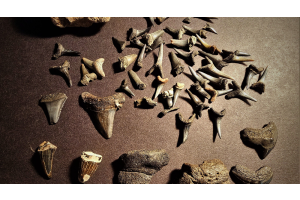
Nursery zones produced thousands of juvenile-sized teeth, which are more affordable because they are abundant. However, adults lived and hunted offshore, where fossilization conditions were less stable. Their larger teeth—especially those reaching 6 inches or more—were far less likely to fossilize undamaged. This is why big adult teeth are significantly more valuable.
2. Preservation Conditions
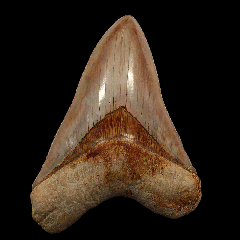
Silt, currents, and oxygen levels determine whether a tooth mineralizes intact or becomes broken or eroded. Perfect serrations, intact enamel, root completeness, and symmetry all raise a tooth’s value. We carefully inspect these features when we add new pieces to our catalog so that collectors and educators fully understand the ecological and geological story behind each fossil.
3. Sediment Color and Mineral Makeup
Different habitats produce different fossil colors. Teeth from rivers in the southeastern United States are often deep charcoal or chocolate brown, while those from Peru or Chile may show lighter grays or tans. These variations result from water chemistry and sediment mineral content. Unique or highly aesthetic colorations often increase value, since they represent rare geological conditions.
4. Locality Restrictions and Access
Some fossil localities are no longer accessible due to conservation laws or commercial closures. Sites like Sharktooth Hill in California or mining zones in Peru produce incredible specimens, but availability can decrease as access changes. This naturally causes prices to rise over time.
All these ecological and geological factors help explain how much is a megalodon tooth when collectors or students browse our selection.
Connecting Fossil Prices to Megalodon’s Ancient Lifestyle
Middle and high school marine-science learners often enjoy understanding how Megalodon’s size and behavior translate into fossil diversity—and ultimately into fossil pricing.
Large Prey = Large Teeth
Because Megalodon consumed whales and other enormous marine mammals, adults needed powerful jaws lined with immense, serrated teeth for slicing through thick flesh and bone. Teeth of these large sharks could exceed 6 inches, but such giants were lost less frequently than smaller teeth and required perfect fossilization conditions to survive millions of years. This is why our 6-inch and larger specimens are among the rarest items we offer.
Wide Geographic Range = Global Fossil Sites
Megalodon swam in oceans around the world, but not all regions were equally suited for preserving fossils. Coastal upwelling zones, deltas, and warm shallow seas were ideal, which is why we source many of our teeth from the southeastern U.S., Chile, and Peru. These sites mirror ancient ecological hotspots where Megalodon thrived, and each fossil represents a snapshot of that prehistoric environment.
Shark Biology = Massive Tooth Counts
Sharks shed tens of thousands of teeth during their lifetimes. This characteristic means that many Megalodon teeth exist, but most are broken, heavily worn, or incomplete. Perfect or near-perfect teeth remain exceptionally scarce, especially at large sizes. Students are often surprised to learn that even with millions of years of teeth shedding, only a small fraction fossilize in collectible condition.
Each time we prepare a Megalodon tooth for our catalog—checking its serrations, enamel, root, and mineral composition—we’re also reading a biological story written by the shark itself.
How Ecological Science Helps Learners Interpret Fossil Value
Understanding fossil pricing becomes easier when students see the connections between ecology, geology, and paleontology.
For example:
● A perfectly preserved large tooth means the shark lived in a habitat with stable sediments, low oxygen, and minimal disturbance—conditions that are scientifically meaningful.
● A damaged or worn tooth reveals evidence of seafloor activity, currents, or environmental stress.
● The tooth’s color reflects the minerals of the ancient seabed.
● The tooth’s locality tells us about ancient coastlines, food webs, and biodiversity hotspots.
When learners explore these details, they begin to understand the scientific story behind each fossil and the logic behind its price. At Buried Treasure Fossils, we love sharing this deeper ecological perspective with collectors, educators, and young scientists because it transforms a fossil from a mere object into a vivid record of ancient marine life.
So, How Much Is a Megalodon Tooth? (Body Keyword Use)
In the modern fossil market, how much is a megalodon tooth depends entirely on the interplay of size, condition, rarity, and ecological origin. Smaller, juvenile teeth may cost under $50, making them perfect for classroom use or beginner collections. Mid-sized teeth with strong enamel and visible serrations fall into moderate price ranges. Meanwhile, large, museum-quality specimens—especially those above 6 inches—can reach thousands due to their rarity and extraordinary preservation. We work hard to offer options for every budget while maintaining transparent quality standards.
Why We Are Proud to Offer Authentic, Educational Fossils
Our mission is rooted in accessibility, scientific accuracy, and passion. We guarantee the authenticity of every specimen we offer and provide detailed information about each fossil’s age, locality, and characteristics so learners, teachers, and collectors can understand the ancient world these teeth come from. We also prioritize legally and responsibly collected fossils, ensuring that students can explore prehistoric life with confidence and curiosity.
By offering options from entry-level pieces to rare, collector-grade items, we help ignite scientific imagination in explorers of all ages.
Conclusion: What Fossils Teach Us About Ancient Oceans
When students ask how much a megalodon tooth is, they’re unknowingly stepping into a powerful conversation about marine ecology, geological processes, and prehistoric life. Fossil prices reflect ancient habitats, biological traits, and Earth’s ever-changing oceans—making each tooth a story millions of years in the making. If you or your students feel inspired to explore these remarkable relics firsthand, we invite you to discover our carefully curated selection and continue your journey into the prehistoric seas through the extraordinary fossils we share.