Understanding why fossil shark teeth display such striking color variations is one of the most fascinating aspects of marine paleontology, especially for collectors evaluating specimens online. Within the first moments of exploring these unique relics, readers often wonder how an authentic megalodon tooth transforms from its original biological appearance into the richly colored fossil forms we recognize today. By examining the science behind mineralization, we can better appreciate how millions of years beneath ancient seafloors create the natural hues that collectors, students, and fossil enthusiasts value.
Color is far more than an aesthetic feature. It is a geological fingerprint—evidence of burial conditions, sediment chemistry, and environmental shifts that occurred long after Megalodon ruled the oceans. Whether you are a science-focused reader, a STEM student seeking deeper understanding, or a collector looking for genuine fossils, exploring color formation reveals why each tooth is truly one of a kind.
How Marine Burial Shapes Fossil Colors
When Megalodon teeth settled onto the seafloor millions of years ago, they entered an environment that began altering their structure almost immediately. Oxygen levels, biological activity, pressure, and sediment type all play essential roles in the long fossilization process. While the enamel originally appeared grayish-white in life, fossilization changes everything.
Minerals dissolved in groundwater gradually replace organic material and enter microscopic pores within the dentin, creating long-term chemical transformations. This process—called permineralization—is responsible for the dramatic colors fossil collectors recognize today. Contrary to common belief, color does not come from the shark itself but from the environment surrounding the tooth during burial.
For example, iron-rich sediments introduce deep browns, reds, and oranges. Carbon-heavy sediments produce glossy blacks and cool grays. Phosphates, silicates, and marine clays create subtle blues and greens. Even within a single locality, the mixture varies, which is why no two fossilized shark teeth are ever identical.
Understanding the Most Common Fossil Tooth Colors
Below are the color categories most collectors encounter, along with the minerals responsible for each hue. These explanations help determine whether a tooth’s color reflects natural fossilization or artificial enhancement.
Black and Jet Black Fossils
The most iconic fossil tooth coloration—smooth, dark black—results from carbon-rich sediments. In low-oxygen environments, decaying organic materials produce carbon that saturates the tooth surface. The more carbon present, the deeper and more uniform the black tone becomes.
Because this coloration comes from natural mineral uptake, it is evenly distributed and penetrates deep into the enamel rather than appearing painted or superficial. This depth helps distinguish genuine fossils from artificially stained replicas.
Blue and Blue-Gray Specimens
Collectors prize blue hues because they indicate a rare interplay between phosphate minerals and specific clay deposits. These environments occur only in select fossil beds, particularly along submerged continental shelves. Blue Megalodon teeth are especially valued because the mineral balance required to produce this color is uncommon.
A true blue tooth will not have a bright artificial glow—it instead displays muted, natural gradients of smoky blue, slate, or storm-gray.
Tan, Beige, and Honey Brown Fossils
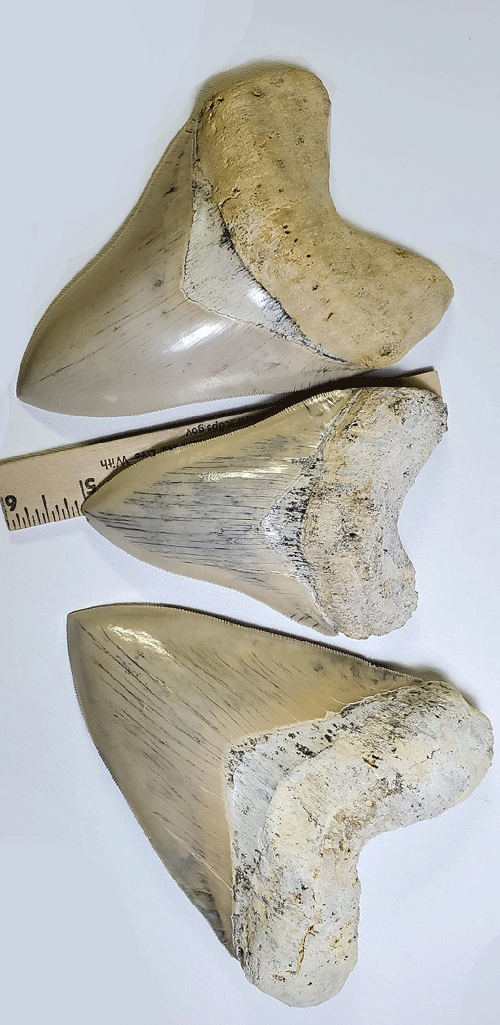
Iron oxide is the primary mineral responsible for warm earth tones. These colors typically appear in river deposits and shallow marine sediments where oxidized iron circulates. Over millions of years, trace metals diffuse uniformly throughout the tooth, creating beautiful gradients of gold, sand, or light chestnut.
Chocolate Brown and Deep Rustic Shades
Teeth fossilized in iron-rich clay layers develop deeper browns, sometimes approaching mahogany. Collectors often favor these colors due to their rich, natural appearance and connection to ancient coastal environments.
Rare Multi-Tonal Fossils
Some of the most visually striking teeth show multiple colors blending together—black enamel transitioning into brown root zones or blue enamel paired with tan outer layers. These color borders form when a tooth shifts between micro-environments during burial or when mineral availability changes over time.
This natural marbling is almost impossible to replicate artificially, making multi-tonal fossils highly valued among collectors.
Why Fossil Teeth Feel Heavier Than Modern Teeth
Young collectors and new fossil enthusiasts often ask why fossilized teeth feel significantly heavier than modern shark teeth. The answer lies in the mineralization process itself. As groundwater flows through sediment, minerals infiltrate microscopic pores in the tooth’s interior. Over millions of years, these minerals replace organic tissue entirely.
Modern shark teeth contain lightweight biological components like collagen and dentin. Fossilized teeth contain dense minerals such as:
● Calcite
● Iron oxide
● Phosphate minerals
● Silicates
This mineral replacement increases density, giving fossils their characteristic weight. When examining a tooth, a heavy feel is one of the most reliable signs that the piece is genuine rather than a lightweight resin replica. Artificial molds rarely match the mass of a real fossil because resin is far less dense than mineral-filled dentin.
For collectors evaluating specimens online, understanding this distinction helps prevent confusion between a naturally mineralized tooth and a polished artificial reproduction.
Identifying Natural vs. Artificial Colors in Fossils
Knowing how authentic colors form makes it easier to identify artificial dyes or surface treatments used in fraudulent fossils. A naturally mineralized tooth shows:
● Color embedded throughout the enamel, not only on the surface
● Gradual transitions rather than abrupt lines
● Textures and micro-fractures that interrupt color, indicating age
● A matte or naturally glossy finish, never a glasslike varnish
A fake or altered tooth may show:
● Bright, unnatural hues
● Uneven brush marks or stains
● Color that chips off under gentle scraping
● Overly perfect uniformity
Because we at Buried Treasure Fossils specialize in sourcing genuine, legally collected teeth, we ensure that every specimen reflects the true mineral story of its environment. When evaluating an authentic megalodon tooth, natural coloration is one of the most trustworthy indicators of authenticity.
Regional Differences in Fossil Tooth Colors
Collectors often notice that teeth from different localities have signature color palettes.
Southeastern United States (Carolinas, Georgia)
Known for smoky blacks, deep grays, and subtle blue tones due to phosphate-rich sediments.
Florida Rivers
Produces warm tans, oranges, and browns because of oxidized iron and mineral-rich freshwater environments.
Morocco
Often yields sand-colored or beige teeth, shaped by desert marine sediment layers that dried over time.
South America
Certain fossil beds produce rare pastel and olive tones, shaped by a mixture of volcanic ash and marine sediment.
These geological identities help researchers study ancient ecosystems and assist collectors in identifying provenance.
Why Color Never Determines Value Alone
While color is scientifically fascinating, it is only one factor influencing a tooth’s collectible value. Condition, size, symmetry, enamel preservation, serration completeness, and overall aesthetics matter far more. Some of the most valuable teeth display multiple colors or extremely glossy enamel, but collectors base desirability on a balance of features, not color alone.
Regardless of hue, a real fossil should reflect natural mineralization—not surface-level dyes or chemical treatments.
Conclusion: Why Understanding Color Helps You Choose the Right Fossil
By examining how marine minerals create natural fossil hues, collectors and students can better evaluate the quality and authenticity of specimens found online. Understanding these color variations also enriches your appreciation of how each authentic megalodon tooth records millions of years of geological history. If you’re exploring fossils for education, collecting, or investment, we invite you to continue discovering our scientifically curated selection. With our passion for paleontology and our commitment to authenticity, we’re always here to help you find a specimen that inspires curiosity and confidence.