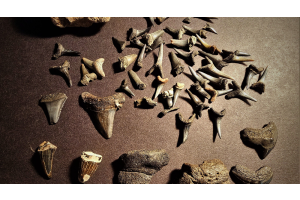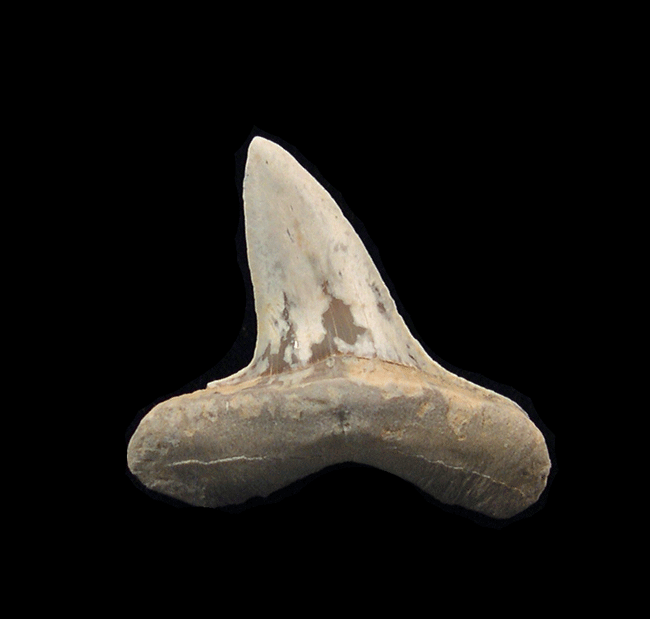
Kansas, with its sweeping plains and unassuming farmland, holds a secret beneath its soil: the remains of an ancient sea that teemed with some of the most formidable sharks to ever live. While Kansas is landlocked today, during the Cretaceous period, it was submerged beneath the Western Interior Seaway.
This vast inland ocean stretched from the Gulf of Mexico to the Arctic Ocean. From those depths, predators such as Cretoxyrhina, Ptychodus, and Squalicorax reigned supreme, leaving behind the fossilized teeth that now spark fascination among collectors and paleontologists alike. Classifying these teeth is both a science and an art. For paleontologists, classification involves careful identification based on anatomy, morphology, and geological context.
For collectors, it means grading by rarity, preservation, and display value. Together, these approaches turn Megalodon teeth in Kansas into more than fossils, they become windows into the lives of apex predators that once ruled the Cretaceous seas.
Why Kansas Is a Fossil Hotspot
Kansas stands out in fossil history because of its location within the ancient Western Interior Seaway. This inland sea provided ideal conditions for preservation: fine marine sediments buried creatures quickly after death, reducing decomposition and allowing fossils to mineralize beautifully over millions of years.
For sharks, whose skeletons were made of cartilage rather than bone, teeth became the most enduring record. Because sharks shed thousands of teeth throughout their lives, the seaway floor became a vast repository of these fossils. Over time, shifting geology exposed these deposits, allowing modern fossil hunters to uncover treasures that are 80 to 100 million years old.
The Major Players: Kansas Cretaceous Sharks
Three groups of sharks dominate the fossil record in Kansas, each with distinct teeth that facilitate classification.
Cretoxyrhina – The “Ginsu Shark”
Often dubbed the “T. rex of the seas,” Cretoxyrhina was a massive predator growing up to 25 feet long. Its teeth are highly prized because of their cutting power: broad, triangular, and razor-sharp. They resemble modern great white shark teeth but are more robust, making them instantly recognizable to both scientists and collectors.
Ptychodus – The Shell Crusher
Ptychodus was a unique shark that specialized in feeding on shelled prey, such as clams and ammonites. Its teeth were not sharp but instead flat and pavement-like, designed to crush rather than slice. This difference in morphology makes Ptychodus fossils particularly fascinating for classification—they reveal not just the shark’s identity, but also its entire dietary strategy.
Squalicorax – The Crow Shark
Squalicorax earned the nickname “Crow Shark” for its opportunistic, scavenger-like behavior. Its teeth are smaller than Cretoxyrhina’s, but they bear distinct serrations that hint at its role as a coastal predator and scavenger. Collectors appreciate these teeth for their wickedly sharp edges and accessibility, as they are more commonly found than some rarer species.
Scientific Classification: Paleontologists’ Perspective
For paleontologists, classification is about much more than naming a tooth. Each fossil must be placed within a broader evolutionary and ecological context. To do this, scientists focus on:
Morphology – The shape, size, and structure of the tooth are carefully studied. Are the edges serrated? Is the cusp symmetrical? These details distinguish species.
Position in the Mouth – Sharks have multiple rows of teeth, and their morphology varies depending on the location of the teeth. Identifying upper jaw versus lower jaw teeth can refine classification.
Stratigraphy – Paleontologists also consider the rock layer in which the tooth is found. The Kansas Cretaceous strata are well-documented, so the depth and location provide clues to the tooth’s age and species.
Comparative Anatomy – Fossils are compared to known specimens in museum collections. This ensures accuracy and consistency in species identification.
The ultimate goal is to reconstruct not just individual species, but entire food webs of the Cretaceous seas. Each tooth becomes evidence of predator-prey relationships, evolutionary adaptations, and environmental shifts.
Collector Classification: Rarity, Condition, and Display
Collectors, while appreciative of the scientific importance, often classify Megalodon teeth in Kansas by different criteria. The excitement lies in finding and showcasing specimens that stand out. The main categories include:
Species and Rarity – Cretoxyrhina teeth are rarer than Squalicorax, and large, well-preserved Ptychodus teeth are even more desirable. Rarity drives collector value.
Size – Tooth size is often measured by slant height (a diagonal measurement from base to tip). Larger teeth command greater attention, as they represent more mature, formidable sharks.
Preservation Quality – Teeth with sharp edges, intact tips, and little to no erosion are considered premium finds. Fossilization color also plays a role, with rich hues being particularly attractive.
Authenticity – Because shark teeth are popular collectibles, authenticity is crucial. Trusted sources guarantee that each tooth is genuine and not artificially altered or replicated.
Aesthetic Appeal – For display purposes, symmetry, luster, and completeness make certain specimens showstoppers in private collections or museum cases.
Bridging the Two Worlds
What makes Kansas shark teeth remarkable is that both scientists and collectors value them, albeit for different reasons. Paleontologists see them as keys to understanding ancient ecosystems, while collectors see them as rare treasures that carry a tangible connection to prehistoric life.
Yet, these worlds often overlap. Many collectors contribute to science by donating or lending rare specimens to museums for study. Likewise, paleontologists often inspire collectors by publishing accessible guides that help enthusiasts accurately classify their finds.
Conclusion
Megalodon teeth in Kansas are more than curiosities. They are time capsules, preserving the story of predators that shaped the ancient seas. Through classification, whether by the sharp eye of a paleontologist or the discerning gaze of a collector, these fossils gain new meaning.
In the end, Kansas shark teeth remind us of something profound: the land we walk on today was once a thriving ocean, and the fossils beneath our feet are whispers from a forgotten world. Whether you study them scientifically or display them proudly, these teeth are treasures of an ocean long gone, yet never truly lost.
If you’re inspired by the incredible legacy of Kansas shark teeth, there’s no better way to connect with this ancient world than by holding one in your hands. Our collection features authentic, high-quality Cretoxyrhina, Ptychodus, and Squalicorax fossils, each guaranteed genuine and carefully selected for collectors and enthusiasts alike.