One warm morning, a quiet beach became the setting for something truly remarkable. The waves lapped gently against the shore, and a man strolled along the tideline with no particular destination in mind. His eyes scanned the sand, idly following seaweed trails and tiny footprints left by crabs. Then something caught his attention—a jagged edge poking out beneath the surface. At first, it looked like a broken piece of stone or maybe a chipped shell, but after brushing away the grains, he realized he’d found something far more unusual.
Not long after, news began to spread that a man had found a tooth of a megalodon while enjoying a casual beach walk. It wasn’t luck—it was a real piece of history, shaped by time and preserved by nature.
Sometimes, the sea hides its secrets in plain sight. All you have to do is look down.
Why This Find Matters More Than You Think
There’s something magical about finding a fossil. It’s not just the thrill of discovery—it’s the connection it builds between past and present. When you hold a fossilized shark tooth, especially one from a megalodon, you’re holding more than an object. You’re having a piece of a creature that once ruled oceans before humans ever built ships or wrote books.
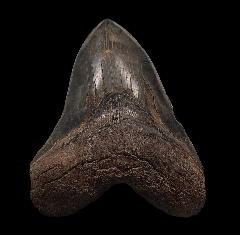
Megalodon teeth are thick, triangular, and sometimes as long as seven inches. These aren’t the teeth of your average shark. They are enormous, dense, and silent witnesses to a world long gone. Each one tells a story about a giant predator that once hunted whales and kept entire marine ecosystems in balance.
Ancient Giants with a Bite That Lingers
The megalodon wasn’t your average shark. It measured up to 60 feet in length, larger than most school buses. Its bite force could crush bones effortlessly. For over 20 million years, it was the ocean’s apex predator.
And yet, today, the only evidence we have of these majestic giants is their fossilized remains, including their teeth. No bones, no skin, no preserved fins—just teeth. Why? Sharks, including the megalodon, had cartilage-based skeletons that didn’t fossilize easily. The teeth, made of hard enamel, were the only parts strong enough to survive time’s erosion.
Each fossilized tooth is a quiet reminder that long before us, the seas were home to something truly spectacular.
Every Tooth Has Its Own Signature
No two megalodon teeth are the same. Some are wide and flat, while others are narrower and pointed. Their size, shape, and color vary depending on the minerals present in the surrounding sediment and the duration of their burial.
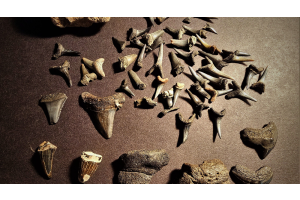
Colors range from deep gray to earthy browns, with subtle accents of soft blues or greens. Some still carry sand within the serrations. Others show wear from feeding or time spent tumbling under the sea. Each one is a fingerprint—a fossilized signature from a time before our calendars began.
Collectors often marvel at the uniqueness of each tooth. It’s not about size alone. It’s about the story it tells through its edges, color, and texture.
From Ocean’s Depths to Display Shelves
What do people do with megalodon teeth once they find them or purchase them? Some choose to place them on display stands, treating them like museum pieces. Others tuck them away in drawers as personal treasures, shared only with close friends or curious children.
A megalodon tooth doesn’t need much to impress. Its natural form is enough to spark questions and ignite imaginations. Whether you're an experienced fossil collector or someone discovering it for the first time, the experience is always the same—astonishment, awe, and a deep appreciation for the world beneath the waves.
Why These Fossils Still Resonate Today
Fossils connect us to history in a way books and documentaries never can. They’re physical. They’re real. When you hold a megalodon tooth, you’re holding something that once belonged to a living creature—one that swam the ancient oceans before continents had fully formed.
For many, these teeth aren’t just items for display. They’re conversation starters, reminders of Earth’s timeline, and symbols of nature’s incredible force. Whether found in riverbeds, along beaches, or acquired from trusted sources, each fossil holds both scientific and sentimental value.
It’s one thing to read about ancient sharks. It’s another to cradle part of one in your hand.
What Makes This Discovery Rare?
Fossilized shark teeth aren’t rare, but large, intact megalodon teeth are far from ordinary. When someone stumbles upon one in near-perfect condition, it becomes more than a fabulous find—it’s a discovery that stirs curiosity across communities.
When the story broke that a man found a megalodon tooth, people didn’t shrug it off. They asked questions. Where was it found? How big is it? What does it look like? That’s the beauty of fossil finds—they invite everyone into the mystery.
These teeth survive due to specific environmental conditions, which include the optimal combination of water, sediment, pressure, and time. That’s why finding one outside of typical fossil sites feels so remarkable.
Your Own Piece of Prehistoric History Awaits
You don’t have to wait for a beach stroll to offer up a fossil. There are trusted sources that provide authentic megalodon teeth, collected from locations where they are naturally uncovered—no digging, no tampering, no artificial shaping.
From small fragments to large, display-worthy specimens, there’s a tooth for every collector, every enthusiast, and every curious soul. You might not be able to hear the megalodon’s roar through time, but you can still hold its legacy in your hands.
These pieces of the past offer something priceless: perspective. They remind us that Earth is older, wilder, and more mysterious than we often remember.
Conclusion: When the Past Washes Up at Your Feet
The day a man finds a tooth of megalodon, he doesn’t just walk away with a fossil—he walks away with wonder. These ancient artifacts are more than relics. They’re reminders of a time when nature shaped giants and let their stories drift silently beneath the waves.
Whether you discover one by chance or bring one into your life intentionally, a megalodon tooth connects you to a world far deeper than the one we see today.
Ready to explore the mystery of megalodon fossils for yourself? Take the first step toward your own prehistoric discovery.