

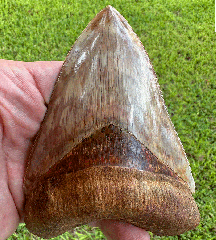
The megalodon—a name that echoes through prehistoric waters—has long fascinated paleontologists and shark lovers alike. But beyond the monster-sized jaws of the adult megalodon lies a question less commonly explored: what about its beginnings? Specifically,what size were the teeth of a baby megalodon?
Tucked away in ocean sediment and fossil beds are clues to this aquatic mystery, and each one tells a story of a shark that started out smaller than you'd expect—yet still impressive.
Let’s wade into the quieter, lesser-known waters of prehistoric science, where the lives of baby megalodons are waiting to be explored.
A Bite-Sized Beginning
Long before reaching the terrifying proportions that made them rulers of the ancient sea, baby megalodons entered the world with jaws that already hinted at their future might. Fossilized teeth found in shallow coastal deposits provide a fascinating look into their early development.
Estimates suggest that baby megalodons were born over six feet long—a size that would make most modern sharks blush. Somewhere between survival instinct and evolutionary design, they came equipped with fully formed teeth. This is where the conversation around baby megalodon tooth size takes a compelling turn.
Paleontologists have discovered teeth from infant megalodons that measure approximately 1.5 inches, with some examples reaching up to 2 inches in length. These may seem small compared to the 7-inch serrated giants found in adults, but they remain surprisingly large for a newborn shark.
Fossil Evidence from Nursery Zones
Fossilized shark teeth often tell more than just size—they tell stories about behavior, environment, and even where these ancient creatures may have been born. Certain fossil beds, notably off the coasts of Panama and South Carolina, have revealed clusters of smaller teeth. These locations are believed to be “nursery zones” where megalodons gave birth in shallow, safer waters.
In these protective areas, newborns likely spent the first stages of their lives learning to hunt smaller prey while avoiding the dangers of the deep sea. Their serrated teeth were already designed for slicing through meat, signaling an early need to feed independently. That biological preparation gives more meaning to their size—these weren’t helpless babies.
Evolution in Miniature
Despite their smaller frames, baby megalodons weren’t drastically different from adults in structure. Their teeth retained the classic triangular shape and serrated edges that made them effective predators. This miniature version of adult dentition shows how nature didn’t hold back when it came to equipping the young.
This trait isn’t just interesting from a paleontological standpoint—it reveals something more profound about shark evolution. Megalodons belonged to a lineage where being born ready was essential. Their size, their teeth, and their instincts all pointed toward survival from the very first swim.
Nature’s Prehistoric Engineering
When we think of megalodons, it’s easy to jump straight to dramatic images of gaping jaws filled with teeth the size of your hand. However, the baby teeth give us a more intimate and curious view. They're snapshots of a species built to thrive from birth.
The developmental precision of their teeth—fully formed, functional, and almost comically large for an infant—suggests a sophisticated evolutionary design. These were not transitional structures, but active tools of survival. Every tiny serration mattered.
And while their smaller size didn’t yet command the same fear as their older counterparts, baby megalodons were clearly designed with the same mission: to dominate the food chain.
What Fossils Reveal About Growth
Baby megalodon teeth do more than confirm size—they help researchers piece together the shark’s early growth rate. Some fossil studies suggest that megalodons may have proliferated in their first few years, which means those 1.5–2-inch teeth didn’t stay small for long.
The baby teeth were likely shed quickly as the shark grew, replaced by ever-larger versions—each one a milestone of development. This process helps explain why so many small teeth have been found; young sharks likely shed them often in their first stages of life, creating a fossil record that traces their early years in layers of sediment.
Rare Finds with Big Meaning
Finding intact baby megalodon teeth is rare. Unlike their adult counterparts, whose massive teeth have been collected for centuries, infant fossils are fragile, scattered, and sometimes overlooked. When one is discovered, it brings a rush of scientific excitement.
These specimens offer insight not only into individual animals but also into entire breeding behaviors, habitats, and developmental patterns. Each small tooth holds questions: Where was this baby born? How long did it stay in the nursery? What did it eat? Every fossil is a piece of an ancient puzzle.
The Surprising Scale of Newborn Predators
Though 1.5 to 2 inches may not sound monumental, scale is everything. Place a baby megalodon tooth next to that of a modern newborn great white, and the difference becomes clear. Great white pups are born with teeth closer to 0.5 inches. That means even at birth, megalodons were equipped with tools up to three times larger.
These numbers elevate our understanding of the species. They weren’t merely bigger—they were born into an entirely different league. The infant megalodon wasn’t a scaled-down version of a predator; it was a full-fledged hunter in miniature.
More Than a Tooth
Ultimately, discussing tooth size is never just about the tooth itself. It’s about how early design shaped the fate of a species. Baby megalodons were born into a world where survival was never guaranteed. But with jaws already capable of hunting, and teeth sharp enough to tear, they had more than a head start.
The size of those early teeth reminds us that nature often builds with purpose, sculpting even the youngest members of a species to thrive. Each baby tooth fossil is a quiet reminder of something once fierce, now frozen in time.
Fossil Hunting and Curiosity
For collectors and amateur paleontologists, discovering a baby megalodon tooth is akin to hearing a whisper from the past. It's smaller, subtler, but significant. These fossils are more than curious—they’re chapters in a story that began millions of years ago.
Whether you’re drawn by science or simple fascination, exploring these relics can offer an unforgettable connection to ancient life beneath the waves.
Closing Thoughts
The mystery behind the size of baby megalodon teeth offers a glimpse into a prehistoric world where size was more than a spectacle—it was a matter of survival. These young giants began their lives with all the tools they needed, and their early development leaves behind clues that continue to captivate those who seek them.
If you’ve ever been curious about holding a piece of that ancient history in your hand—or adding a truly unique fossil to your collection—now is the time to start exploring.
Ready to dive into fossil history and discover ancient treasures of your own? Explore the full collection today and let the ocean’s secrets surface in your hands.






