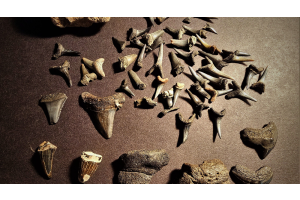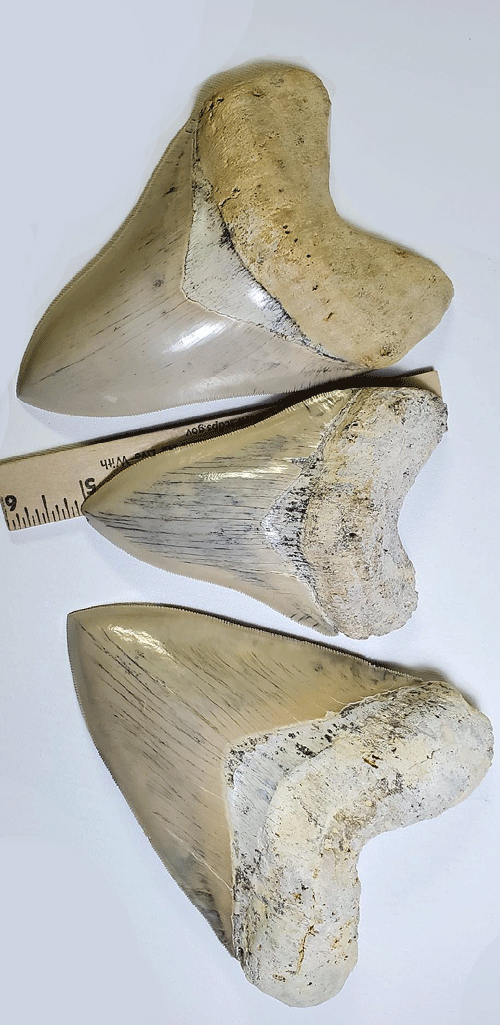
Imagine standing on a beach and holding a fossil that’s millions of years old—something that once belonged to the largest shark that ever lived. That’s exactly what happens when you hold a Megalodon tooth. These fossils connect us to an ancient world, where giant predators ruled the seas. A big megalodon tooth can measure up to seven inches, making it one of the most striking fossils a collector can own. But beyond its size, each tooth carries the weight of history, offering a tangible link to a creature that dominated oceans long before humans even existed.
Why Megalodon Teeth Fascinate Us
Part of the fascination comes from the shark itself. The Megalodon, whose name means “big tooth,” roamed the oceans roughly 23 to 3.6 million years ago. Estimates suggest it could reach lengths of 60 feet or more, making it one of the largest predators ever known. Its teeth, sharp and serrated, were perfect tools for hunting whales, dolphins, and other large marine animals. Today, those teeth are not just fossils; they are reminders of the raw power of nature. For many collectors, holding one feels like cradling a fragment of history.
The Sheer Size and Strength of These Fossils
When people first encounter a Megalodon tooth, size is the most obvious feature. Unlike modern shark teeth, which are usually only a couple of inches long, Megalodon teeth can be as large as a human hand. The triangular shape, broad base, and pointed tip reveal just how formidable this shark must have been. It’s easy to imagine how such teeth once sliced through prey.
But it isn’t just about size. Fossilized Megalodon teeth carry a density and weight that fakes often lack. Pick up an authentic one, and you immediately notice its solid, heavy feel—almost as if the fossil itself is holding centuries of earth and ocean within it.
Signs of Authenticity: How to Tell If It’s Real
With their popularity, many replicas flood the market, so it’s important to know how to tell the difference. Some key signs help you distinguish between authentic and fake teeth:
● Shape and Serrations: Real Megalodon teeth feature small serrations along the edge, like a steak knife. Over time, these serrations wear down uniquely, meaning no two teeth are identical. If you see perfectly even edges, you might be looking at a replica.
● Color and Texture: Fossilization changes the tooth’s color, depending on the minerals in the soil or seabed. Genuine teeth can be black, brown, gray, or even shades of blue, often with natural marbling. Fakes tend to look too uniform, sometimes even painted.
● Weight and Density: Authentic fossil teeth feel heavy for their size. Resin or plaster copies, on the other hand, are noticeably lighter.
● Enamel Surface: A real tooth’s enamel shows tiny imperfections, natural gloss, and signs of erosion. If it looks too shiny or flawless, that’s a warning sign.
Learning these traits ensures that when you hold a Megalodon tooth, you’re truly holding history—not a reproduction.
Why Collectors Value Megalodon Teeth
Collectors and fossil enthusiasts treasure Megalodon teeth not only for their rarity but also for what they represent. Each tooth is a natural artifact, shaped by millions of years buried beneath sediment. The variations in size, color, and preservation make every specimen unique. Some collectors display them in cases, while others use them as conversation pieces in offices or homes. Beyond aesthetics, owning one provides a deeper appreciation for Earth’s prehistoric life.
The Connection Between Past and Present
Think of it this way: every fossil is a storyteller. When you hold a Megalodon tooth, you’re connecting directly with an ancient predator’s legacy. That connection is what makes these fossils so meaningful. They remind us of how drastically life on Earth has changed, yet they also highlight the continuity of nature’s cycles.
For many, the fascination goes beyond science. There’s a sense of awe in realizing you’re holding the same kind of weapon a Megalodon once used to dominate the seas. That physical connection to such a powerful creature adds a personal dimension to history—one you can literally feel in your hand.
Spotting Value in Authentic Finds
Authentic Megalodon teeth can hold significant value, especially larger ones in excellent condition. Collectors often pay a premium for teeth with intact tips, sharp serrations, and rare coloration. For example, a tooth showing deep blues or marbled shades can be more sought after than a standard black one. Provenance—the record of where and how the tooth was found—also adds value, as it ties the fossil to a specific region or discovery story.
This is why buying from reputable sources is important. Trusted sellers provide authenticity and background information, so you know your fossil isn’t just real, but also carries documented history.
A Collector’s Tip: Avoid the Too-Perfect Tooth
One simple tip can help new collectors: be cautious of anything that looks flawless. Real Megalodon teeth almost always show signs of wear—chips, asymmetry, or variations in serrations. These details are proof of authenticity. Replicas often look “too good,” with perfect symmetry and overly smooth edges. Remember, imperfections are what make real fossils genuine treasures.
Holding History in Your Hand
Ultimately, the appeal of Megalodon teeth lies in more than just collecting. It’s about the feeling you get when you hold one. The density, the texture, the visible serrations—all tell a story of oceans filled with giants. When you grip a genuine tooth, it’s almost as if time folds, letting you reach across millions of years.
That’s why enthusiasts often describe it as holding history itself. It isn’t just a fossil; it’s a reminder of nature’s power and resilience, of creatures that came before us and shaped the ecosystems of their time.
Why a Big Megalodon Tooth Stands Out
While all fossils are fascinating, there’s something especially captivating about a big megalodon tooth. Its size alone makes it a centerpiece, but its presence carries more than visual impact. It offers perspective—reminding us that Earth once hosted predators on a scale that dwarfs even today’s great white sharks. Having one in your collection is more than ownership; it’s a daily reminder of how extraordinary our planet’s history truly is.
Final Thoughts
So, could holding a Megalodon tooth be like holding history in your hand? Absolutely. Each tooth is a fragment of deep time, shaped by nature and preserved across millennia. When you pick one up, you’re not just admiring a fossil—you’re connecting with the story of life itself.
For collectors and enthusiasts alike, a genuine Megalodon tooth offers more than beauty or value; it’s a bridge between past and present. And when it happens to be a big megalodon tooth, that connection feels even stronger.