

Imagine walking into a museum and seeing a jawbone large enough to swallow a small car. That’s not an exaggeration—it’s the reality of what a reconstructed megalodon might display. This ancient sea predator ruled the oceans millions of years ago, leaving behind toothy clues and fossilized whispers. While the full picture remains a mystery, one thing is certain: the megalodon shark skeleton continues to capture imaginations.
There’s something undeniably fascinating about tracing the bones of a monster that no longer roams the seas. Though no complete skeleton has ever been found, paleontologists and enthusiasts piece together the evidence—each fossilized tooth, each vertebra—a puzzle as massive as the creature itself.
Let’s take a deeper dive into this enigmatic relic of prehistory.
The Myth and Mystery of a Forgotten Ocean King
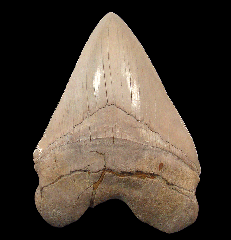
The megalodon is often described as the largest shark to have ever lived, with estimates placing its length at 50-60 feet. Its triangular, serrated teeth can grow up to 7 inches long. Yet, despite its fame, there’s no full skeleton to display.
Why? Sharks don’t have bones like humans do. Their skeletons are made of cartilage, which doesn’t fossilize as easily as bone. That’s why we mostly find megalodon teeth and a few scattered vertebrae. Still, those fragments are enough to inspire life-sized reconstructions and scientific estimates that make jaws drop—literally.
Piecing Together the Evidence
A large part of what we “know” about the megalodon’s form comes from comparisons with modern sharks, especially the great white. Scientists use these comparisons to estimate the shape and size of megalodon’s fins, tail, and body. The few vertebral columns that have been discovered help sketch out what the spine might have looked like—an eerie reminder of how much we still don’t know.
In museums and private collections, fossilized vertebrae sit like ancient coins, often polished and displayed. These are the breadcrumbs left behind by a giant that once ruled the deep.
The Teeth Tell the Story
While cartilage may not last through the ages, megalodon teeth certainly do. They’re among the most sought-after marine fossils. Some are found in riverbeds, others on the ocean floor, and each one tells a silent story of prehistoric predation.
These teeth are more than just souvenirs of a bygone era—they’re clues. The serrations suggest a diet that included large marine mammals, and the size of the teeth hints at an immense jaw span. Some reconstructions show a mouth so wide it could swallow a pair of adult humans side by side.
This is where the fascination begins to feel real: a tooth in your hand, worn smooth by the tides, possibly millions of years old. It’s history you can touch.
Reconstructing a Legend
So, could a full megalodon shark skeleton ever be displayed in a museum? The short answer: not likely. Since cartilage doesn’t preserve well, full skeletons are rare or impossible. What we do see are reconstructions—based on science, but also some imagination.
These models are often built using fiberglass and resin, shaped around fossil records and computer simulations. When displayed, they’re breathtaking: 60 feet of sleek terror, suspended as though it might swim away at any moment. Some exhibits even allow visitors to walk through the jaws, offering a glimpse into the scale of this extinct giant.
Still, it’s important to remember that what we’re looking at is more sculpture than skeleton—a scientific guess wrapped in awe.
The Hunt for Megalodon Fossils Today
You don’t have to be a scientist to explore the world of megalodon fossils. Collectors and enthusiasts scour riverbanks and coastal sediments in places like South Carolina, Florida, and North Carolina, hoping to unearth a piece of history.
The excitement of discovery isn’t limited to those in lab coats. For many, finding a tooth is like catching a ghost. Each one is unique—some jet black, others earthy and worn. Size, condition, and shape all influence their value, both as collectibles and as scientific fragments.
And while a full skeleton may remain elusive, these teeth serve as a tangible connection to the deep past.
How Do Scientists Date These Fossils?
Most megalodon teeth are dated using stratigraphy—studying the layers of earth or sediment in which they’re found. Some are as old as 20 million years, while others are from a few million years ago, just before the species vanished.
There’s still debate about why the megalodon went extinct. Climate change, a decline in food sources, and competition from smaller, more agile predators may all have played a part. But its teeth, resilient and sharp as ever, remain.
In a way, they’ve outlived the predator they once served.
What We Can Learn from a Tooth
Beyond their size and beauty, megalodon teeth can teach us about evolution, marine ecosystems, and even the chemistry of prehistoric oceans. Scientists use chemical analysis to determine what the megalodon ate and how it migrated. Isotope testing has shown that these giants roamed far and wide, likely occupying the top of the oceanic food chain.
So, the next time you hold a megalodon tooth in your palm, you’re not just holding a fossil—you’re holding a chapter from Earth's marine history.
Could New Discoveries Change Everything?
Absolutely. Fossil hunting continues, and new finds are always possible. While a full megalodon shark skeleton might remain out of reach, each new tooth or vertebra could adjust our understanding. Maybe one day, a remarkably well-preserved cartilage structure will be unearthed—one that offers fresh insights or changes the shape of museum exhibits altogether.
Until then, we work with what nature left behind, guided by curiosity and the clues buried in stone.
Final Thoughts on the Ocean’s Greatest Enigma
Even without a complete skeleton, the megalodon has earned its place in prehistoric lore. Its teeth and fragments are windows into an ancient world—silent but striking. The term megalodon shark skeleton may lead to models and reconstructions today, but what those pieces represent is far greater: the thrill of discovery, the majesty of extinct giants, and the enduring appeal of one of nature’s most remarkable creatures.
Ready to add a piece of ancient mystery to your own collection? Start your fossil journey today and explore authentic finds that bring the ocean’s past to life.






