

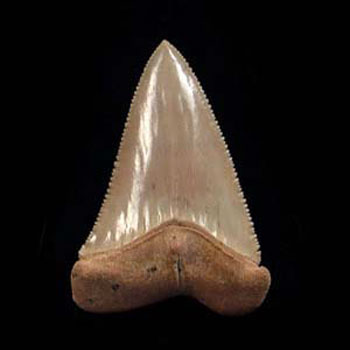
When it comes to nature’s most impressive predators, few creatures capture the imagination quite like the great white shark. With their massive size, remarkable speed, and powerful jaws, these apex predators have been fine-tuned by evolution to dominate the oceans. But among their many lethal adaptations, great white shark teeth stand out as perhaps the most iconic—and arguably most effective—kill tools in the natural world.
But are they truly the most perfect? To answer that, we’ll need to look deeper into the biomechanics, function, and comparisons with other fearsome predators both in and out of the water.
What Makes Great White Shark Teeth So Remarkable?
Great white sharks, scientifically known as Carcharodon carcharias, have evolved a set of teeth that are perfectly suited to their hunting lifestyle. Each tooth is wide, triangular, and heavily serrated—designed not just to bite, but to saw through flesh and bone with astonishing efficiency.
These teeth can grow up to 3 inches long and are arranged in multiple rows. When one tooth is lost—which happens frequently—it is quickly replaced by another moving up from behind. This conveyor belt-like system ensures that the shark is never without its primary weapon. Combined with their incredible bite force—up to 1.8 tons—these teeth become devastating instruments for ripping large chunks out of prey like seals, dolphins, and even whales.
Great white sharks don’t chew their food. Instead, they use their great white shark teeth to tear prey into manageable pieces that they can swallow whole. The serrations along the tooth edge act like a steak knife, making it easier to slice through tough tissues and bone.
Comparing to Other Predators: How Do They Stack Up?
Let’s compare these teeth to those of other top-tier predators—both in the ocean and on land.
1. Tiger Sharks
Tiger sharks are sometimes called “the garbage cans of the sea” because of their broad diet. Their teeth are curved and deeply serrated, adapted for slicing through a wide variety of prey, from sea turtles to dolphins. However, they lack the precision and structural triangular design of great white teeth, which are better engineered for deep, clean incisions.
2. Saltwater Crocodiles
These reptiles have conical teeth designed for gripping rather than cutting. Crocodile teeth can hold and drag prey underwater to drown them, but they lack serration and aren’t ideal for slicing. The great white’s teeth are better optimized for both killing and processing prey.
3. Big Cats (Lions, Tigers)
Lions and tigers have sharp canines for puncturing and killing, but their teeth lack the slicing capability of a shark's serrated blades. Their kill often relies on suffocation via throat bite, not laceration. While effective on land, their teeth are less versatile compared to great white shark teeth.
4. Snakes (e.g., Vipers)
Snakes use fangs to deliver venom, often with little mechanical damage. While this is effective in disabling prey, it’s a completely different strategy—chemical over mechanical. It’s efficient but not as instantly damaging as a great white's bite.
5. Tyrannosaurus rex (Fossil Comparison)
Although extinct, T. rex teeth were massive and banana-shaped, designed to crush bone. Some paleontologists believe they delivered bone-shattering bites, much like great whites. However, great whites have the advantage of tooth replacement and serration, which T. rex lacked.
Biomechanics: How Do These Teeth Actually Work?
Biomechanics plays a big role in the effectiveness of any natural weapon. In the case of great white sharks, their bite mechanism works like a perfect combination of pressure, leverage, and motion.
● Serration: Acts like a saw, slicing through thick skin and muscle.
● Triangular shape: Increases surface area and depth of cut.
● Jaw mobility: Great whites can extend their jaws slightly forward when biting, allowing for a more effective strike.
● Tooth renewal: Lost teeth are quickly replaced—ensuring they always have sharp, functional tools at the ready.
All of this adds up to a highly engineered natural system that delivers both power and precision. Their bite can sever limbs, decapitate prey, or cause catastrophic injuries in a single strike.
Why Are Fossilized Teeth Still So Sought After?
Fossilized shark teeth have fascinated humans for centuries—not just for their scientific value, but for their cultural symbolism and aesthetic appeal. Fossilized great white shark teeth are rare, especially those in excellent condition with intact serrations and coloring.
These teeth have been found in locations such as South Carolina, North Carolina, Peru, and Chile. The age, color, and preservation quality make them desirable for collectors. Some even show signs of being transitional between modern great whites and their extinct ancestors, like the massive Mako shark.
Collecting shark teeth has become a passion for many. Aside from the sheer beauty of these fossils, there’s an emotional connection to the ancient ocean predator that once wielded them.
The Science Behind the Shark’s Bite
Modern technology has allowed researchers to simulate and study the bite mechanics of great white sharks. Using CT scans and computer modeling, scientists have found that the bite force is among the strongest in the animal kingdom, second only to some crocodilian species in raw pressure—but with far greater cutting power.
Interestingly, great whites also possess electroreception, allowing them to detect the heartbeat of hidden prey. This gives them an edge even when visibility is low. Their attack strategy is often a surprise ambush from below, and the initial bite is intended to inflict maximum damage—thanks to the toolset of their teeth.
So, Are They the Most Perfect Kill Tools?
“Perfection” in nature depends on context. In the oceanic world, great white shark teeth are arguably among the most efficient, adaptable, and fearsome killing tools ever developed. They combine:
● Mechanical power (bite force)
● Biological design (serrated, triangular, self-replacing)
● Strategic function (clean slicing, not just gripping or puncturing)
● Sensory enhancement (electroreception aids targeting)
Their only real “limitation” is that they’re built for a specific hunting strategy—ambush, slice, and retreat. In other ecosystems, different strategies call for different tools. But for their purpose, these teeth are nearly flawless.
Final Thoughts
If you own one of these incredible fossils, you’re holding a piece of evolutionary brilliance. The sharp edges, the perfect serrations, and the unmistakable triangular shape are not just aesthetically stunning—they're symbols of the brutal and efficient world of apex predation.
Compared to land-based killers and even other sharks, great white shark teeth stand out for their specialized function, constant renewal, and pure cutting power. Whether you’re a collector, a scientist, or just someone who appreciates nature’s craftsmanship, it’s hard to argue against their place at the top.
They may not be the most versatile tools across all environments, but within their realm, they reign supreme—silent, swift, and shaped by millions of years of precision.






