

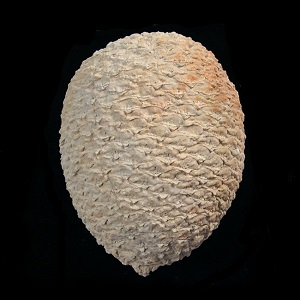
Pine cones have fascinated people for centuries—partly for their rustic beauty and partly for their sheer mystery. But when you come across a giant pine cone, the kind you’ll see in fossil collections or even on high-end collector websites featuring large pine cones for sale, you might wonder: Are these tough, prehistoric structures nature’s armor? Or are they simply massive seed carriers from an ancient world?
Let’s peel back the layers—just like a cone—and find out.
What Exactly Is a Pine Cone?
To begin, a pine cone isn’t just a decorative object you find scattered on hiking trails. It’s the reproductive organ of pine trees—more specifically, a seed-bearing structure for conifers. There are male and female cones, but the large ones we’re most familiar with are the females. These are responsible for protecting seeds until they’re mature enough to be released and carried off by wind, gravity, or animal helpers.
And while today’s cones are impressive, the real jaw-droppers come from the prehistoric past. Fossilized Araucaria mirabilis and Pinus species cones, some dating back over 150 million years, are truly monumental in both size and preservation.
Are Pine Cones Really Nature’s Armor?
Let’s look at this question from both a structural and functional angle.
1. Armor in Design
Pine cones are built like miniature fortresses. Their overlapping, woody scales create a layered defense mechanism, shielding seeds from environmental hazards like heavy rains, temperature drops, and hungry animals. In fact, many fossilized cones still retain this impressive structure after millions of years—proof of how effective their design really was.
Some rare fossil specimens, such as those from the Jurassic period like Araucaria mirabilis, are known for showing not just their rugged exterior but also remarkably preserved interior features. In some cases, short stem sections are even visible, giving a fuller picture of how these cones were anchored to their trees.
If we think of armor as a way to protect what's vital, then yes, pine cones absolutely qualify. They are nature’s version of a vault, designed to keep their genetic cargo safe until the right moment.
2. Biological Priorities
The real purpose of a pine cone is reproduction. Despite their tough exterior, their role is not to defend against predators but to ensure the safe passage of the next generation. The thick walls and sealed structure are like a living incubator. Once the seeds are mature, the cone opens up—some even require fire or extreme heat to do so—releasing them into the world.
So while they may look like armor, their primary goal is seed propagation, not protection for its own sake.
Fossilized Giants: What Do They Tell Us?
The fossils of pine cones—especially the Jurassic-era Araucaria cones from Argentina—are among the best-preserved botanical fossils in the world. These cones are not just big; they’re immaculately detailed.
Specimens weighing over a pound, preserved in their natural matrix, and displaying vibrant internal hues when polished (reds, oranges, charcoal grays) are so pristine that it's easy to forget they’re millions of years old.
The fact that these fossils are still intact speaks volumes about their original durability. Some have even been found with insect borings, giving us rare insights into prehistoric interactions between flora and fauna.
There are also exquisite specimens from Germany’s Upper Oligocene period (around 32 million years ago), such as those of the Pinus species. These are often preserved in hard sandstone nodules, capturing both the fine surface texture and the overall cone form.
Why Are These Fossil Cones So Rare?
If you’ve browsed through paleobotany shops or collector websites, you might have noticed something: there’s an urgency to buy these cones. That’s because exports of Argentine fossil pine cones have been halted for over a decade. Most cones on the market today come from old private collections—what’s available now may never be restocked again.
That’s part of why large pine cones for sale have become sought-after by fossil enthusiasts, collectors, and even interior decorators looking for one-of-a-kind natural pieces. Whether cut and polished or kept in their natural state, these cones are both scientific treasures and artistic marvels.
Just Seeds or Something More?
It’s easy to dismiss giant pine cones as “just oversized seeds.” But that misses the deeper significance. These are the evolutionary end-products of millions of years of adaptation, refinement, and survival.
When we examine the preserved cones of Araucaria mirabilis, we’re looking at a living archive. We see how these plants managed to thrive alongside dinosaurs, how they evolved complex defenses and reproductive strategies, and how some of their features—like thick woody scales and spiral seed arrangements—are still present in modern pines.
In other words, they’re not just seeds. They’re legacies.
From Forest Floor to Fossilized Fame
The journey of a pine cone doesn’t always end on the forest floor. In rare cases, these structures become fossilized under layers of sediment and pressure, giving scientists and collectors alike a time capsule from ancient Earth.
Cut and polished fossils show spectacular inner details that resemble crystallized flames or meteor trails, making each piece visually unique. Some even include rare stem sections—something modern cones seldom preserve. Their aesthetic appeal and scientific value make them prized artifacts, preserved not just by nature but now by collectors.
If you’ve ever been curious about large pine cones for sale, this isn’t just about acquiring a cool-looking object. It’s about holding a fragment of Earth’s ancient narrative in your hands.
So, Are Giant Pine Cones Nature’s Armor?
In conclusion, yes and no.
Giant pine cones are not armor in the military sense—but they are certainly protective. Their thick scales are defenses against time, weather, predators, and decay. Yet their real power lies in their role as vessels of life. Whether fossilized in Jurassic rock or growing on today’s towering conifers, pine cones represent resilience, regeneration, and design that have stood the test of time.
And if you happen to come across large pine cones for sale, remember: you’re not just buying a seed pod—you’re investing in a piece of Earth’s evolutionary ingenuity.
Final Thoughts
The next time you see a pine cone—whether on a walk in the woods or displayed in a glass case—take a closer look. You’re not just looking at a woody object. You’re witnessing a marvel of biological engineering, a record of ancient life, and a container of future forests.
In that sense, maybe calling them nature’s armor isn’t so far off after all.
And if you’re on the hunt for large pine cones for sale, you’re not just collecting—you're preserving a small, indestructible slice of deep time.






