

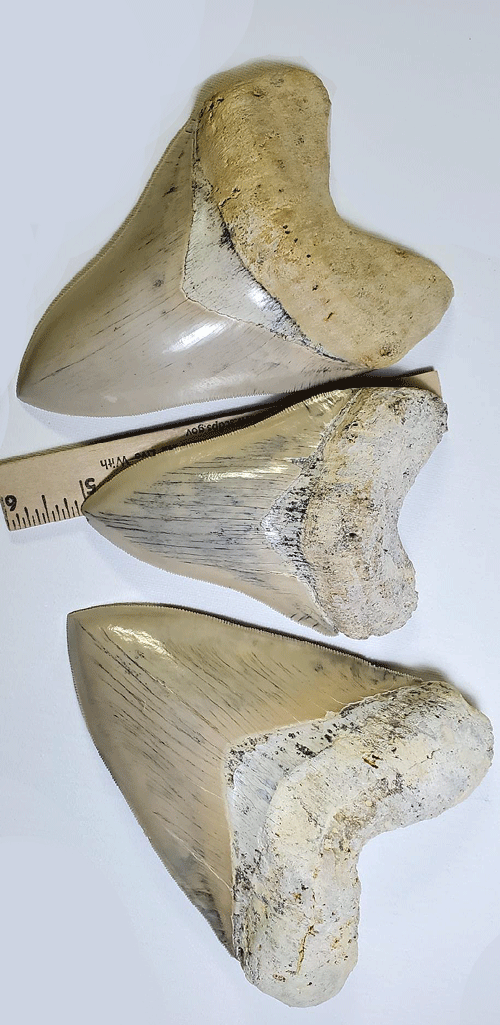
Many collectors seek authenticity when they encounter a megalodon tooth. Some feel unsure about their find. Others question their recent purchase. If you worry that your fossil might not be real, take a closer look. You do not need fancy equipment or scientific training to examine the clues. You only need attention to detail, a little patience, and the proper guidance. Follow these clear steps to figure out whether your fossil is an authentic megalodon tooth or a clever replica.
Start with the Texture and Weight of an Authentic Megalodon Tooth
Genuine megalodon teeth exhibit signs of age and natural wear and tear. You can identify these signs if you know what to look for. The enamel often carries subtle surface lines or texture. A polished tooth that seems too clean deserves closer inspection. Natural teeth feel dense and gritty. They carry weight. When you tap one on a hard surface, it gives off a deep sound. Plastic copies sound hollow or weak. Let your fingers and ears help you assess what your eyes might miss.
Check the Root and Blade for Natural Signs
Look closely at the root of the tooth. Fossilized roots often look rugged or grainy. They do not shine or appear smooth. If the root seems too perfect, it may have been restored or altered. Most genuine roots show a mix of natural wear and fossilization. You can also examine the blade. Real megalodon blades often retain worn serrations. These notches do not look clean or uniform. Replicas usually try too hard to look impressive, which can give them away.
Use Color as a Clue
Color offers another helpful clue. Real megalodon teeth do not share one standard shade. Their color depends on the minerals in the soil where they fossilized. You might find grey, black, brown, or bluish tones. Bright colors or a gleaming surface often signal paint or chemical treatment. Look for subtle color variation. That usually points to authenticity. Fossil color reflects time spent underground, not time spent in a display case.
Rely on Your Senses
Feel the tooth in your hand. Fossil teeth feel solid and grounded. Resin or plastic copies feel lighter. They often slip too easily across your palm. Examine the texture up close. Real fossils show complexity, even in the small details. Replicas sometimes miss this. Their surface appears too smooth. Their details lack depth. Trust your instincts here. If the tooth feels too perfect, it might not come from the past.
Ask Smart Questions Before You Buy
Before buying, ask clear questions:
● Where did the seller source the tooth?
● Did it come from a land site or a riverbed?
● Has anyone restored or repaired the tooth?
● Can the seller provide multiple clear photos?
● Does the listing include a size reference, such as a ruler or coin?
Good sellers provide complete answers and clear images. They do not dodge questions or avoid details.
Ask about restoration or repairs. An honest seller will answer openly. A vague or defensive response suggests caution. You deserve to know what you are buying before you commit.
Look for Documentation and Discovery Details
If available, ask for documentation. A certificate of authenticity adds credibility. Even without paperwork, sellers can provide details about discovery. They should explain the region and the layer in which the tooth was found. Some may even know the age of the sediment. Megalodon teeth date back to the Miocene and Pliocene epochs. Anything outside that range needs explanation. If a seller cannot support the tooth’s timeline, take a step back.
Use Natural Light to Reveal the Truth
Inspect the tooth in daylight. Natural light reveals more than artificial lighting. It helps you catch surface inconsistencies. If parts of the tooth reflect light differently, someone may have painted or filled those spots. Real fossils show variation, but they follow a natural flow. Uneven shine or mismatched sections often point to restoration or reproduction. Use natural light to see what studio lighting hides.
Check for Symmetry and Over-Polishing
Study the tooth’s overall shape. No two megalodon teeth look exactly alike. Nature shapes each one in its own way. Teeth that appear too symmetrical may have undergone repairs. Some restorers use fillers to reshape broken tips or edges. Ask sellers if they used any material to complete the tooth. They should disclose any modifications. Collectors care about originality, not just appearance.
Tap Into the Fossil Community for Input
You can also tap into collector communities. Many fossil enthusiasts enjoy sharing knowledge. Some belong to forums or social groups where members post photos and ask for opinions. These communities can offer quick feedback. They help new collectors build confidence. Share pictures of your tooth, include close-ups, and let experienced collectors weigh in. Many have handled hundreds of teeth. They know what real ones feel and look like. In these spaces, you may also hear shared experiences about identifying an authentic megalodon tooth.
Seek Expert Help When Needed
When you feel unsure, consult an expert. Paleontologists or fossil specialists can often evaluate authenticity within minutes. Some shops or collectors offer this service. They examine texture, weight, and origin. A professional opinion adds peace of mind. If you plan to invest in a rare piece, always consider expert review. You protect both your collection and your money when you ask for guidance.
Pay Attention to the Price
● Does the price match the condition and size?
● Is the deal too good to be true?
● Has the seller explained their pricing clearly?
● Does the fossil’s presentation feel polished but suspiciously cheap?
● Are you finding identical teeth across listings with similar descriptions?
Rare fossils do not appear on the market at unusually low prices. If a large, perfect-looking tooth comes at a bargain rate, question it—trust sellers who clearly and confidently explain their pricing.
Protect and Care for Your Fossil
Real megalodon teeth deserve proper care. Once you confirm authenticity, protect your fossil from damage. Avoid cleaning it with harsh chemicals. Use a soft brush to remove dust. Keep the tooth away from moisture and direct sunlight. Display it in a case to shield it from bumps or scratches. A genuine fossil holds history. Please treat it with the respect it earned over millions of years.
Keep Records to Support Value
If you plan to sell or trade, keep a record of the tooth’s origin and details. Take your own clear photos. Write down where and when you acquired the piece. That history adds value and builds trust with future buyers. Collectors appreciate transparency. Your attention to detail helps the next person who holds that tooth understand its story.
Final Thoughts
Authenticity matters. When you hold a genuine megalodon tooth, you connect with a profound history. You learn more than just age or species. You gain a new respect for prehistoric life. But that connection fades if doubt lingers. Use your senses. Ask questions. Seek answers. Choose experts when needed. Each step brings you closer to knowing what you own. That knowledge strengthens your role as a collector. At the end of your search, what you really want is an authentic megalodon tooth.
Footnote
These techniques reflect standard practices fossil collectors and specialists use to identify genuine megalodon teeth without relying on guesswork or assumptions.






