

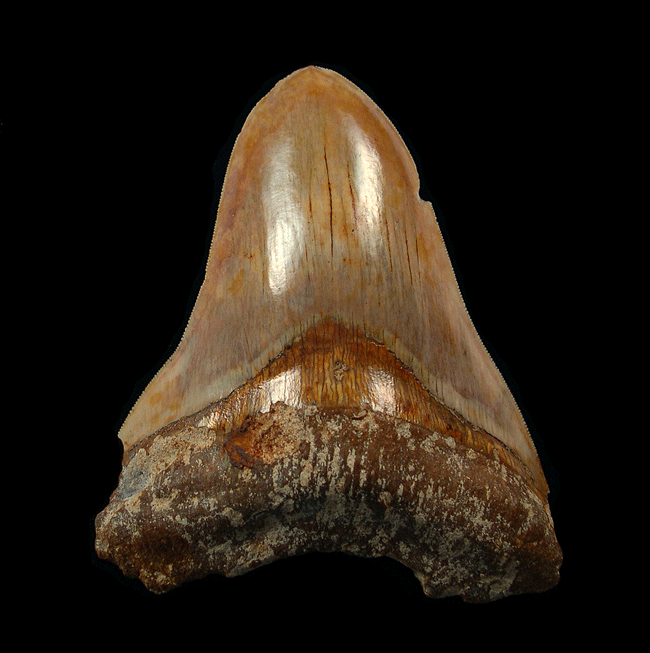
Collectors know when a fossil demands attention. A remarkable Megalodon tooth from Indonesia now leads that conversation. Measuring 5⅛ inches with sharp serrations, thick enamel, and an intact root, this fossil offers more than size. While it does not qualify as the largest megalodon tooth ever found, it ranks among the most complete and desirable examples in the private market. Seasoned buyers value condition as much as length. This tooth earns its place as a specimen that invites deeper evaluation. It challenges assumptions and encourages the market to raise its expectations around quality and completeness.
Why Preservation Plays a Bigger Role Than Size Alone?
To understand what makes this Indonesian tooth rare, it is essential to examine its physical characteristics. Unlike many specimens from West Java, this one avoided the erosion caused by river exposure. Its dark brown enamel holds a natural shine. The bourlette shows a strong contrast. Serrations run sharp from base to tip. The root remains solid without breakage. Every surface shows natural integrity. Collectors value this completeness. The fossil dates back to the Late Miocene or Pliocene, spanning a timeline of four to ten million years. Buyers who prioritize both age and condition recognize how few teeth deliver this level of preservation.
Market Awareness Shifts When a Fossil Sets a New Standard
Collectors and sellers closely watch the market's reaction to fossils like this. One tooth does not change everything, but it can influence how others price and grade their collections. Buyers looking at specimens over five inches now carry this tooth in mind as a reference. They ask more of what they see. That awareness affects what sells, how long it remains on the shelves, and how quickly prices adjust. If collectors continue using this tooth as a benchmark, it may shape what qualifies as museum-grade in the near future. That influence happens quietly, one sharp detail at a time.
Top Fossil Buyers Focus on Features That Define Value
High-level collectors look deeper than size. In this case, four defining traits explain the interest:
● The enamel remains polished and original, with no signs of restoration.
● Serrations show clarity and uniformity, running clean from top to base.
● The root structure holds firm without chips, gaps, or artificial filling.
● The bourlette appears thick and well-defined, with bold contrast against the enamel.
Each of these details elevates this specimen. When combined in one tooth, they create a piece that transcends standard listings and enters serious collector territory.
Authenticity and Condition Build Confidence Among Experts
This specimen earns trust through its natural features. It does not need restoration to look complete. Collectors often struggle to find teeth that hold this balance of size, color, and integrity. When a fossil checks every box—intact root, sharp edges, rich color—it immediately attracts those who collect with care. Buyers value authenticity over flash. This tooth provides that. No enhancements, no patching, no artificial shine. Instead, it offers what serious fossil investors look for: clean evidence of age, strong geological integrity, and visible traits that back its value from every angle.
Why Long-Term Collectors Choose Structure Over Hype?
Buyers who think long-term understand that investment-grade fossils must hold condition, not just attention. While the largest megalodon tooth ever recorded exceeds seven inches, many such specimens lack the preservation found here. This Indonesian tooth may not hold the record for the longest tooth in the world. Still, it meets higher marks in enamel quality, serration sharpness, and natural form. That balance appeals to buyers who see beyond headlines. They prefer pieces that perform under scrutiny. And they make purchases based on complete value—not size alone. That mindset builds stability in the fossil trade and rewards specimens like this with strong long-term potential.
Two Collector Profiles Approach This Tooth Differently
The market responds in layers. Some buyers focus on speed. Others focus on traits. The second group drives long-term value.
● These collectors examine fossil teeth under natural light to detect restoration.
● They assess root formation, enamel clarity, and alignment of serrations.
● They compare color transitions in the bourlette and weigh the geological context.
● They follow seller history and scrutinize every description before purchase.
This fossil passes those tests. That’s why experienced buyers now turn their attention toward it. They recognize in it the traits that define serious investment, not just casual collecting.
Expect Pricing Shifts When Collectors Raise Their Standards
This fossil has already influenced how some sellers list and describe their offerings. If it sells quickly, others may follow that path and adjust their expectations upward. If it remains available, it may serve as a stable benchmark against which other listings can be compared. Either way, the market now sees this tooth as a test. It measures whether quality alone can drive decisions. The astute collectors track that movement. They understand when one specimen reflects more than rarity. It reflects a moment when quality leads the conversation, not marketing or speculation.
Better Questions Lead to Stronger Buying Decisions
This tooth forces collectors to refine their evaluation of value. What matters more—length or structure? How much does provenance add to long-term interest? What visual traits indicate restoration versus untouched preservation? These are the right questions. This Indonesian Megalodon tooth answers most of them. It offers size, form, sharpness, and a natural finish that avoids artificial polishing. While it does not qualify as the largest megalodon tooth it shows how to define premium value without relying on superlatives. That insight helps buyers refine their collecting process and make more informed choices with every acquisition.
Final Thoughts
The fossil market grows stronger when collectors focus on quality. This Megalodon tooth, recovered from West Java, shows why condition and structure deserve more attention than size alone. While it does not carry the record for the largest megalodon tooth ever, it delivers what many of those specimens cannot—balance, beauty, and geological confidence. Its serrations remain intact. Its enamel holds depth and contrast. Its root forms a complete profile. These features enable the market to reset its standards based on facts, rather than trends. That kind of clarity benefits every collector who values truth over hype.
Footnote
Recovered from Miocene-Pliocene layers in West Java, this 5⅛-inch Megalodon tooth offers complete serrations, thick bourlette, and strong enamel without restoration—rare traits that elevate it among global listings.






