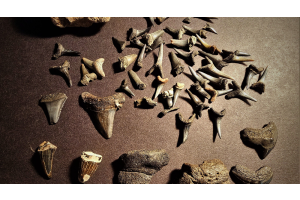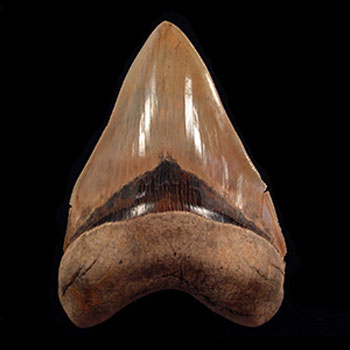
Megalodon teeth have always stirred excitement among fossil collectors, researchers, and enthusiasts. These prehistoric relics are admired for their incredible size, sharp serrations, and the awe they inspire about one of the ocean’s greatest predators. As providers of these fossils, we take pride in guiding collectors, and it is our responsibility to help ensure that specimens are understood in their most valid form. When buyers trust us, they trust that restorations, repairs, or enhancements are disclosed and that our descriptions highlight authenticity.
This level of care allows us to protect the value of fossils and the knowledge they carry, ensuring no one is misled by exaggerated or artificial claims. For many, the dream of acquiring the largest megalodon tooth is irresistible, but understanding the role of restoration is essential before believing in record-size claims.
The Fascination With “Record” Teeth
The fascination with “record-breaking” Megalodon teeth is undeniable. Whenever a tooth crosses the six-inch mark, it tends to draw immediate attention. Some of these fossils can exceed seven inches, but such examples are scarce. The site information emphasizes that teeth usually range between three and six inches, and those exceeding six and a half inches are among the rarest of the rare.
This rarity is precisely why teeth labeled as “record” size can attract scrutiny. Restorations can sometimes be applied in ways that enhance overall length, giving the impression that a tooth is naturally larger than it truly is. What seems at first glance to be an incredible prehistoric survival may actually reflect skilled human restoration, rather than the untouched remains of an ancient shark.
How Restoration Alters Perceptions
Restoration has a valuable role in fossil collecting. It can preserve specimens, restore symmetry, and allow fragile pieces to be handled or displayed. Yet, when restorations are performed on Megalodon teeth, the risk of misinterpretation increases. A tooth might be perceived as intact and “record-breaking” when, in reality, several features have been added or modified.
Some of the most common restoration practices include:
● Rebuilding missing crown tips: By adding material to complete a broken point, restorers can increase the length by a fraction of an inch. That small addition can elevate a tooth into “record” status.
● Repairing roots: Roots are often damaged, but filling in gaps can enlarge the fossil’s base and exaggerate its mass.
● Surface enhancements: Enamel cracks, missing bourlette sections, or worn serrations can be concealed with added material, creating a more pristine appearance.
Each of these steps can improve the tooth’s display quality. However, when they influence size, they affect authenticity. Collectors who measure a restored tooth as over six inches may not realize that part of that size comes from modern craftsmanship.
Rarity and Market Influence
Large Megalodon teeth are not only rare; they are also highly sought after. This demand places significant pressure on the fossil market. Collectors are willing to pay more for specimens that exceed six inches, especially if they appear intact. As a result, restored teeth can sometimes overshadow naturally preserved ones, simply because their larger size commands attention.
However, true rarity does not rest solely on dimensions. Other qualities such as color, bourlette condition, serrations, and provenance matter deeply. For instance, a tooth with vibrant color from North Carolina, or a remarkably preserved specimen from Sharktooth Hill in California, can hold as much significance as one that claims “record size.”
When restorations inflate length, they distort this balance. A collector might be captivated by numbers rather than qualities, potentially overlooking fossils with far greater scientific or historical value. Here, the largest megalodon tooth becomes more of a marketing phrase than a natural discovery if restoration is left undisclosed.
Why “Record” Claims Create Controversy
The controversy arises because restorations blur the boundary between natural history and human modification. A missing crown point that has been rebuilt may create a larger measurement, but does it reflect the actual size of the shark’s tooth? Some argue that the fossil should be celebrated for what remains naturally, while others accept restoration as part of fossil preservation.
This debate intensifies with the rarest specimens. If a tooth is labeled the “largest known,” but its length comes partly from reconstructed features, then its place in scientific or collecting history becomes questionable. Enthusiasts often challenge such claims, emphasizing the need for clarity when discussing measurements.
Collecting With Knowledge
Knowledge protects collectors from disappointment and misinterpretation. While size is captivating, it should not overshadow other factors:
● Provenance matters. Fossils from Peru, Indonesia, Florida, Georgia, and Sharktooth Hill each tell unique stories.
● Condition speaks volumes. Natural serrations, enamel preservation, and bourlette integrity show how well a tooth has survived millions of years.
● Restoration disclosure builds trust. A restored specimen can still hold value, but its story differs from one that remains entirely natural.
Collectors who understand these dimensions are far better positioned to appreciate fossils for what they truly are, rather than what restorations make them appear to be.
Consequences of Misleading Practices
When restorations go undisclosed, credibility suffers. Collectors may believe they are acquiring a record specimen when, in truth, they are acquiring something enhanced. The financial cost can be significant, but the loss of trust can be even greater.
The fossil market depends on knowledge, honesty, and respect for history. When restorations are hidden, both collectors and the broader understanding of Megalodon fossils are harmed. Conversely, when restorations are acknowledged, the fossil retains dignity as both a piece of natural history and human craftsmanship.
Preserving Scientific Integrity
Large Megalodon teeth are not only prized by collectors; they are also crucial to paleontology. Teeth that have not been altered provide clues about the size, feeding habits, and evolutionary history of this ancient predator. When restorations inflate size, those clues become less reliable. For science, authenticity matters as much as for collecting.
Promoting authenticity ensures that the fascination with Megalodon teeth is built on accurate knowledge. Restored fossils can still inspire, but they should never mislead researchers or enthusiasts about what the shark truly left behind.
Moving Forward
The market for large Megalodon teeth will continue to thrive, and record-sized specimens will always attract attention. What can change is the approach to disclosure and education. By ensuring restorations are described openly, collectors can celebrate both the natural fossil and the craftsmanship that preserves it.
Fascination with size does not need to disappear, but it should be balanced with appreciation for authenticity. Knowledge transforms collecting from a chase for numbers into a deeper connection with history.
Conclusion
Megalodon teeth carry an unmatched sense of wonder. Their sheer scale evokes the power of an apex predator that ruled the oceans millions of years ago. Yet the drive to claim “record” specimens brings with it a risk: restorations can exaggerate length and blur authenticity.
By recognizing the role of restoration and demanding transparency, collectors safeguard the actual value of these fossils. Size, while captivating, is only one measure of importance. Provenance, condition, and disclosure of restoration together define what makes a fossil truly rare. For those seeking the largest megalodon tooth, it is authenticity—not artificial enhancement—that ultimately makes the story worth believing.