

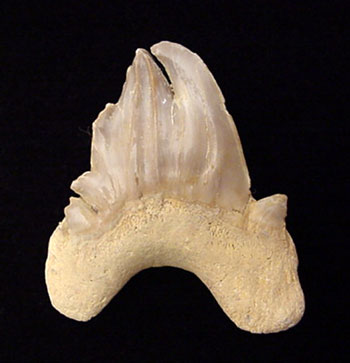
At our fossil collection services, we have witnessed how certain discoveries can captivate both experienced collectors and curious enthusiasts. Among these treasures, pathological shark teeth remain some of the rarest and most fascinating finds. They are anomalies of nature, shaped by unpredictable forces millions of years ago.
As we explore and share these specimens, we invite others to see how our passion for uncovering and preserving such fossils helps bring the prehistoric world closer to us today. For those searching for a pathological megalodon tooth for sale, these remarkable fossils offer a chance to own a piece of nature’s rarest creations.
A Natural Anomaly in Every Tooth
Pathologic Otodus teeth are formed when disruptions occur in normal tooth development. These disruptions may be caused by genetic mutations, injuries, infections, or environmental stress. As a result, the teeth can develop twisted roots, compressed or split crowns, multiple tips, or irregular enamel textures. Instead of displaying uniform shapes, they can become rare examples of nature’s unpredictability.
Each deformation becomes a unique creation. Collectors often say that these teeth appear more like sculptures formed by time than ordinary fossils.
Scarcity Rooted in Fragility
Their rarity can be explained not only by their unusual shapes but also by their fragility. Pathologic teeth were more likely to break during the shark’s lifetime. After death, their fragile state often prevented them from surviving the fossilization process. This is why complete, display-worthy pathologic Otodus teeth can be so difficult to find and are highly valued when preserved intact.
Authenticity: The Untouched Story
What makes these fossils even more special is their untouched nature. Many shark teeth in the fossil market have been repaired, restored, or artificially enhanced. Pathologic specimens from Morocco, however, are often discovered complete and unaltered. They remain authentic reminders of the prehistoric past, showing their true form without modern intervention.
Authenticity adds to their value. These pathologic teeth hold the exact shape they fossilized into, preserving evidence of prehistoric fragility in enamel and dentine.
Moroccan Origins: A Fossil Treasure Source
The Khouribga phosphate beds in Morocco are well known for producing remarkable Otodus fossils. The pathologic examples found here often display a breathtaking variety of forms. Some may have split crowns, others show compressed symmetry, while a few display root curves or textures that look almost surreal. The geological processes in this region have preserved anomalies with exceptional clarity.
Collectors value Moroccan specimens not only for their origin but also for their high-quality preservation.
Conversation Pieces in Any Collection
While symmetrical, pristine teeth can appeal to collectors, pathological ones bring something extra to a collection. Their unusual shapes demand attention, often becoming the centerpiece of a display. They can spark conversation, invite curiosity, and inspire observers to ask questions about their unusual features.
These specimens transform a fossil collection into something far more engaging, ensuring that they are noticed and remembered.
Fossils with a Past Life Story
Each pathologic tooth tells a story of survival and disruption. It reflects a specific event in the shark’s life, whether an injury, illness, or developmental misfire. These events left visible evidence on the tooth, and over time, fossilization preserved those features. Today, millions of years later, collectors can still see those moments etched into the fossil’s form.
This story gives the fossil more than scientific value. It also adds emotional depth, connecting people to an ancient life that once swam in prehistoric seas. For anyone looking at a pathological megalodon tooth for sale, part of its value lies in knowing that the fossil carries a personal history from millions of years ago.
Rarity, Authenticity and Visual Impact
Pathological teeth attract collectors for three key reasons:
● Scientific Value – They provide real examples of paleopathology, showing how ancient sharks lived, adapted, and healed.
● Display Impact – Their irregular shapes draw the eye and invite admiration. No two specimens look the same, which makes them fascinating to view.
● True Rarity – Since they are unbroken and unaltered, they present natural artistry in a way that restored specimens cannot match.
This combination makes them a highly desirable addition to fossil collections.
Curated Quality: What Collectors Can Expect
When these specimens are offered, they are often described in careful detail. Features like “split crown,” “compressed width crown,” or “unusual curvature” may be highlighted. Each listing points out completeness, lack of restoration, and authenticity guarantees. These assurances let collectors know that what they are receiving is an untouched and genuine piece of prehistory.
Elevating Fossil Collecting
The appeal of pathological teeth goes beyond aesthetics or value. For collectors, they represent tokens of nature’s unpredictability. They show that life was not always flawless and that unique variations often tell the most compelling stories.
Pathologic teeth also highlight the connection between science and art. They can inspire wonder while also providing insight into paleontology. A single specimen can embody resilience, adaptation, and transformation.
Final Thoughts
Pathological Megalodon (Otodus) teeth should be seen as rare treasures shaped by disruption, preserved despite fragility, and admired for authenticity. Discovered in the phosphate-rich fields of Morocco, they differ from ordinary fossils through their unusual forms and unique stories.
They are more than remnants of prehistoric sharks. They are deviations preserved in stone, rare creations that blend science with artistry. Each one represents an unforgettable moment of ancient survival.
For collectors, these fossils provide more than an object to display. They offer a link to the unpredictable side of nature, a fossil that refused conformity. When someone searches for a pathological megalodon tooth for sale, they are seeking not only a fossil but also a connection to prehistoric life that continues to intrigue us today.






