

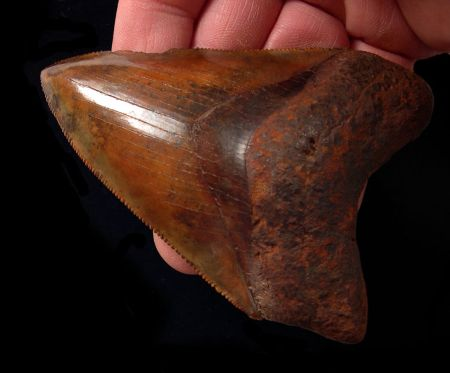
When we speak of fossil discoveries, there are few experiences more thrilling for us than uncovering a megalodon tooth found in North Carolina. These colossal relics connect our present to the reign of one of the most powerful predators that ever lived.
Yet among all fossilized shark teeth, those uncovered in North Carolina’s rivers hold a distinction that collectors and enthusiasts cannot overlook—the radiant copper-red specimens. Their vivid glow, combined with remarkable rarity and preservation, makes them treasures that we are proud to share with collectors who value both aesthetics and history.
Rivers That Painted Teeth in Copper
Ordinary fossilized shark teeth are typically black, gray, or tan, reflecting the minerals present in the surrounding sediments during fossilization. However, certain waterways in North Carolina—most famously the Meherrin River—have produced something entirely different. Over millions of years, mineral-rich riverbeds infused megalodon teeth with a brilliant copper-red hue.
This striking coloration is the result of a slow, natural process where minerals bonded with fossilized enamel. The outcome is extraordinary: a tooth that gleams with shades of deep red and copper, catching light in a way that makes it look closer to polished stone than bone. Each specimen serves as a natural artwork, formed not by human hands but by time, pressure, and chemistry.
These rivers, hidden beneath canopies of trees and often shrouded in silence, became custodians of treasures that waited millions of years to be revealed. When the waters finally surrender one of these fossils, it feels as though the river itself is offering up a secret from the depths of prehistory.
Scarcity That Fuels Desire
The allure of copper-red megalodon teeth is amplified by their rarity. Fossil hunters often spend countless hours wading through rivers, feeling along the beds with no guarantee of success. The conditions needed to produce this coloration are extremely limited in scope. As a result, not every megalodon tooth found in North Carolina carries the copper-red glow, making those that do even more prized.
Rarity is central to their value. For collectors, the combination of age, color, and preservation elevates these fossils into a category that few others reach. Each discovery represents a geological accident of sorts: the right mineral mix, the right water chemistry, and the right conditions to preserve enamel so vividly.
Every time one is unearthed, it sparks excitement not only for its beauty but also for the sheer improbability of its existence. Such finds remind us how extraordinary the natural world can be when time, geology, and history align in ways that cannot be replicated.
Fossils Frozen in Time
Color is only part of what makes these fossils exceptional. Many copper-red megalodon teeth from North Carolina are preserved with remarkable detail. Serrations remain sharp, roots are intact, and enamel appears strikingly clear. This preservation offers both scientific insight and collector appeal.
River conditions in the region have acted like protective vaults, slowing erosion and guarding against the wear that often affects fossilized teeth. As a result, specimens frequently display the kind of fine details that provide paleontologists with evidence of how these massive sharks lived and fed.
Collectors admire this preservation as well. It allows each fossil to retain the presence of a formidable predator, even millions of years later. In fact, a megalodon tooth found in North Carolina is often as remarkable for its anatomical sharpness as for its copper-red glow. Such fossils stand as both relics of natural history and as works of art shaped by time.
Trusting the Source
Because of their rarity and desirability, questions of authenticity naturally arise. Genuine copper-red specimens almost always trace their origin to the Meherrin River and other nearby waterways. Experienced fossil specialists scrutinize each tooth, looking for indicators of authenticity such as natural mineral patterning, preserved serrations, and unaltered enamel.
This verification process is essential, ensuring that collectors acquire fossils that are both genuine and responsibly sourced. Unlike artificially colored specimens or reproductions, authentic copper-red fossils carry the assurance of being actual geological and historical artifacts.
Trust is essential here. When a collector chooses a fossil that has been responsibly sourced and carefully authenticated, they are not simply acquiring an object—they are receiving a piece of prehistory that can be confidently displayed, studied, and admired for generations.
Caring for a Prehistoric Treasure
While these fossils are millions of years old, their beauty can be vulnerable to modern conditions. Collectors who wish to maintain their brilliance need to take thoughtful care:
● Avoid direct sunlight. Prolonged exposure can cause the distinctive copper-red glow to fade.
● Handle with care. Clean, dry hands are best, as oils, dirt, or moisture can damage the enamel or wear down serrations.
● Store with protection. Cushioned cases or padded displays help guard against chips, cracks, and scratches.
Caring for such a specimen is more than a matter of preservation—it is a way of honoring the incredible journey the fossil has taken. From the mouth of a massive shark to the bed of a prehistoric river and finally into human hands, every stage of its history deserves respect.
Holding History Without the Hunt
Not everyone can journey into the rivers of North Carolina to search for fossils. Yet curated fossil collections make it possible for enthusiasts to own authentic copper-red megalodon teeth. These collections bring together carefully sourced and verified specimens, offering access to a treasure that would otherwise remain buried beneath riverbeds.
For collectors, acquiring such a specimen is more than expanding a display shelf. It is a way of holding onto something that has survived across epochs. Each fossil embodies both the power of a prehistoric predator and the geological artistry of nature itself. Displayed in a home, office, or museum, these fossils command attention and spark conversations about the mysteries of our planet’s past.
A Glow That Endures Through Time
The copper-red megalodon teeth of North Carolina remain some of the most extraordinary fossils known today. Their unique glow is the result of mineral-rich rivers, their rarity sets them apart in the fossil world, and their preservation captures extraordinary anatomical detail.
Every specimen tells a layered story: once part of a colossal shark roaming ancient seas, then buried beneath riverbeds for millions of years, and now admired for its brilliance. For collectors, owning a megalodon tooth found in North Carolina is far more than acquiring a fossil. It is embracing a fragment of history that has been shaped by time, preserved by minerals, and revealed in a glow that continues to fascinate.
The enduring appeal of these fossils lies in their ability to connect us with both natural beauty and deep history. They remind us that Earth still holds secrets waiting to be discovered—and that even something as fierce as the megalodon can leave behind relics of striking elegance.






