

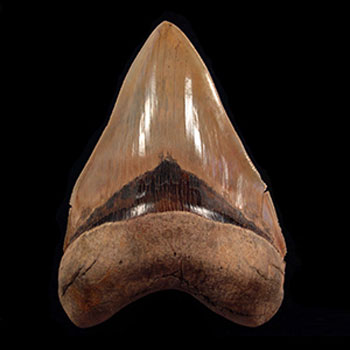
The Megalodon (Otodus megalodon) continues to capture attention as one of the most fascinating creatures in Earth’s history. As we explore these remains, we find ourselves piecing together fragments that tell an extraordinary story. Our interest lies in how this predator, with its staggering size and power, shaped the seas millions of years ago.
When we study what is left behind, we can see why most of the body disappeared while certain parts have endured. The megalodon shark skeleton is something we will never uncover in full, but what does survive still tells a compelling story.
Cartilaginous Skeletons and Why They Disappear
Unlike bony fish or land animals with rigid skeletons, sharks are part of a group known as Chondrichthyes. Their internal framework is made of cartilage, a lighter and more flexible material. While cartilage helped these animals move through the water with ease, it was not built to survive across millions of years.
Cartilage breaks down quickly, and it does not provide the strength that minerals do in order to preserve shape. Over time, it dissolves long before fossilization can even begin. In the saltwater environments where Megalodon lived, this process was accelerated, ensuring that the skeletons could not remain.
This is why complete skeletons of Megalodon have never been recovered. The vast body, which may have stretched close to sixty feet, left no lasting record. What has survived instead are the strongest elements, the teeth and, on rare occasions, vertebral centra.
Teeth: The Dominant Evidence
Teeth are built from highly mineralized tissue. This makes them strong enough to endure pressure, erosion, and the slow build-up of sediment. Over time, they harden into fossils that still hold their triangular shape and sharp serrated edges.
The size of these teeth is extraordinary. Some measure over six inches, and rare examples have reached seven inches or more. Compared to modern Great White Shark teeth, which rarely reach three inches, Megalodon teeth are massive. Their size confirms the strength of this predator and also demonstrates its feeding ability. Studies suggest its bite force could have reached up to 180,000 newtons, far stronger than that of any living shark.
Megalodon shed teeth throughout its lifetime, replacing old ones with new ones. This constant cycle means that thousands of teeth could have been lost by a single shark, leaving behind a trail across ancient seas. Today, these teeth are found in a wide variety of settings, from riverbeds to ocean deposits. Each discovery adds another small piece to a larger picture.
What Teeth Can Tell Us
By comparing modern shark proportions to fossilized Megalodon teeth, scientists have been able to estimate body size. One method suggests that every inch of tooth height could represent about ten feet of body length. A six-inch tooth, therefore, might indicate a shark that measured sixty feet long.
This approach is not exact, as placement of the tooth in the jaw may affect size estimates, but it remains one of the most reliable tools available. Since skeletons are absent, these calculations allow us to imagine the scale of this predator with more accuracy.
Vertebral Fossils: Rare and Invaluable
Teeth are common, but vertebral centers are not. When they are found, they provide unique insights that teeth alone cannot give. Vertebrae can show growth rings, which function like those of trees, allowing researchers to estimate age and growth patterns. They can also suggest how many vertebrae the shark may have had.
Important finds illustrate this point. In Belgium, more than 150 centers were discovered, with diameters ranging from 55 millimeters to 155 millimeters. In Denmark, another collection of 20 centra included examples as large as 230 millimeters. These finds give us rare opportunities to study growth rates and developmental details.
Even so, these discoveries remain incomplete. They represent only parts of the spinal column. No articulated backbone has ever been preserved, and the cartilage that held everything together disappeared long ago. These fragmentary pieces remind us why the megalodon shark skeleton will never be fully revealed.
What Vertebrae Can Contribute
Teeth provide evidence of size and feeding strength, but vertebrae contribute a view of life history. By examining the growth rings, researchers can estimate how quickly Megalodon matured, how long it may have lived, and how growth phases might have shifted throughout its life.
These details are critical for understanding how the shark interacted with its environment. They also help in reconstructing how it may have reproduced, hunted, and grown to such an extraordinary size. Even when fragmentary, vertebral fossils remain a key part of piecing together the animal’s history.
The Puzzle of Incomplete Remains
The absence of cartilage in the fossil record has forced scientists to work with limited evidence. Comparisons with living relatives, such as the Great White Shark, have been used to reconstruct body shapes. These reconstructions are informed guesses, based on what is available rather than complete remains.
This challenge highlights the difference between sharks and other ancient creatures. Dinosaurs, with their bony skeletons, have left behind entire articulated bodies. Megalodon, in contrast, left only the most complex elements. That difference explains why knowledge about this predator is both remarkable and incomplete.
Why These Remains Still Matter
Though the record is incomplete, it still carries enormous scientific and cultural value. Teeth reveal size, bite power, and feeding habits. Vertebrae, though scarce, demonstrate growth and development. Together, these elements form a mosaic of information that helps reconstruct the life of one of the largest predators ever to exist.
The abundance of teeth also allows scientists to track global distribution. They have been discovered on nearly every continent, showing how widespread Megalodon once was. This range underscores the role it played in shaping marine ecosystems.
Conclusion: What Survives of a Giant
Megalodon’s cartilaginous skeleton explains why no complete body has been recovered. Cartilage cannot withstand the passage of time, leaving behind only the most complex structures. The fossil record reflects this reality: abundant teeth, rare vertebrae, and little else.
Yet even these fragments are enough to tell an extraordinary story. Teeth display strength and scale, while vertebrae reveal growth and development. Combined, they allow us to understand a predator that shaped ancient seas millions of years ago. The complete megalodon shark skeleton may never be uncovered, but what survives continues to fuel science and imagination. As one paleontologist once observed, “In every tooth lies the shadow of the giant it once fed.”






