

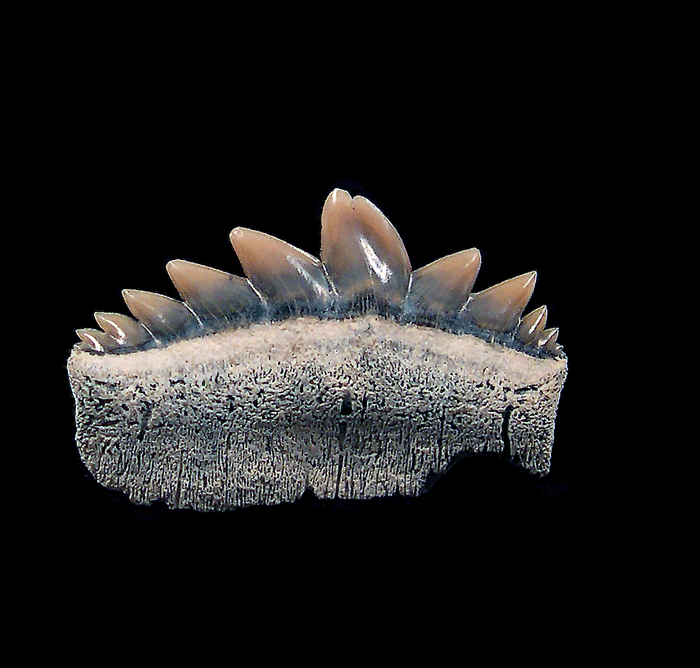
Have you ever held a piece of deep-sea history in your hands? If not, you're in for something special. Cow sharks are ancient creatures, and their teeth are unlike anything found in today’s oceans. When you come across a fossilized Cow Shark Tooth, you're not just looking at a relic. You’re connecting with a moment frozen millions of years ago.
Let’s explore what makes these teeth so rare and why fossil lovers everywhere hunt for them with such passion.
Cow Sharks. Prehistoric Survivors of the Sea
Cow sharks belong to one of the oldest shark families on Earth. These sharks still exist today, but they trace their origins back over 200 million years. Unlike modern sharks, they have six or seven gill slits, and their teeth are filled with rows of strange, comb-like cusps.
Every Cow Shark Tooth reflects that ancient design. It’s not sharp and pointed like a great white’s. It’s wider, rougher, and clearly built for tearing and crushing. That distinctive shape is part of what makes them so unforgettable.
It’s fascinating how their ancient features have remained unchanged for so long.
Time Adds a Powerful Story to Each Tooth
Most cow shark teeth found today come from fossil beds that are millions of years old. These include layers from the Paleocene, Eocene, and even the Late Cretaceous. That means some are older than the dinosaurs' extinction.
Each fossilized Cow Shark Tooth has survived intense geological forces. Over time, mineral-rich waters replaced the organic material, preserving it in stone. But full, undamaged teeth are extremely rare. Partial or broken specimens are far more common.
So when you find a complete one in pristine condition, it's a rare glimpse into an ancient underwater world.
Where It's Found Matters More Than You Think?
Some fossil locations are more productive and famous than others. Sites like the Lee Creek Mine in North Carolina, Sharktooth Hill in California, or the phosphate mines in Morocco and Chile are known for their rare finds.
Due to regulations or mining closures, many of these places are now off-limits. That’s why a Cow Shark Tooth from these specific sites is especially valuable. It may be one of the last from that region ever unearthed.
It’s not just about age. It’s also about access.
A Tooth Unlike Any Other
Cow shark teeth are visually striking. Most fossils display multiple pointed cusps lined up in a row, making the tooth resemble a small, rugged comb. Some can have as many as 15 cusps depending on the species and jaw position.
No two Cow Shark Tooth fossils are the same. Some are symphyseal (center-jaw) teeth, while others come from the lateral rows. Some even show signs of pathologies—misshapen or double cusps—that make them especially interesting to collectors.
These unique shapes are part of what makes every find exciting.
Natural Colors Make Each Tooth Stand Out
One of the most fascinating features of these fossils is their color. Unlike modern shark teeth, which are usually white or gray, a fossilized Cow Shark Tooth might be blue, brown, golden, or even jet black. These colors come from the minerals in the sediment surrounding the tooth as it fossilized.
The color not only adds to the beauty. It also gives clues about the tooth’s origin and burial conditions. Rich blues may point to phosphate-rich soil, while dark blacks can suggest iron or manganese content.
That’s why the look of each fossil is as unique as its story.
Why Age Equals Value?
When a tooth has survived for over 50 million years, it holds a special kind of weight. A fossil from the Cretaceous or Paleocene doesn’t just carry biological value. It also holds historical and scientific importance.
A Cow Shark Tooth from this period gives insight into how marine life evolved after the mass extinction that wiped out the dinosaurs. It's more than a fossil. It’s evidence of survival, change, and deep Earth history.
Owning such a piece means owning a small slice of deep time.
How Collectors Judge Quality?
Collectors look for several features when hunting for rare fossils. These include complete structure, sharp cusps, thick roots, and strong coloration. Teeth with full symmetry or rare positions, like symphyseal teeth from the center of the jaw, are especially prized.
A premium-grade Cow Shark Tooth will often have zero damage, clear definition between cusps, and an unbroken root base. Pathological examples, where nature took a strange turn, are also highly collectible.
That’s why each fossil is reviewed carefully before it makes it into a serious collection.
Access Is Shrinking Fast
As fossil-hunting laws tighten and more regions are protected or closed to collecting, the number of new specimens entering the market has decreased. This means the fossil market now depends heavily on old collections or remaining dealer stock.
When you do see a legally and ethically sourced Cow Shark Tooth for Sale, it's likely part of a very limited supply. Once it’s gone, it may not come back, especially not from the same layer or site.
That limited availability increases both value and urgency.
Not Everything Online Is Genuine
It’s important to be cautious when shopping online. Replicas and fake fossils are becoming harder to detect. Some sellers also mislabel or exaggerate the origin of the specimen.
To make sure a Cow Shark Tooth is authentic, always look for:
● Clear provenance (location and formation)
● Detailed photos of both crown and root
● Authenticity guarantees or certificates
● Transparent seller history or reviews
A genuine fossil is always worth the extra research and attention.
How to Show Off Your Find?
Once you own a rare fossil, it deserves a good display. Some collectors use small acrylic stands with labels. Others opt for shadow boxes or glass domes. Lighting helps highlight fine details like cusp ridges and texture.
A well-displayed Cow Shark Tooth can easily become the centerpiece of a fossil shelf or even a living room conversation starter. It invites curiosity, admiration, and deeper interest in Earth’s ancient past.
It’s not just a specimen. It’s a story on display.
A Tooth That Spans Eras
What makes these fossils so special is not just their rarity. It’s their ability to connect the past to the present. Long before humans walked the Earth, cow sharks roamed the seas. Their teeth survived ice ages, shifting plates, and natural disasters.
Each Cow Shark Tooth carries more than scientific data. It carries emotional weight. It’s a rugged reminder that time flows, nature adapts, and some things endure far beyond their age.
That kind of story never gets old.
Why Some Teeth Sell So Fast?
With rising interest in natural history and fossil collecting, it’s no surprise that a high-quality Cow Shark Tooth for Sale doesn’t stay available for long. Enthusiasts, scientists, and hobbyists alike all compete for the rarest and best-preserved examples.
And as we’ve discussed, the combination of limited supply, unique aesthetics, and deep history makes each fossil an opportunity—not just a purchase.
If you see one you love, don’t wait too long.
CTA: Ready to Own a Piece of Prehistoric Mystery?
Browse trusted collections and discover a Cow Shark Tooth for Sale that fits your fossil dreams.
Explore now—before it disappears into another collection forever.
Keep Learning. One Fossil at a Time
The world of fossils is vast, and this is just the beginning. Stay tuned to our blog for more on rare species, collecting tips, and the stories behind ancient finds. You never know when you’ll come across the next perfect Cow Shark Tooth.






