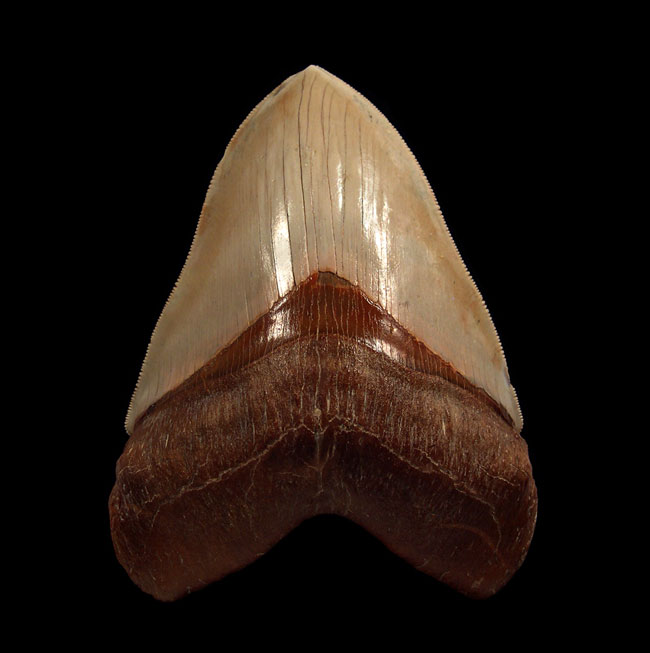
Some fossils tell a quiet story. Others stop collectors and scientists in their tracks. The Megalodon tooth discovered in Chile belongs to the second kind. At seven and one-eighth inches, this specimen stands out as the biggest megalodon tooth ever found in the region. Its incredible size and condition speak for themselves. While most fossil finds offer a glimpse into prehistory, this one reshaped the conversation. It left no doubt that the Chilean coast once belonged to giants. And it gave both researchers and serious fossil collectors a new reason to pay close attention.
Fossils Hidden Beneath Ancient Chilean Seas
Millions of years ago, Chile’s coastline was home to thriving marine ecosystems. As oceans shifted and retreated, layers of sediment captured the remains of creatures that once swam freely. Among them, the Megalodon ruled without question. The tooth found in Chile came from these preserved marine layers. Its perfect shape, natural color, and intact edges reveal more than just the power of time. They demonstrate that the conditions in the region enabled this tooth to survive without significant damage.
Fossil hunters who uncovered it worked with focus and care. They searched proven layers and understood what to look for. When they came across this tooth, its remarkable preservation immediately stood out. Unlike many large teeth found in lesser condition, this one did not need restoration. It told a story of strength, age, and unmatched size.
The Tooth That Sparked New Scientific Questions
The biggest megalodon tooth, measuring over 7 inches, does more than draw attention. It challenges what we think we know. This size means the shark could have reached 60 feet or more. That fact alone invites new questions.
● What type of prey supported predators of this scale in Chilean waters?
● Could Megalodons in southern regions grow larger than others?
● Does this reveal a broader hunting range than once believed?
Experts now view the fossil not as a one-off event, but as a potential signal that more discoveries may follow. Chile’s coast has clearly earned its place among the world's most valuable marine fossil sites.
What Makes Collectors Value This Specimen
In the fossil trade, condition and authenticity matter just as much as size. This Megalodon tooth has garnered interest from collectors worldwide for several key reasons.
● Its size stands as rare even among other large teeth.
● Its preservation shows natural strength with minimal wear.
● Its root and enamel remain undamaged and sharp.
This fossil raised the standard. Collectors now use it as a model to judge future finds. It sets a new bar for valuation, rarity, and scientific interest. People now look at Chilean fossils with greater interest than ever before.
Chile’s Role in the Megalodon’s Timeline
Until recently, regions like North America and parts of Europe received the most attention for Megalodon discoveries. That changed when this tooth came to light. Chile now plays a bigger role in understanding the species’ global spread. Researchers now consider the country a key location for future exploration.
This shift also changes the way experts map the movement of prehistoric marine predators. With this find, Chile has proven it holds more than just isolated fossils. It may hold an entire chapter of Megalodon history still waiting to be unearthed.
Final Words
The seven-and-one-eighth-inch Megalodon tooth from Chile earned global attention for good reason. As the biggest megalodon tooth ever found in the country, it deepened our understanding of these ancient sharks. It also gave fossil collectors a rare and unmatched specimen to admire and learn from. This discovery did not just add another tooth to a case. It advanced science, elevated the value of South American fossils, and gave us all a reason to look more closely at what Chile has yet to reveal.
Footnote
This seven-and-one-eighth-inch Megalodon tooth underscores Chile’s significance in marine fossil records and provides collectors with a powerful new benchmark for size, preservation, and scientific value.