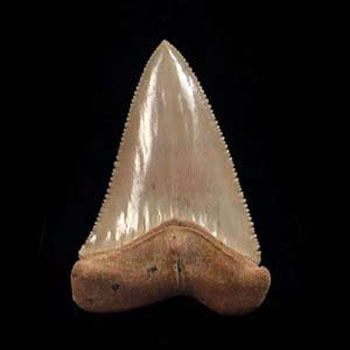
The allure of ancient oceans continues to inspire fossil hunters, with few finds sparking as much excitement and rivalry as shark teeth. These remnants come from one of the sea’s most formidable predators, and their appeal lies not only in their legacy but also in their rarity, striking preservation, and dramatic appearance. We’ve seen collectors worldwide pursue the iconic coloration, triangular form, and sharp serrations that make a great white shark tooth a true collector’s prize.
Let’s explore why these teeth are so rare—and why they continue to inspire awe among serious fossil collectors.
The Science Behind the Scarcity
Great white sharks are among the most iconic marine predators, but finding their fossilized teeth in excellent condition isn’t easy. Despite sharks shedding thousands of teeth in their lifetime, the vast majority never fossilize. Most decay or are destroyed before they have a chance to mineralize into a fossil. For a tooth to transform into a fossil, it must be quickly buried in the right sediment under very specific geological conditions—conditions that are relatively rare.
Even when these circumstances align, erosion, shifting seabeds, and centuries of pressure can damage or obscure the teeth. As a result, a fully intact great white tooth with clear serrations, sharp edges, and solid enamel becomes a prized find, often commanding attention from collectors across the globe.
Preservation Is Everything
What separates a display-worthy tooth from a forgotten fragment is the preservation quality. Tooth color, serration sharpness, and root integrity are essential characteristics for fossil hunters. The enamel should show minimal wear, the root should be full and undamaged, and the blade should retain as much of its original shape as possible.
Color is a major factor, too. Fossilized teeth from great whites often display striking hues ranging from off-white to grey, tan, or even jet black. These variations are a result of the mineral content in the sediment where the tooth fossilized. This means every great white shark tooth is not only a piece of ancient history but a natural work of art, created over millions of years.
Where the Hunt Leads: South Carolina and Beyond
One of the most exciting places to find great white shark teeth is along the rivers and coastal sites of South Carolina. The region is a hotspot for fossil hunters because of its sediment layers that date back millions of years. Tidal rivers and dredged banks in the state often reveal remarkable finds, and many collectors travel from far and wide to sift through gravel bars and underwater beds in search of that one extraordinary tooth.
South Carolina isn’t the only location, but it’s one of the most productive and accessible for collectors hoping to add an authentic, well-preserved specimen to their collection. Other regions like the coasts of Florida and California occasionally yield significant finds, but environmental and legal limitations make hunting more challenging in those states.
The Shadow of the Megalodon
You can’t talk about great white shark teeth without acknowledging the prehistoric giant that came before them: the megalodon. Known for its massive, serrated teeth and unrivaled size, the megalodon has become the ultimate symbol of fossil hunting. Its teeth are often larger and thicker than those of the great white, making comparisons inevitable.
However, what makes great white shark teeth so special is the refinement of their form. While megalodon teeth overwhelm with size, great white teeth impress with precision—razor-sharp edges, symmetrical shapes, and an aggressive taper that seems engineered for slicing. For collectors, that balance of beauty and brutality is where the obsession begins.
Pop Culture and the Power of the Jaw
Few movies have had the cultural impact of Jaws, and the great white shark's reputation was cemented with its terrifying roar on cinema screens. Since then, public fascination with the species—and its fossils—has soared. The dramatic portrayal of this apex predator has transformed great white shark teeth from mere relics into pop-culture artifacts.
Collectors often cite the emotional thrill of owning a tooth from the very species that inspired such awe in movies, books, and documentaries. The association with Jaws has elevated the great white shark tooth from an ocean fossil to a storytelling object—a fossil with narrative weight and primal appeal.
Every Tooth Has a Story
The beauty of fossil collecting is the story each specimen carries. A great white tooth may have come from a shark that roamed the ocean two to five million years ago, battling prey and predators alike. It may have rested in seabed silence for ages, only to emerge one day, still sharp, still fierce.
No two teeth are the same, and that uniqueness is what fuels the collector’s desire. The subtle curve of a blade, the way sediment colored the enamel, the rare full root with unbroken ridges—each detail adds to the allure. These aren’t just ancient tools of predation; they’re physical echoes of prehistoric life.
Fossil Hunting as a Passion, Not Just a Hobby
For serious collectors, hunting great white shark teeth isn’t a weekend pastime—it’s a passion rooted in exploration, science, and appreciation. The hunt is part research, part instinct, and part pure luck. Each fossil adds value to a growing collection, but also knowledge, perspective, and pride.
The online fossil market offers access to authenticated, museum-quality specimens, allowing collectors to invest confidently. Knowing that a tooth was found in a specific formation, that it has been examined for authenticity, and that it has the characteristics of a rare find is part of what drives interest. The sense of owning a real piece of prehistoric marine history makes every acquisition meaningful.
Why These Teeth Continue to Rise in Value
As the fossil market grows and more collectors join the hunt, the value of well-preserved great white shark teeth continues to rise. The limited availability, increasing demand, and appeal to both beginner and advanced collectors all contribute to this upward trend.
Additionally, legislation in some fossil-rich regions is tightening, limiting access to private and public fossil-hunting grounds. This only adds to the rarity and value of what’s already been discovered, making authenticated and fully preserved specimens even more desirable.
Curated for Collectors
Whether you’re new to fossil collecting or refining an existing display, selecting the right great white shark tooth means knowing what to look for. Size is just one part of the equation. Serration definition, symmetry, enamel condition, and color all play a role in determining value. Collectors who focus on quality over quantity often find their collections more rewarding and respected among peers.
Many curated online collections allow fossil enthusiasts to browse museum-grade specimens, compare characteristics, and make informed purchases. It’s not just about acquiring a tooth—it’s about acquiring a conversation piece, a historic artifact, and a personal trophy from the depths of time.
Conclusion
The fascination with great white shark teeth runs deeper than their fearsome shape or cinematic legacy. These rare fossils combine nature’s raw force with geological artistry, turning every specimen into a captivating prize. From the sediment layers of South Carolina to the shadows cast by the megalodon, every tooth carries a story worth discovering. We’ve seen how preservation, provenance, and passion all intersect in the hands of collectors who seek something more than just a fossil—they seek history itself. A great white shark tooth isn’t just a collectible—it’s a claim to a prehistoric legacy.
Explore authentic great white shark teeth and elevate your collection with rare, museum-grade fossils sourced from legendary locations. Start collecting now.