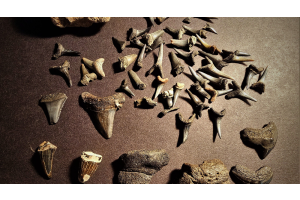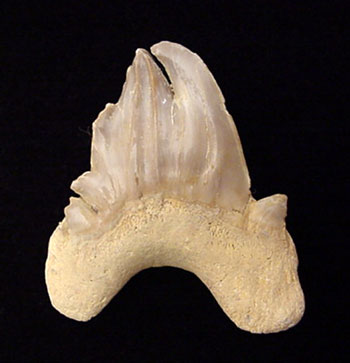
Shark tooth collecting often centers on sharp, symmetrical specimens—but that’s only part of the fascination. Increasingly, collectors are drawn to the twisted, misshapen, and warped anomalies known as pathological teeth. These aren’t defects—they’re rare fossils shaped by prehistoric trauma, genetic variation, or environmental stress. We've seen rising demand for these so-called “flawed” specimens, especially among collectors seeking fossils with raw history and unmistakable individuality. A pathological megalodon tooth for sale isn’t just a fossil—it’s a striking relic of survival.
Let’s explore why these rare deformities are redefining value in the fossil market.
The Drama Behind Every Twist and Curve
Pathological teeth aren’t common, and that’s exactly the appeal. Imagine holding a tooth that grew with a twist or forked root, possibly due to trauma, infection, or jaw deformity in a shark that ruled the oceans millions of years ago. These distortions weren’t designed to attract collectors—but now, they do.
The appeal lies in the story. These fossils scream survival, mutation, and chaos. Unlike regular specimens, pathological teeth didn’t conform to nature’s usual blueprint, and that deviation is exactly what fuels their allure. Every groove and misshape becomes a talking point, sparking questions about the life of the predator it belonged to.
A Market Drawn to Scarcity
The rarity of pathological fossils is undeniable. Most fossil hunters will sift through thousands of teeth before finding even one with a unique pathology. These are not mass-market pieces. They are finds that raise eyebrows at trade shows and become the crown jewel of personal displays.
Collectors aren’t just drawn to rarity for bragging rights—they’re investing in something that resists replication. Unlike the symmetrical Megalodon teeth frequently featured in collections, a pathological fossil carries a one-of-a-kind identity. Once it’s sold, there isn’t another like it waiting in the next crate.
That’s why phrases like pathological megalodon tooth for sale catch immediate attention from serious fossil enthusiasts scanning the marketplace.
Not Just Teeth—Narratives in Fossil Form
Pathological shark teeth bring with them more than physical deformities—they bring stories. Was the root twisted due to an old injury? Did the crown fuse oddly because of environmental stress? Did the predator suffer a developmental anomaly? Each tooth holds speculation and history, making it far more than just an object of display.
This narrative quality transforms a fossil into a conversation piece. It doesn’t sit quietly behind glass—it demands to be examined, debated, admired. And that emotional connection is what pushes collectors to seek out these oddities over more common, textbook-perfect examples.
From Curiosity to Collector Obsession
There’s been a noticeable shift. Where once pathology was considered a curious footnote, it’s now a driving category in its own right. The demand for a pathological megalodon tooth for sale has surged, and collectors are no longer content with filling their shelves with uniform shapes. They want twists. They want forks. They want roots that look like gnarled branches and serrations that resemble jagged scars.
This shift is reflected in fossil marketplaces and specialty dealers who now feature pathological collections front and center. What was once seen as an oddity has become a targeted search term, as more collectors begin to understand that the rarity and unpredictability of pathology add both emotional and market value.
Why These Teeth Command Higher Prices
While symmetry still holds strong value in traditional grading, pathological teeth operate under a different metric. Here, it’s the unpredictability that drives price. A forked root, a spiraled crown, a distorted enamel curve—all these features can push a fossil’s value well above that of a similar-sized normal tooth.
The pricing structure recognizes that these teeth are nearly impossible to find in multiples. If a pathological tooth is available now, it may be years before another like it surfaces again. Collectors are aware of that timeline. That’s what makes them act quickly when they see a unique specimen offered.
You Can’t Replicate What Nature Distorted
Modern reproductions can recreate perfect specimens down to the finest detail. But they can’t copy pathology. These distortions are wild, organic, and unpredictable. That’s part of the thrill for collectors—knowing their pathological fossil can’t be duplicated or faked convincingly.
We see collectors gravitating toward pieces that feel truly ancient and untamable. That’s exactly what these teeth offer. They embody a kind of primal authenticity that polished, symmetrical pieces sometimes lack. Pathology brings rawness, and that rawness feels honest.
The Emotional Pull of the Imperfect
There’s a growing emotional appreciation for these teeth. In a collection full of near-perfect Megalodon fossils, it’s the twisted, broken, or malformed one that draws the longest stares. Maybe it reminds us that perfection isn’t always the goal—that the real interest lies in variation, chaos, and survival.
Collectors aren’t just chasing teeth; they’re chasing meaning. And a pathological fossil—be it from Otodus, Megalodon, or another prehistoric shark—often carries a heavier, more fascinating narrative.
Owning Something Wild and Unrepeatable
When someone finds a pathological megalodon tooth for sale, they aren’t just buying a fossil. They’re securing a piece of natural history that defies duplication. There’s confidence in knowing that your collection includes a tooth that no one else has, one that probably emerged after a lifetime of ocean battles or a rare genetic event.
Collectors tell us time and again—it’s these unique anomalies that breathe life into their shelves. These aren’t just objects; they are proof that nature occasionally strays from the blueprint. And those deviations are what elevate a collection from standard to extraordinary.
Conclusion
A pathological megalodon tooth for sale isn’t just a listing—it’s an opportunity. For collectors who thrive on individuality, rarity, and the kind of fossil that sparks questions and awe, these teeth are unmatched. They’re wild. They’re rare. And they’re in high demand for a reason. We’ve watched their value rise, not just in price, but in collector prestige and emotional pull.
So, when you encounter one of these twisted relics, don’t overlook it. It may just be the most unforgettable piece your collection will ever hold.
Explore the rare beauty of prehistoric anomalies—add a unique pathological megalodon tooth to your fossil collection today.