

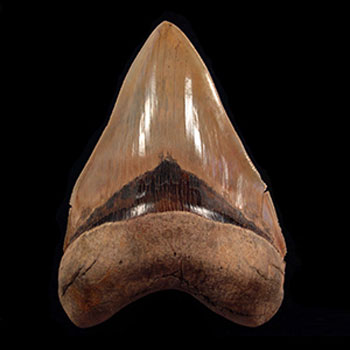
At our organization, we often help others explore the fascinating world of prehistoric life, and one of the most common questions we encounter is why a megalodon shark tooth can be found in so many parts of the globe. As we look closer, the answer becomes clear.
These fossils tell a story shaped by Megalodon’s global presence in ancient seas, the paleogeographic changes of Earth, and the natural processes that preserved and revealed these teeth over millions of years. By examining the fossil record that has been carefully collected and studied, we are able to see how these forces worked together to create such a wide distribution.
Megalodon’s Range and Tooth Shedding
Megalodon was not confined to a single ocean basin or coastline. The fossil record shows that it lived during the Miocene and Pliocene, and it appears to have had a nearly worldwide marine distribution. This massive shark seems to have inhabited coastal waters across the globe, leaving behind evidence of its presence in the form of fossilized teeth.
Like all sharks, Megalodon was continuously shedding and regrowing teeth throughout its life. That natural process meant that millions of teeth were dropping to the seafloor. Because teeth are incredibly durable compared to bones, they were far more likely to survive long enough to fossilize. The combination of an expansive range and constant tooth shedding explains why the fossil record is filled with these remains, which continue to capture the imagination of fossil hunters today.
Paleogeography and Ancient Seas
The spread of Megalodon teeth is also closely tied to paleogeography. During the Miocene and Pliocene, Earth’s landmasses and seas were not arranged in the same way they are today. Shifting coastlines and higher sea levels often created shallow marine environments that became home to large predators such as Megalodon.
The fossil record confirms that significant deposits of Megalodon teeth have been uncovered in places like Florida, Georgia, North Carolina, South Carolina, California, Chile, Peru, and Indonesia. These areas, now either inland or near modern coastlines, were once covered by seas where Megalodon thrived. In California, Sharktooth Hill remains one of the richest fossil beds, providing a remarkable glimpse into the ancient ecosystems that supported this giant predator. As continents shifted and sea levels rose and fell, new regions became submerged and later exposed. That process helps to explain why Megalodon teeth are now discovered in such a wide range of modern environments.
Ocean Currents and Fossil Transport
Ocean currents and sediment movement also need to be considered when looking at the global spread of Megalodon teeth. When Megalodon shed its teeth, they could be moved from their original resting places by waves and currents before they were finally buried in sediment. Over time, this transport would have redistributed the teeth, concentrating them in fossil-rich beds or along ancient river channels.
Although the fossil record does not provide specific details of every current system, the discovery of a megalodon shark tooth in varied regions strongly suggests that water movement played a role in scattering and collecting these fossils. Later erosion and shifting sediments exposed them again, making them accessible in coastal deposits, riverbeds, and shallow layers where they could be uncovered by collectors.
Fossil Distribution Across the Globe
The global record of Megalodon teeth highlights just how extensive their distribution truly is. Florida and Georgia have long been recognized as regions where coastal waters once hosted large populations of marine life, leaving behind abundant fossils. North Carolina’s Lee Creek site is another location that has yielded a rich supply of specimens. South Carolina, with its rivers and coastal beds, continues to be a favored destination for fossil hunters, while Sharktooth Hill in California remains one of the most famous fossil beds in the world.
Outside of North America, South America has contributed significantly to the record, with Chile and Peru providing important localities where marine deposits contain numerous specimens. Indonesia adds further depth to the global picture, offering yet another region where Megalodon teeth have been uncovered. Collectors and scientists consistently note that Megalodon fossils can be found in nearly all coastal waters worldwide. This reinforces the idea that the shark’s wide habitat, combined with continuous tooth shedding and favorable depositional environments, produced an extraordinary fossil record.
Geological Processes and Fossil Preservation
Once Megalodon teeth were shed, geological processes determined whether they would survive long enough to become fossils. Quick burial in marine sediment greatly increased their chances of fossilization. Over millions of years, tectonic uplift, erosion, and fluctuations in sea levels exposed these fossil-bearing layers once again.
This sequence of events explains why Megalodon teeth are often discovered in places where seas have long since disappeared. Fossils that were once deeply buried are now visible on dry land or in shallow riverbeds, offering clear evidence of a predator that once dominated the oceans.
Why the Distribution Is So Wide
The reasons for the wide distribution of Megalodon teeth lie in several interconnected factors. Megalodon lived across oceans worldwide, ensuring that no single region was favored above another. Its natural biology, which included the constant shedding of teeth, created a massive supply of fossils that had the opportunity to be preserved. Paleogeographic conditions during the Miocene and Pliocene exposed large areas of land to marine environments where fossils could form. Ocean currents carried and concentrated teeth before burial, while geological forces eventually exposed them millions of years later.
When viewed together, these factors make it clear why Megalodon teeth appear in so many different parts of the world. They are the result of a species with a global reach, a biology suited to leaving countless fossilized remains, and geological processes that revealed them for discovery today.
A Global Legacy Preserved in Stone
Megalodon teeth serve as lasting reminders of ancient oceans and the creatures that once thrived within them. Their wide distribution shows how this shark occupied vast stretches of the globe while also illustrating how Earth’s shifting seas and powerful geological forces shaped the fossil record.
Each fossil tooth provides a direct link to a world that existed millions of years ago. These remains are not only relics of a predator but also valuable records of Earth’s dynamic history. The presence of these fossils across continents is the result of countless shed teeth, expansive seas, oceanic currents, and the geological changes that exposed them to us today.
When asking why a megalodon shark tooth can appear in so many places, the answer lies in a blend of biology, paleogeography, and geology. Together, these factors created one of the most widespread fossil records known, ensuring that Megalodon’s legacy remains visible across continents and coastlines. As one fossil collector once remarked, “Every tooth is like a message from the past, reminding us that the oceans once belonged to giants.”






