

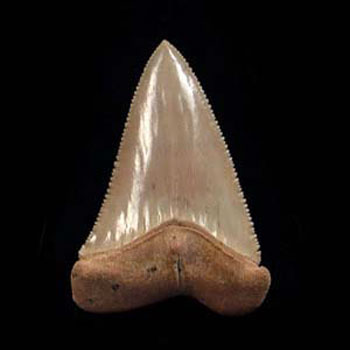
Shark teeth have fascinated people for centuries, but few specimens capture the imagination as much as those from the Great White shark. These apex predators inspire awe, fear, and curiosity, and their teeth are among the most prized items in both fossil collections and private displays. While people often think of sharks as terrifying hunters, collectors see their teeth as something far more: a rare and tangible connection to one of the ocean’s most powerful creatures. In fact, many collectors willingly pay thousands for a single tooth. But why are great white teeth so valuable, and what makes them stand out in the world of fossil trading and marine artifacts?
The Unique Appeal of Great White Teeth
One of the first things that sets Great White shark teeth apart is their sheer visual impact. Wide, triangular, and sharply serrated, these teeth are unmistakable. Unlike other species, which often have narrower or smoother teeth, Great White specimens look exactly like the kind of weapon nature would design for maximum effectiveness. The serrations along the edges resemble saw blades, capable of slicing through thick skin and bone.
Collectors love these features because they make Great White teeth both scientifically interesting and visually striking. They look like the kind of fossils that belong in a museum, and in fact, many specimens sold today are of near-museum quality. A tooth with sharp serrations intact, rich coloration, and a complete crown is rare enough to command a significant price.
Rarity and the Challenge of Sourcing
Another factor driving value is rarity. While sharks naturally shed thousands of teeth during their lifetime, finding complete, undamaged Great White teeth is not easy. Modern Great Whites are a protected species, which means that their teeth cannot simply be harvested. The majority of what is available on the market today comes from fossilized deposits or old private collections.
This scarcity makes high-quality examples harder to obtain. Fossilized teeth from South Carolina, North Carolina, Chile, and Peru are especially sought after, as these regions produce exceptionally well-preserved specimens. Collectors know that once a tooth with excellent size, shape, and preservation is gone, there’s no guarantee a similar one will turn up again soon.
A Link Between Past and Present
The fascination with Great White teeth is not just about rarity—it’s also about the history they represent. Fossil records show that these sharks have existed for millions of years, and their lineage is believed to trace back to the giant mako shark, an extinct predator. Transitional teeth—those that carry features of both ancient makos and modern Great Whites—are especially valuable because they tell a story about evolution.
Collectors often compare modern specimens to fossilized ones, marveling at how tooth size and shape have changed over millennia. This direct connection between present-day predators and their prehistoric ancestors gives the teeth a timeless quality that appeals to both scientists and enthusiasts.
A Symbol of Power and Luck
Shark teeth have long been seen as more than just fossils. Ancient cultures used them as tools and weapons, attaching them to clubs and spears. In the Middle Ages, people believed shark teeth had protective properties, wearing them as necklaces to ward off poison and evil.
Today, the symbolism continues. Many people view Great White teeth as talismans of strength, resilience, and even good luck. This cultural and spiritual dimension adds another layer of appeal, giving collectors more reasons to seek out these prized specimens. A single tooth can serve not just as a fossil, but as a meaningful symbol to the owner.
Size, Color, and Condition Matter
Not all shark teeth are created equal, and collectors are very particular about what makes a specimen valuable. Size is one of the most important factors. Larger teeth come from older, more mature sharks, and they are far less common than smaller ones. A large, intact specimen in excellent condition can easily fetch premium prices.
Color also plays a role. Fossilized teeth can take on different hues depending on the minerals present in the surrounding soil and sediment. Some develop rich browns or jet-black shades, while others maintain lighter tones. Collectors often look for unusual or aesthetically pleasing colors to complement their displays.
Condition may be the single biggest determinant of value. Teeth with broken edges or missing serrations are far less desirable. That’s why complete specimens, with sharp details and no restoration or repair, are so highly prized.
Pop Culture and the “Jaws Effect”
It’s impossible to discuss the fascination with Great White sharks without mentioning their impact on pop culture. Since the release of the movie Jaws, the Great White has held a place in the collective imagination as the ultimate ocean predator. While scientists continue to emphasize that shark attacks on humans are rare, the shark’s image as a powerful hunter persists.
This cultural spotlight has fueled interest in owning a tangible piece of the creature. Collectors see Great White teeth not only as fossils but as symbols of a species that has captivated human imagination for decades. Pop culture has essentially made them even more desirable, and demand continues to rise.
Why Collectors Invest Heavily
So, why are collectors willing to pay big for Great White shark teeth? It comes down to a combination of beauty, rarity, history, symbolism, and cultural significance. A high-quality specimen is not just a fossil—it’s an artifact, a piece of natural history, and a conversation starter all in one. For some, owning a Great White tooth is the closest they can get to holding a piece of the ocean’s most iconic predator.
In addition, the market for fossils is highly competitive. As supplies of well-preserved specimens dwindle, prices inevitably rise. Collectors know this, and many see investing in high-quality shark teeth as both a personal passion and a financial decision.
The Thrill of the Hunt
Part of the excitement also lies in the search. Collectors enjoy hunting for the perfect specimen, comparing size, color, and condition before finally adding one to their collection. Many start with smaller, more common teeth and gradually work their way up to rarer and larger examples. The progression reflects both their growing passion and the increasing value of their collection.
This pursuit keeps interest alive. Each new tooth represents a new milestone, and the challenge of finding rare, top-quality specimens adds to the thrill.
A Collector’s Pride
For serious collectors, Great White shark teeth are often a centerpiece of their fossil displays. The wide, triangular crowns and razor-sharp serrations stand out immediately, drawing attention from anyone who sees them. Whether displayed in a case, worn as jewelry, or kept as a treasured personal item, these teeth carry a sense of pride and accomplishment for their owners.
In many ways, the value of a Great White tooth is about more than money. It represents dedication to the craft of collecting, appreciation for natural history, and a connection to one of the ocean’s greatest predators.
Bottom Line
Collectors pay big for Great White shark teeth because they embody rarity, beauty, cultural symbolism, and history all in one. Each specimen offers a glimpse into the life of one of the ocean’s most formidable hunters, while also connecting us to ancient traditions and modern fascinations. For those who collect, owning great white teeth is about much more than adding to a display—it’s about holding a piece of nature’s power in their hands.






