

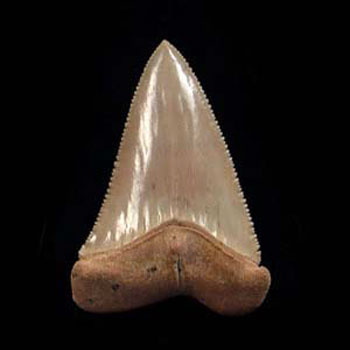
Sharks have captured human imagination for centuries, but no shark commands more fascination than the great white. These apex predators dominate the oceans not only with their size and speed but also with one of their most impressive features—their teeth. While many animals rely on claws, talons, or fangs for survival, the teeth of the great white shark stand out as extraordinary tools of adaptation. Understanding what makes them so unique compared to other predators reveals just how perfectly nature has equipped these giants of the sea. From their design to their function, great white shark teeth are unlike anything else in the natural world.
Nature’s Perfect Cutting Tools
One of the most remarkable features of a great white shark is its ability to tear through prey with efficiency. Unlike big cats, which use sharp fangs to pierce and hold, or wolves, which rip with canines, sharks rely on serrated teeth that resemble a saw blade. Each tooth is edged with small serrations that act like a row of knives, slicing through flesh and even bone with ease. This design gives the great white a clear advantage when attacking large prey such as seals or sea lions.
What makes these teeth especially powerful is their triangular shape. The wide base provides strength, while the pointed tip allows for quick penetration. This combination of design and function ensures the great white can take down animals far larger than itself, something not every predator can manage.
Constant Renewal: Teeth That Never Stop Coming
Most predators must take great care of their teeth since losing them can threaten survival. Lions, for example, rely heavily on a limited set of fangs that do not regenerate once damaged. Great whites, on the other hand, never face this problem. Their jaws hold multiple rows of teeth, and as one tooth falls out, another quickly moves forward to replace it.
This conveyor belt of teeth means a great white is never left defenseless. In fact, sharks can shed thousands of teeth over a lifetime. Each tooth lost in a hunt or broken during a bite is simply replaced by a fresh one, fully sharpened and ready for action. This system of endless renewal ensures the shark’s hunting tools remain as effective on the first day as they are decades later.
Size and Power Beyond Compare
When we think about predator teeth, size matters. Crocodiles, for instance, possess long, conical teeth designed for gripping. Tigers and lions have impressive canines, but they pale in comparison to the sheer scale of shark teeth. Some individual great white shark teeth can grow to impressive sizes, wide and thick enough to cut through prey with a single snap.
Unlike the rounded teeth of bears that must crush bone, shark teeth are thin and sharp, built for slicing rather than grinding. The size, combined with their sharp edges, allows great whites to remove massive chunks of flesh in a single bite. Few predators have evolved tools this efficient for feeding.
Built for Hunting in the Ocean
The ocean presents challenges that land predators never face. Visibility can be low, prey can move in three dimensions, and water resistance makes capturing food more difficult. The great white’s teeth have adapted specifically for this environment. Their curved shape prevents slippery prey from escaping, while the serrated edges ensure even the toughest hide is no match.
This specialization highlights why great whites are among the most successful hunters in marine ecosystems. Where other predators rely on brute strength or stealth, the shark’s teeth combine precision and force to guarantee success.
A Window Into Prehistoric Times
Sharks are often called living fossils, and for good reason. Their ancestors swam the seas long before dinosaurs walked the earth. Teeth provide the clearest evidence of this history. Fossilized shark teeth dating back millions of years show striking similarities to those of modern great whites. The serrations, triangular shape, and size have remained consistent, proof of their evolutionary perfection.
Comparing these fossils to the teeth of other predators, both past and present, reveals the uniqueness of sharks. While many species have had to drastically adapt or face extinction, sharks perfected their design early on and have remained dominant ever since.
Color and Texture: More Than Just Function
Beyond their cutting ability, shark teeth often carry striking appearances. Some fossilized great white shark teeth display natural hues of blue, brown, or gray depending on the minerals present where they fossilized. Collectors and scientists alike value these specimens not just for their rarity but for the insight they offer into geological history.
Unlike the smooth, ivory texture of mammal teeth, shark teeth can show ridges, serrations, and mineral stains that tell the story of both the shark and the sea it once lived in. This adds a layer of fascination beyond function, turning each tooth into both a weapon and a piece of natural art.
Comparing Sharks to Other Apex Predators
Predators across the animal kingdom have evolved teeth tailored to their environments. Wolves use sharp molars for shearing meat. Crocodiles use long, pointed teeth for gripping prey underwater. Big cats use canines to pierce and suffocate. But none of these tools compare to the efficiency of shark teeth.
What truly sets the great white apart is its ability to combine slicing power, endless regeneration, and ocean-specific design. While most predators must preserve and protect their teeth, sharks treat theirs as disposable, ensuring they always have a fresh arsenal ready for the next hunt.
Why Teeth Matter in Shark Survival
Without their teeth, great whites would struggle to survive. These predators do not have claws or paws to help them hold prey. They rely entirely on their jaws and teeth to secure food. The precision design of each tooth allows them to feed quickly, conserving energy and reducing the risk of injury.
Their teeth also influence their role in the ecosystem. By efficiently hunting seals, fish, and other prey, great whites help keep marine populations in balance. Their teeth, in this sense, are not just personal survival tools but key factors in maintaining ocean health.
Fascination With Shark Teeth in Human Culture
Beyond biology, humans have long been fascinated with shark teeth. Fossilized teeth are popular among collectors and often hold symbolic meaning in various cultures. Some see them as representations of power, strength, and resilience. Others simply value them as pieces of ancient history.
This cultural fascination further highlights their uniqueness. Few other predators inspire the same level of awe through a single tooth. While a lion’s fang may impress, it is the shark’s serrated, triangular tooth that sparks widespread admiration and intrigue.
Conclusion
When comparing predators across the globe, it becomes clear that none have teeth quite like the great white. From their serrated edges to their ability to regenerate endlessly, these tools are a perfect adaptation for life as an apex predator in the ocean. Their size, design, and efficiency place them in a category all their own.
While lions, crocodiles, and wolves all possess impressive dental adaptations, the shark’s teeth remain the gold standard of evolutionary design. In both function and fascination, great white shark teeth are unmatched in their ability to capture prey, inspire curiosity, and tell the story of millions of years of survival.






