

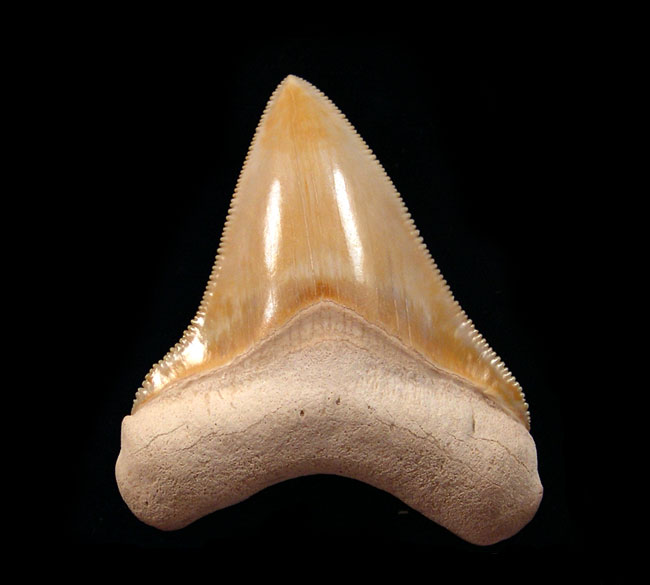
Some fossils stop you in your tracks the moment you see them. Bone Valley Megalodon teeth are among the rarest treasures. Their striking colors, deep blues, bold blacks, shimmering golds, and bright whites, make them instantly recognizable and set them apart from Megalodon teeth found anywhere else in the world. Collectors consider them masterpieces of natural history, and for good reason.
Our Bone Valley Megalodon teeth collection are not only beautifully preserved, but they also carry a story that spans more than ten million years.
A Prehistoric Predator, Frozen In Color
The Bone Valley Formation of Central Florida is best known for producing some of the most remarkable Megalodon teeth ever discovered. Dating back to the Miocene epoch (10–15 million years ago), these teeth belonged to the most powerful shark to have ever lived, the massive Carcharocles megalodon.
While Megalodon teeth are discovered across the globe, the specimens from Bone Valley stand apart for two reasons: exceptional preservation and unmatched coloration. In many cases, the enamel remains glossy and sharp, the serrations crisp, and the root intact. But it is the colors that make these fossils truly extraordinary, tones so vivid they appear almost artistic, as if painted by nature itself.
The Signature Colors of Bone Valley
Ask any fossil collector what makes Bone Valley Megalodon teeth unique, and the answer will always include their palette of colors. These teeth are known for combinations rarely seen in other fossil sites, such as:
Black & White Megs – Bold contrast that gives the tooth an unmistakable look.
Blue & White Megs – Sky-blue enamel paired with creamy white roots, one of the most sought-after combinations.
Gold & White Megs – Warm golden hues that seem to glow when held in the light.
Green, Tan, and Mixed Variations – Earthy tones with surprising depth and character.
Each tooth is unique, shaped not just by the shark it once armed, but also by the minerals and sediments that surrounded it for millions of years. Collectors often describe them as fossils with personality, each one carrying its own signature pattern and color blend.
Why the Colors Form
The colors of Bone Valley Megalodon teeth are the direct result of geological conditions unique to Central Florida. The region is rich in phosphate sands and clays, which, over millions of years, infused fossilized teeth with different minerals.
Iron oxides gave rise to golden and reddish hues.
Silica and phosphates created creams, whites, and blues.
Carbon compounds infused darker tones, such as gray and black.
The exact shades of any given tooth depended on the surrounding groundwater chemistry and mineral mix. This explains why two teeth found in close proximity can look dramatically different. The result is a collection of colors rarely duplicated in other fossil localities.
Preservation Beyond Expectation
Beyond their vibrant colors, Bone Valley Megalodon teeth are also prized for their preservation. Many specimens display:
Sharp serrations are still easily visible after millions of years.
Glossy enamel with little to no erosion.
Intact roots, often with beautiful mineralized textures.
This level of preservation, combined with striking colors, explains why Bone Valley specimens are regarded as some of the most desirable Megalodon teeth on the planet.
The Golden Age of Collecting
Seasoned collectors often refer to the “good old days” of Bone Valley collecting. During much of the 20th century, phosphate mining operations in Polk County, Florida, occasionally allowed access to their spoil piles, where fossil enthusiasts could search for teeth.
It was during this time that some of the most spectacular specimens were recovered. The black & white, blue & white, and gold & white Megs from those years became legendary among collectors, representing the very best of what Bone Valley could produce.
Sadly, those days are now largely over. Modern mining practices and safety restrictions have made access nearly impossible. The few remaining specimens from those earlier decades are now highly coveted, and finding one available for purchase has become increasingly rare.
Rarity Creates Value
The scarcity of new finds has only increased the allure of Bone Valley Megalodon teeth. Collectors worldwide seek them not only for their beauty but also for their investment value. Unlike teeth from other localities, Bone Valley specimens with exceptional colors and preservation are finite in number. Once they are gone, they are gone forever.
This rarity, combined with guaranteed authenticity and natural preservation, means that prices for high-quality specimens continue to rise. A true blue & white or gold & white Megalodon tooth is considered a centerpiece fossil, something every collector dreams of owning.
A Legacy Locked in Stone
Every Bone Valley Megalodon tooth carries with it a remarkable story, one of prehistoric oceans, powerful predators, and geological artistry. They remind us of a time when giant sharks ruled the seas and Florida was a shallow marine paradise.
They also remind us of a time not so long ago, when collectors could still walk the mine pits of Polk County and come away with treasures that seemed too beautiful to be real. That era has ended, but the fossils remain as lasting legacies.
Each tooth is not just a relic, it is a piece of natural history, geological beauty, and human discovery, all rolled into one.
Conclusion: Nature’s Most Colorful Fossils
Bone Valley Megalodon teeth stand at the very top of our fossil collection for their beauty, preservation, and rarity. Their extraordinary colors, whether black and white, blue and white, or shimmering gold, are the product of geological forces that cannot be replicated. Their scarcity ensures that they remain among the most sought-after fossils ever discovered.
For collectors, owning a Bone Valley Megalodon tooth is like holding a piece of art created by nature over millions of years. For scientists and educators, they are invaluable windows into Earth’s distant past. Authentic, unaltered, and increasingly rare, these fossils deserve their reputation as the most colorful teeth, and perhaps the most beautiful fossils on Earth.
Explore our fossil collection now!






