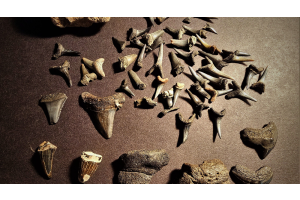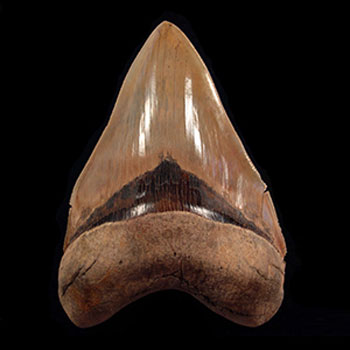
When you hold a Megalodon tooth in your hand, you are not just holding a piece of fossilized enamel, you are holding a fragment of Earth’s history, sharpened by time and shaped by an apex predator. These massive teeth, some exceeding six inches in length, are more than just ancient relics. They are time capsules that capture the story of entire geological epochs: the Miocene and Pliocene eras. Each serrated edge whispers of a bygone ocean, where the largest shark to have ever existed patrolled the seas, feeding on whales and reshaping marine ecosystems with unmatched power.
Unlike ordinary fossils, Megalodon teeth for sale carry within them the scale, the force, and the drama of an animal that could bite through bone with an estimated 180,000 newtons of pressure—the most powerful bite force of any creature known. They are not just remnants; they are storytellers of deep time, recording not only the anatomy of a species but also the dynamic environment in which it thrived.
Let’s explore why these fossilized teeth are such extraordinary time capsules of the Miocene and Pliocene seas.
The Megalodon: Apex Predator of Ancient Oceans
Megalodon, whose name translates to “big tooth,” ruled the oceans between approximately 23 and 3.6 million years ago. Stretching up to 60 feet in length, twice the size of a great white shark, it was a predator built for domination. Its diet was as massive as its size: adult Megalodons primarily feasted on whales and large marine mammals, a clear indication of their role as keystone predators.
The teeth themselves speak volumes about this shark’s hunting capabilities. Serrated edges allowed it to slice cleanly through flesh and bone, while the absence of side cusps created an unbroken cutting surface ideal for dispatching enormous prey. In many fossilized whale bones, paleontologists have found bite marks that match the distinctive serrations of Megalodon teeth, offering direct evidence of this predator’s role in shaping ancient marine ecosystems.
But the significance of these teeth goes far beyond the story of the predator itself. They open a window into two critical geological eras: the Miocene and the Pliocene.
Megalodon Teeth as Geological Timekeepers
The Miocene and Pliocene epochs were periods of massive transition on Earth, marked by climate change, tectonic shifts, and evolutionary innovation. Megalodon teeth for sale, preserved in sediment layers from these times, act as anchors that help paleontologists understand not just the shark’s reign but also the oceans it dominated.
Miocene Era (23 to 5.3 million years ago):
During the Miocene, the planet was warm, with higher sea levels that expanded shallow marine habitats. These conditions allowed Megalodon populations to flourish, and their teeth are commonly found in deposits from this period. Fossil teeth from Miocene strata reveal the shark’s widespread distribution across nearly every ocean, a testament to its dominance in warm waters.
Pliocene Era (5.3 to 2.6 million years ago):
As Earth cooled during the Pliocene, sea levels dropped, and new oceanic currents formed. These environmental changes altered prey distribution and may have contributed to Megalodon’s eventual extinction. Teeth from this era often mark the last strongholds of the species, capturing the twilight of its existence.
Because teeth are made of dentin and enamel, substances that fossilize well, Megalodon teeth remain exceptionally well-preserved, retaining fine details that allow scientists to date them with remarkable precision. They are, in essence, durable bookmarks in the vast library of Earth’s history.
The Science Locked in Serrations
Every feature of a Megalodon tooth offers clues to the past.
Size: The sheer size of Megalodon teeth, often ranging from 4 to over 6 inches, tells us about the shark’s enormous body size. Rare specimens exceeding 7 inches are especially valuable, not only for collectors but also for researchers studying growth patterns in the species.
Serrations: The razor-like serrations along the cutting edge reveal adaptations for efficiently processing large, fleshy prey. Their presence also helps differentiate Megalodon teeth from those of other sharks, such as great whites.
Enamel Preservation: Variations in color and mineralization reflect the sedimentary environments in which the teeth fossilized, acting almost like a geological fingerprint of the seabed from which they originated.
Together, these features transform each tooth into a multi-layered record—part biological blueprint, part geological artifact.
From Ocean Floor to Collector’s Cabinet
Beyond science, Megalodon teeth hold a powerful allure for collectors and enthusiasts. The rarity of specimens exceeding six inches makes them highly prized. These larger teeth are not just impressive in scale, they embody the shark’s reign at its peak.
Fossil hunters often unearth Megalodon teeth in riverbeds, coastal cliffs, and sediments dredged from the ocean floor. Their durability makes them among the most common large shark fossils, yet no two are identical. Variations in size, coloration, and preservation quality make each specimen a unique piece of history. For many, owning a Megalodon tooth is not just about collecting, it’s about holding a tangible connection to a creature that defined an era.
Ecological Lessons from Fossilized Giants
Megalodon teeth also offer insight into extinction and survival. Despite its dominance, Megalodon disappeared around 3.6 million years ago. Many scientists attribute this to a changing climate, shrinking habitats, and the rise of new predators such as the ancestors of modern great white sharks.
By studying the distribution of fossil teeth, researchers trace how the shark’s range contracted as ocean conditions changed. These patterns offer valuable insights into how marine ecosystems respond to climate shifts, an issue that remains highly relevant today.
Conclusion: Holding Deep Time in Your Hands
To hold a Megalodon tooth is to touch a story 20 million years in the making. These Megalodon teeth for sale remind us that Earth’s history is written not only in rocks and sediments but also in the anatomy of creatures that once ruled the seas. They are timeless symbols of power, change, and survival—true time capsules of the Miocene and Pliocene.
Whether displayed in a museum, studied in a laboratory, or cherished in a private collection, Megalodon teeth continue to inspire awe and admiration. They invite us to imagine oceans teeming with leviathans and remind us that the past is never truly lost, it lingers, sharp-edged and enduring, in fossils that bite back across the ages.
True treasures are rare, and our Megalodon teeth over six inches are among the rarest of all. Each fossil is a unique symbol of power, survival, and deep time. Secure a one-of-a-kind Megalodon tooth for your collection and own a piece of prehistoric prestige.