

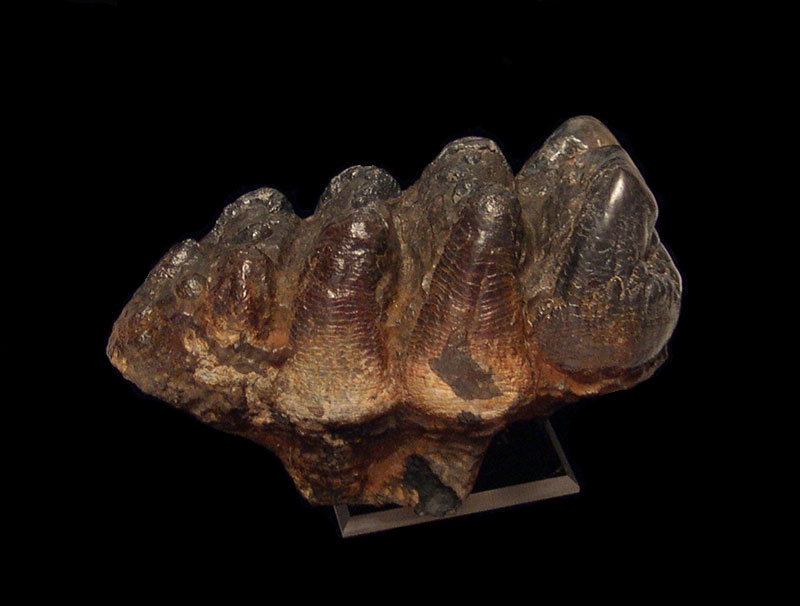
The discovery of ancient fossils always raises fascinating questions. On one hand, they are extraordinary windows into Earth’s history, connecting us with species that roamed millions of years ago. On the other hand, they often end up in private collections, auction houses, or even online stores. This debate is particularly striking when it comes to Gomphotherium teeth, the fossilized remains of an extinct elephant ancestor. These teeth are found in different parts of the world, including South Carolina, and are sometimes listed as a Gomphotherium tooth for sale. But should these rare relics belong in private hands, or do they rightfully belong to universities and museums where they can advance science and education?
Knowing Gomphotherium: An Ancient Elephant Relative
Gomphotherium was a fascinating prehistoric creature that lived during the Miocene and Pliocene epochs. It roamed parts of North America, Asia, and Europe, thriving in grasslands and river valleys. Unlike modern elephants, Gomphotherium had four tusks—two upper ones and two elongated lower ones. Its teeth were broad and ridged, adapted to a mixed diet of leaves, grasses, and aquatic plants.
The fossilized molars of Gomphotherium are especially valued by paleontologists because they reveal important details about the animal’s diet, evolution, and migration. For collectors, however, the attraction often lies in the sheer beauty and rarity of these fossils. Some specimens show well-preserved cusps, intact roots, and striking coloration caused by mineralization over millions of years.
The Rise of Fossil Auctions and Private Sales
It is not unusual today to come across fossil sales online, ranging from small shark teeth to impressive mammoth tusks. In this growing market, a Gomphotherium tooth for sale can attract high interest, with prices reflecting the rarity and quality of the specimen. Collectors see these fossils as display pieces, conversation starters, and tangible connections to prehistory.
Auction houses and fossil dealers often highlight authenticity and preservation, offering guarantees to buyers. In many cases, fossils legally obtained decades ago circulate in the market, particularly when sourced from private land where collection is permitted. This makes the trade technically legal, but legality does not erase the ethical questions that follow.
Why Scientists Value Fossils Beyond Collectible Status
From a scientific perspective, each fossil is a puzzle piece in the broader story of life. Gomphotherium fossils, especially teeth, help researchers track evolutionary changes that led to modern elephants and mammoths. A tooth’s wear patterns can reveal the animal’s diet, while its size and shape provide clues about age, health, and even environmental conditions.
Universities and museums argue that fossils should be housed in public institutions where they can be studied, cataloged, and preserved under professional care. Every specimen contributes to the larger dataset of paleontology. When fossils leave this system and enter private hands, researchers may lose valuable opportunities for comparison and analysis.
The Ethics of Ownership: Who Has the Right?
The core question is whether fossils are part of the cultural and scientific heritage of humanity or if they are legitimate commodities for private ownership. Advocates for public curation argue that Gomphotherium fossils should be preserved for future generations and studied within proper academic contexts. They believe auctions turn these rare items into luxury objects rather than tools of knowledge.
On the other hand, collectors often view themselves as caretakers of history. Many invest time and money into preserving specimens that might otherwise deteriorate or remain buried. Some private collectors even loan or donate their fossils to universities, helping bridge the gap between personal passion and public benefit.
Legal Loopholes and Fossil Hunting Rights
In the United States, fossil ownership laws vary depending on where the specimen is found. Fossils collected on federal land are protected and cannot be sold, while fossils found on private property often belong to the landowner. This creates a gray area in which a Gomphotherium tooth for sale may be perfectly legal, even if it raises ethical concerns.
Internationally, laws differ widely. Some countries strictly prohibit fossil export, while others allow open trade. This inconsistency fuels the global market, with specimens sometimes moving far from their place of origin. Critics argue that such trade erases local connections and denies regional institutions access to their own natural heritage.
Universities and Museums: Guardians of Knowledge
Public institutions play a critical role in safeguarding fossils for study, education, and cultural enrichment. Museums curate exhibits that inspire millions of visitors each year, sparking curiosity about Earth’s past. Universities train the next generation of scientists using real specimens as teaching tools. When fossils like Gomphotherium teeth are placed in these institutions, they remain accessible to the public and contribute to ongoing research.
Moreover, institutions often have better facilities for long-term preservation. Fossils require stable environments to prevent deterioration, something not always guaranteed in private collections. This reinforces the argument that universities and museums are the natural custodians of such artifacts.
Collectors and the Allure of Fossil Ownership
Despite ethical debates, the fascination with fossil collecting persists. For many, owning a fossil is a deeply personal way to connect with prehistory. A beautifully preserved Gomphotherium tooth for sale can be more than an object—it becomes a bridge across millions of years. Collectors often describe a sense of responsibility, treating fossils as treasures to be admired and protected.
Some also argue that private ownership keeps fossils from languishing unnoticed in storage rooms of museums. Given that many institutions already hold extensive fossil collections, collectors believe they are giving these pieces a new kind of life by displaying them in homes and offices.
Striking a Balance: Shared Stewardship
The debate does not need to be black and white. A middle ground may exist where private collectors, auction houses, and academic institutions collaborate more effectively. Collectors could share access to their fossils with researchers or donate digital scans of specimens to scientific databases. Institutions, in turn, might acknowledge the role of responsible collectors in preserving heritage.
Some fossil dealers already emphasize transparency, detailing the legal origins of specimens and encouraging collaboration with museums. This approach recognizes that fossils are both scientific artifacts and objects of fascination for the general public.
Should Gomphotherium Teeth Be Sold or Studied?
At the heart of the discussion is whether we prioritize the scientific value of fossils or the rights of individuals to own them. A Gomphotherium tooth for sale may hold immense allure for collectors, but in the hands of researchers, it contributes to humanity’s collective understanding of evolution. There is no single solution that satisfies all perspectives, but the conversation itself reflects our growing awareness of the responsibilities tied to owning the past.
Final Thoughts
The story of Gomphotherium reminds us that fossils are not just relics of ancient times; they are teachers, storytellers, and ambassadors of Earth’s deep history. Auctions and universities both claim roles in their preservation, yet the broader question remains: do fossils belong to individual collectors or to humanity at large?
For now, the answer may lie in balance. While a Gomphotherium tooth for sale may attract private buyers, there is undeniable value in ensuring that such fossils also remain accessible to researchers, students, and the public. The past belongs to all of us, and how we handle these precious remains will shape not only the story we tell about history but also the legacy we leave for the future.






