

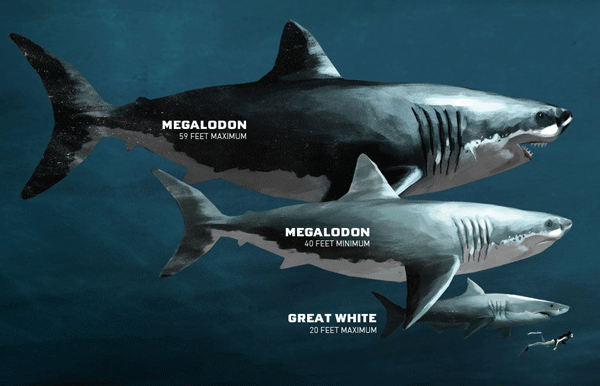
At our organization, we help others explore the fascinating world of ancient marine predators and the stories their fossils tell. Through our work, we allow enthusiasts and collectors to connect with the prehistoric past and understand how creatures like the megalodon and the great white shark shaped the oceans of their time.
These remarkable species lived in very different eras, yet both continue to leave a powerful mark on the fossil record, giving us clues about evolution, adaptation, and survival. The study of the megalodon vs great white tooth comparison helps reveal how both species adapted to their environments and what their fossils can teach about prehistoric marine life.
The Ancient Reign of Megalodon
The mighty megalodon, scientifically known as Otodus megalodon, once ruled the world’s oceans during the Miocene and Pliocene epochs, approximately 23 million to about 3 million years ago. According to the source, megalodon teeth can be as old as 23 million years, showing how far back its legacy extends. This colossal predator thrived in warm seas and played a vital role in ancient marine ecosystems, feeding on whales and other large marine creatures.
Over millions of years, the remains of megalodon settled on the ocean floor, where sediments gradually buried them. These layers of sand and silt later hardened into rock, preserving the enormous teeth that collectors find today. Because such fossils formed over immense stretches of time, they are often discovered in uplifted regions that were once part of the sea.
The Era of the Great White Shark
The great white shark, or Carcharodon carcharias, represents the modern era of apex predators. While megalodon disappeared millions of years ago, the great white continues to swim in the world’s oceans. Great white teeth are much younger in comparison, often only a few thousand years old, though they still provide valuable information about shark evolution and survival.
Because these sharks live in present-day seas, their teeth are occasionally found in newer sediments near coastal waters. However, since less time has passed, they are not yet deeply buried or mineralized like megalodon fossils. Their preservation depends heavily on environmental factors such as ocean currents, temperature, and sedimentation rates. In ideal conditions, their teeth become part of the growing fossil record, connecting the modern age to the prehistoric past.
The Telltale Teeth of Two Eras
Comparing the teeth of these two species reveals how form follows function. Each tooth tells a story about diet, strength, and adaptation. According to the source, megalodon teeth could reach over seven inches in length, while great white teeth usually measure around three inches. The megalodon’s teeth were broad and thick, designed to crush bones and tackle massive prey. In contrast, the great white’s teeth are sharper and more triangular, made for slicing through softer prey like fish or seals.
This distinction helps paleontologists understand feeding patterns and evolutionary adaptations. Larger, denser megalodon teeth are more likely to survive geological processes, while the thinner teeth of the great white are more vulnerable to erosion and breakage. This difference explains why megalodon fossils are frequently found intact, whereas significant white fossils are often more fragmented. A detailed megalodon vs great white tooth comparison highlights not only the physical contrast but also the environmental conditions that affected preservation across millions of years.
How Time Shapes the Fossil Record
The fossil record captures not only life forms but also the effects of time. Megalodon’s existence millions of years ago means its remains have undergone powerful geological transformations. The long process of burial, pressure, and mineral replacement ensured that its teeth became durable fossils.
Significant white shark fossils, by contrast, are much younger. Their preservation depends on rapid burial and protection from erosion. Because ocean movement is constant, many teeth are destroyed before they can fossilize. Those that do survive provide scientists with a more recent snapshot of life in today’s seas.
The difference in age between the two species profoundly affects how their fossils are found and studied. Megalodon fossils often appear in ancient rock formations, while great white teeth are uncovered in softer sediments. Both kinds of fossils, however, serve as time capsules, revealing the history of marine evolution across millions of years.
Fossil Collecting as a Window into the Past
Collectors and researchers often compare megalodon and great white shark teeth to gain insight into both the prehistoric and modern oceans. The source emphasizes how examining size, shape, and age can reveal fascinating details about each species. Megalodon teeth, due to their impressive size, are often the highlight of collections. Great white teeth, while smaller, are equally significant because they bridge the gap between ancient and modern predators.
Each fossilized tooth represents a story of survival and transformation. The conditions that allowed these teeth to endure also preserve a record of the oceans’ chemistry, sedimentation, and biological life. Studying them will enable scientists and enthusiasts to better understand how species evolved to adapt to changing environments.
Evolutionary Continuity and Environmental Clues
The comparison between megalodon and significant white fossils paints a vivid picture of oceanic change. The differences in tooth size and structure reveal how each species adapted to its environment. Megalodon’s large, robust teeth indicate an ocean filled with enormous prey, while the great white’s sharper, slimmer teeth reflect a world of faster, smaller species.
These variations highlight the influence of climate and habitat on evolution. As sea levels fluctuated and ocean temperatures shifted, prey populations changed as well. Sharks responded by evolving new physical traits to maintain their dominance. Fossilized teeth record these transitions, serving as valuable evidence of nature’s adaptability through time.
The Legacy of Two Ocean Predators
The eras of the megalodon and the great white illustrate how time defines what remains in the fossil record. Megalodon’s age left behind monumental fossils that tell the story of a vanished world. The great white continues to contribute to this record, its teeth becoming future artifacts for scientists to study.
Together, they form a bridge between past and present, showing how evolution preserves successful traits while refining others. Each fossil discovery adds another chapter to the long narrative of life beneath the sea, connecting the prehistoric depths to the modern oceans of today. The enduring fascination with the megalodon vs great white tooth debate continues to inspire collectors and researchers to uncover new insights about the giants of the past and their lasting influence on marine history.






