

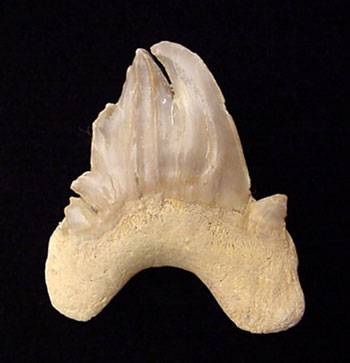
Imagine the most fearsome predator ever to swim Earth’s oceans, the Megalodon. This giant shark, reaching lengths of up to 60 feet, ruled the prehistoric seas with its terrifying jaws. Now imagine one of those jaws having a rough day, chipped, twisted, or oddly bent. Yes, even Meg had dental issues, and that’s what makes a pathological Megalodon tooth for sale so fascinating.
Unlike regular Meg teeth, these are the real weirdos of the fossil world. Bent, split, compressed, everyone tells a different story.
And each strange curve draws collectors in with prehistoric curiosity.
So, What Exactly Is a Pathological Tooth?
In simple terms, it’s a tooth that didn’t grow “normally.” A pathological tooth may be curved strangely, twisted oddly, compressed unusually, or split entirely. In humans, we’d call the dentist. But in the case of a Megalodon? That tooth just kept chomping whales.
These unique formations are rare. That’s what makes a pathological Megalodon tooth more than a fossil; it's a freaky masterpiece sculpted by nature itself.
Odd? Yes. Incredible? Absolutely.
And collectors love these one-of-a-kind dental disasters more than perfect specimens.
Nature’s Weirdest Dental Art
Why do these teeth grow wrong in the first place? Experts believe that injuries, jaw stress, genetic defects, or biting hard objects (like giant bones or armor-like turtles) may have caused the tooth to grow incorrectly. One bite too hard and, snap, something changes forever.
So when you find a pathological Megalodon tooth for sale, you're not just getting a tooth. You're getting fossilized evidence of prehistoric misfortune. That twist or split tells a story that’s tens of millions of years old.
And let’s be honest, weird fossils are just more fun.
No Two Are the Same — Seriously
You’ve heard the saying, “like snowflakes”? The same goes here. Every pathological tooth is totally unique. Some are curved like a sickle. Others have forked crowns or compressed roots. Some look like the Megalodon got into a bar fight and lost, twice.
That’s why a pathological Megalodon tooth becomes the crown jewel of any fossil collection. Its imperfections make it priceless, not flawless.
And owning one? That’s like having a prehistoric autograph, with bite marks.
The Science Behind the Deformity
Scientists actually love these weird teeth. Why? They offer insight into shark biology, jaw mechanics, and how these monsters lived and fed. A twisted root might suggest a healed injury. A split crown could point to chronic stress.
So, when you spot a pathological Megalodon tooth for sale, you’re looking at more than a fossil. You’re staring at a piece of paleontological evidence.
In other words, it’s history that bit back.
Real or Fake? Spotting Authentic Pathologies
Let’s be real: the fossil world has its fair share of fakes. Especially when something as eye-catching as a deformed Meg tooth is involved. That’s why knowing how to spot a genuine pathological Megalodon tooth is key.
Look for:
● Natural coloration and texture
● Clear signs of pathology, not manmade damage
● Documentation and location details
● Sellers with great reputations
Buying from trusted sources ensures your tooth is the real deal, not a modern carving gone wrong.
When in doubt, ask for close-up photos or a certificate of authenticity.
What Makes Them So Valuable?
These aren't your everyday teeth. While regular Megalodon teeth are impressive, pathological ones are much rarer. Think 1 in 1,000 or even less. That’s what makes any pathological Megalodon tooth for sale a hot commodity among collectors.
The more dramatic the deformity, the higher the value. Add in good size, great preservation, and zero repairs, and you’ve got something truly special.
It’s like finding a diamond with a twist, literally.
Meet the Different Types of Pathology
Let’s break it down. Not all pathological teeth are the same. Here are a few types you might see:
● Split Crown: The tip splits into two or more segments.
● Twisted Root or Crown: Looks like a spiral or curve.
● Compressed Tooth: Squashed appearance from pressure or trauma.
● Curved or Hooked Teeth: Bends in odd directions, like it grew sideways.
Each type tells a different story, and makes collecting even more thrilling.
Which kind will you find next?
Display It Like the Rare Treasure It Is
Let’s say you’ve got your hands on a pathological Megalodon tooth. Don’t tuck it into a box. These are showstoppers.
Use:
● A glass case with lighting
● A labeled fossil stand
● Shadowboxes with fossil facts
● Digital frames with their history and type
Tell the story of how this tooth might have come to be. Displaying it well adds value and sparks great conversations, even with non-fossil folks.
Because this isn’t just a rock, it’s a relic of ancient survival.
It’s Not Just a Fossil — It’s a Story
What do regular teeth not have? Backstories. However, a pathological Megalodon tooth is for sale.
Maybe it came from a Meg who bit into another giant predator. Perhaps it was born this way. Either way, the tooth you're holding is a piece of natural history with a story to tell.
It’s got scars. It’s got history. It’s got mystery. And it probably once had whale meat on it.
Now that’s cool.
Where to Buy the Best Ones?
Not every fossil shop will have these. When searching for a pathological Megalodon tooth, stick with sellers who:
● Specializes in shark teeth
● Offer detailed descriptions
● Provide close-up photos
● Are transparent about restoration (if any)
Some top fossil dealers update their stock monthly, so keep an eye out. These teeth don’t stay on the shelf long.
Think of it as hunting for a hunter.
Can You Actually Afford One?
Short answer: Yes. Long answer: It depends on what you’re looking for.
You can find a pathological Megalodon tooth for sale for as little as $50 if it’s small or mildly deformed. But large, highly deformed teeth with zero repairs? Those can go for hundreds or even thousands.
Set a budget, know your types, and check often. Deals pop up when you least expect them, like fossilized surprises.
Be Part of a Niche but Growing Community
Collectors of pathological fossils are a passionate bunch. They’re not just in it for value. They love the stories, the science, the thrill of the hunt.
Join online forums, attend fossil shows, and follow dealers on social media. Share your finds and learn from others. You’ll quickly see that the world of weird teeth is wonderfully deep.
Every new pathological Megalodon tooth adds something to the conversation.
And you could be the next collector with a story no one else has.
Wrapping It Up — with a Twist
To wrap things up, here’s the takeaway: a pathological Megalodon tooth for sale is more than just a cool fossil. It’s a tale of survival, struggle, and strange beauty from one of nature’s most terrifying creatures.
It’s proof that even prehistoric monsters had their off days.
So whether you're building a museum-worthy collection or looking for your first standout piece, consider going weird. Go pathological. Go Meg.
Final Call to Action — Don’t Miss the Bite
● Ready to own a tooth that defies expectations?
● Explore our collection of rare, authentic fossil oddities today.
● Because even Megalodon had bad tooth days, and now, they’re collectible!






