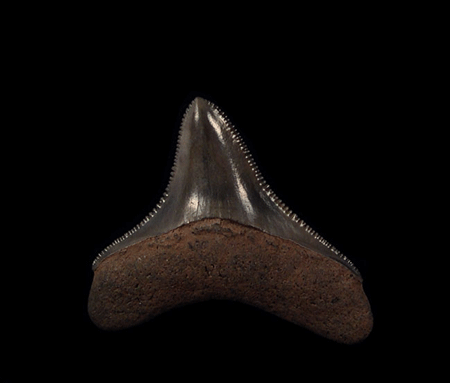
Few discoveries excite paleontologists and fossil enthusiasts as much as a well-preserved shark tooth. Recently, a new megalodon tooth found in coastal sediments has sparked renewed interest in the ancient predator’s life and habits. This find not only enhances our fossil record but also provides valuable clues about how these massive sharks once navigated Earth’s oceans. At Buried Treasure Fossils, we’re passionate about helping collectors and researchers explore these fascinating relics, and every new discovery reminds us just how much more there is to learn about the prehistoric seas.
The Significance of Coastal Sediment Discoveries
Coastal sediments are nature’s archives. Over millions of years, they accumulate remains of marine organisms, from microscopic shells to massive shark teeth. A megalodon tooth preserved in these layers is more than a fossil—it’s a time capsule. It tells us about the water temperature, prey availability, and even migratory routes that existed when the giant shark thrived.
This context is crucial because unlike skeletal fossils, which are rare due to the shark’s cartilaginous body, teeth fossilize readily. Each tooth becomes a vital clue in reconstructing the life of Otodus megalodon. For researchers, sedimentary context is just as important as the fossil itself, revealing whether the shark passed through, hunted in the area, or used the waters as a breeding ground.
Clues About Ancient Migration Patterns
The new megalodon tooth found was embedded in deposits associated with shallow coastal waters, which were once nutrient-rich zones. This supports the theory that megalodons followed seasonal migration routes similar to modern whales. Their movements were likely tied to prey distribution and breeding cycles.
Evidence gathered from isotopic analysis of fossilized teeth reveals that megalodons, the colossal predators of the ancient oceans, exhibited a strong preference for warmer waters, yet they were not confined to any single habitat. Instead, these magnificent creatures traversed vast expanses of ocean basins, with some specimens unearthed thousands of miles apart—an astonishing testament to their extensive range. The discovery of coastal sediments further bolsters the notion that ancient shorelines served as crucial stopover points. These vital locations likely allowed megalodons to feast on an abundant array of marine mammals, including seals and whales, showcasing their role as apex hunters in a dynamic and diverse ecosystem.
The Connection Between Feeding Zones and Fossil Locations
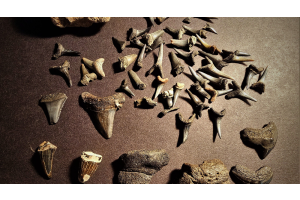
Every fossilized tooth serves as a vital clue, revealing the megalodon’s ancient feeding habits and preferences. Teeth unearthed from regions once abundant with whales hint at specialized hunting grounds where these colossal predators thrived. The concept of fossil shark teeth deepens this narrative, as it emphasizes the diversity of shapes and sizes left behind by various shark species, each uniquely adapted to their feeding lifestyles.
Megalodons, distinguished by their formidable, broad, serrated teeth, were expertly designed for tearing flesh and crushing bone with incredible efficiency. When these formidable fossils are discovered in clusters along ancient coastlines, paleontologists interpret them as compelling evidence of significant feeding zones, reminiscent of today’s shark “hotspots” where prey congregates.
By meticulously comparing these fossil sites from around the globe, researchers can trace the migratory paths of megalodons, uncovering how they followed shifting prey populations influenced by changing climate conditions and sea-level variations. This fascinating interplay between predator and environment paints a vivid picture of the megalodon’s dominance over ancient oceans.
What This Means for Marine Biology Students
For students of marine biology and paleontology, this discovery is a real-world example of how geology and biology intersect. It illustrates the importance of context—how the environment surrounding a fossil is just as valuable as the fossil itself. Studying coastal sediment layers alongside fossilized teeth reveals not just where the megalodon lived, but how it interacted with its environment.
This also emphasizes the significant role of predator-prey dynamics in sculpting the intricate tapestry of ecosystems. Much like the way contemporary great white sharks subtly shape the behavior of seals, the formidable presence of megalodons would have dramatically influenced the migration patterns of whales across ancient seas. Delving into this complex interplay enhances our understanding of the delicate balance that governs both ancient and modern marine ecosystems, revealing the profound connections that exist within the ocean's depths.
The Broader Impact on Paleontology
Each new megalodon tooth found pushes paleontology forward in unexpected ways. For instance, isotopic testing of tooth enamel can reveal whether a shark spent more time in coastal nurseries or in the open ocean. Combining this data with global fossil distribution maps helps reconstruct migratory pathways that stretched across continents.
It also aids in resolving long-debated questions, such as what caused the megalodon’s extinction. If migration routes shifted due to cooling oceans or declining prey, then studying these fossils helps us link climate change with species survival. That makes the megalodon’s story not just a chapter in prehistory, but a cautionary tale for modern biodiversity.
Fossil Collecting: From Research to Hobby
For collectors, megalodon teeth hold both scientific and personal value. Their size, serration, and condition make them among the most sought-after fossils. At Buried Treasure Fossils, we understand that whether you’re a researcher or a hobbyist, every specimen is more than a collectible—it’s a piece of history.
We specialize in making these fossils accessible, from entry-level pieces for beginners to rare, museum-grade specimens for advanced collectors. And authenticity is at the heart of what we offer—each fossil is genuine, legally sourced, and backed by decades of passion for paleontology.
Why This Discovery Resonates with Us
As a community of fossil enthusiasts, we’re thrilled whenever science uncovers more about these prehistoric giants. A new megalodon tooth found in coastal sediments isn’t just another artifact; it’s a reminder of the dynamic history of our oceans. It inspires us to continue exploring, collecting, and sharing fossils that bridge the gap between Earth’s ancient past and our present curiosity.
Our catalog goes beyond shark teeth—we offer ammonites, trilobites, dinosaur fossils, and much more. But megalodon teeth always stand out, capturing the imagination of students, collectors, and scientists alike.
Conclusion: Learning From the Ancient Giants
The discovery of a new megalodon tooth found in coastal sediments underscores the power of fossils to illuminate ancient migration patterns. By connecting tooth morphology, sedimentary context, and global distribution, we gain a clearer picture of how these apex predators ruled the seas. These insights enrich not only our scientific understanding but also our appreciation for the natural history that continues to shape our world.
If you’re inspired by this discovery and eager to explore authentic specimens, we invite you to journey through our extensive fossil collection. From fossil shark teeth that reveal evolutionary adaptations to megalodon teeth that symbolize the awe of prehistoric seas, our catalog brings you closer to the mysteries of ancient life. Fossil collecting isn’t just about ownership—it’s about connecting with Earth’s incredible history, one specimen at a time.