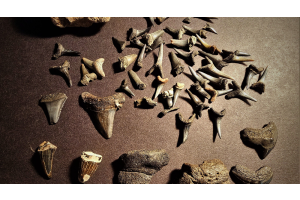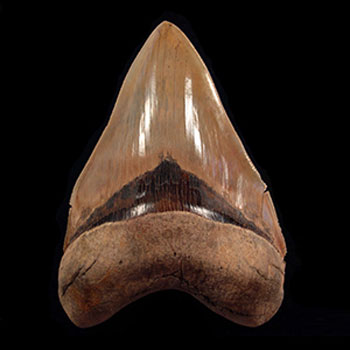
Collectors often imagine unearthing a complete megalodon skeleton as the ultimate prize. The idea sparks excitement and curiosity. But here is the reality. Nature never left us with a complete megalodon shark skeleton. Unlike animals with bone-based skeletons, megalodons had cartilage frames. Cartilage does not last. It breaks down rapidly after death. The only parts strong enough to fossilize from this massive shark are its teeth and, in rare cases, its vertebrae. These are the real remnants available to collectors today. Understanding this difference between fantasy and fossil fuels lays the foundation for making informed choices.
What Actually Fossilized from the Megalodon Shark Skeleton?
In the world of fossils, buyers must know what actually survives from prehistoric creatures. Cartilage from sharks, including the megalodon, disintegrates before it has any chance to mineralize. That is why the fossil record never includes a complete megalodon skeleton. Museums do not own one. Scientists have never uncovered one. Instead, people collect fossilized megalodon teeth. These teeth contain dense minerals and are preserved far better than soft tissue or cartilage. Some seasoned collectors may come across vertebral centra, but such finds are rare.
Museum Models Do Not Reflect Real Fossils
Museums often feature complete megalodon models. These displays offer a visual representation of the shark’s size and strength. They do not feature real skeletal material. Specialists build these models using data from modern sharks and fossilized teeth to estimate jaw size and body structure. They aim to educate, not mislead. For anyone buying fossils, it is crucial to distinguish between replicas and the genuine article. Authentic fossils carry a story, while models deliver scale and spectacle.
Why Do Collectors Focus on Megalodon Teeth?
Most of the megalodon market focuses on the sale of its teeth. These teeth vary in size, coloration, and quality. Some teeth display excellent serrations, while others exhibit signs of age and wear. Collectors appreciate these variations. They tell stories of growth, feeding, and even fossilization. The shape and symmetry of a megalodon tooth affect its value, but so does its origin. Teeth found in rivers might display a darker hue, while those found in sandy sediments tend to have lighter colors. Every piece has unique characteristics that attract different kinds of buyers.
The Rare Value of Fossilized Vertebrae
When collectors search beyond teeth, they sometimes encounter vertebral fossils. These vertebrae come from the shark’s backbone. Due to their structure, they fossilize only in rare conditions. But when they do appear, they offer insight into the shark’s overall size and age. Vertebrae provide a scientific context to a collection. They hold significant academic value and interest, especially when researchers use them to estimate growth rates or life spans. Collectors who secure one of these pieces understand the rarity and significance they possess.
What Associated Finds Reveal to Serious Collectors
Some fossil hunters get lucky and discover multiple teeth or vertebrae together. Experts refer to these discoveries as associated finds. When collected carefully and appropriately documented, these finds suggest that the fossils came from a single megalodon. For collectors, that detail adds a layer of authenticity and meaning. An associated find allows someone to hold several pieces of one animal’s life. These kinds of collections rarely enter the market, but when they do, they attract considerable interest and often move quickly.
The Truth Behind Composite Displays
Buyers need to stay alert. Many sellers promote composite displays of megalodon teeth arranged to look like jaws. These displays are visually appealing, particularly for private collections or educational spaces. However, they do not represent a real jaw or a true megalodon shark skeleton. Sellers typically gather teeth from different sharks, locations, and even time periods to build these displays. When collectors buy these setups, they must understand their purpose. They deliver visual drama but hold different values than single, authenticated specimens.
Misleading Product Listings to Avoid
New collectors often come across misleading product listings. These listings might claim to offer full skeletons or complete jaws. The reality usually involves resin casts, not original fossil material. That is why learning the basics of fossil anatomy and preservation can save buyers from disappointment. Knowing how to spot a genuine megalodon tooth makes a difference. Real fossils weigh more. They contain visible mineralization. Their surfaces reflect age and natural wear, not smooth, plastic finishes. Holding one in your hand often settles the question.
How the Fossil Market Has Matured?
Over the past several decades, the fossil market has evolved. Buyers now ask more informed questions. They look for origin details, restoration records, and scientific context. Sellers responded by raising standards. Collectors no longer accept vague labels or incomplete descriptions. Instead, they expect transparency and integrity. That change created a healthier market, one where genuine fossils carry more weight than flashy claims. Buyers who enter this space today benefit from that progress. They gain access to a more educated and responsible collecting experience.
Why Does a Single Tooth Hold More Value Than a Replica?
When collectors invest in a megalodon shark tooth, they do not just add a fossil to a shelf. They preserve a piece of ancient history. The tooth tells a story of survival, predation, and deep-ocean mystery. It connects the modern world to a prehistoric past. Buyers who stay focused on these authentic pieces build meaningful collections. They collect truth, not illusion. And that truth holds lasting value.
What Collectors Commonly Pursue?
Let us clarify what collectors often pursue
● Teeth. Most commonly available and valued for their size, serration, color, and location.
● Vertebrae. Rare but informative fossils that provide insights into shark size and growth.
What Makes Each Fossil Piece Significant?
Collectors who understand the real limits of fossil preservation can also appreciate what makes each piece significant
● Teeth tell us about feeding behavior and prey.
● Vertebrae reveal growth patterns and physical structure.
Why Real Fossils Matter More Than Visual Displays?
Every fossil holds a purpose when placed in context. The key lies in knowing what truly belongs in the fossil record and what exists only in imagination. A single real megalodon shark tooth says more about nature than any artificial skeleton ever could. Collectors who know that walk away with something much more valuable than a display. They walk away with a piece of something real.
Focus on Truth When Building a Collection
Authentic fossil collectors do not chase myths. They search for facts. They want pieces backed by origin, by mineralization, and by history. When a collector finds an authentic megalodon shark skeleton component, such as a tooth or a vertebra, they discover a fragment of time that no replica can replace. That level of connection only comes through clarity, respect, and knowledge.
Footnote
Authentic megalodon skeleton components exist only in parts like teeth or vertebrae. Collectors should value truth over visual recreations when building a meaningful fossil collection.