Understanding a creature as colossal and mysterious as the Megalodon requires more than just awe. It calls for science, evidence, and careful examination of what remains. While we can’t walk alongside this ancient shark or observe it in the wild, we can learn a great deal from what it left behind. By analyzing the megalodon shark skeleton, scientists have pieced together fascinating insights into this apex predator’s size, diet, and dominance in prehistoric oceans.
As enthusiasts ourselves, we’re drawn to the mystery surrounding the Megalodon. Through examining pieces of its skeletal legacy, especially teeth and vertebrae, we can begin to see how truly dominant this shark once was.
Why Bones Alone Aren’t Enough
The first thing to know is that sharks, including Megalodon, don’t have traditional bones like mammals or reptiles. Their skeletons are made of cartilage, a tough yet flexible tissue that decomposes quickly after death. This means that most of what we know about Megalodon comes from fossilized teeth and a few rare vertebral column fragments rather than a complete Megalodon shark skeleton.
Despite this limitation, these remains have proven invaluable. Fossilized cartilage and the arrangement of vertebral centra offer insight into the shark’s body structure, swimming mechanics, and overall mass.
Fossil Teeth: Clues to Size and Feeding
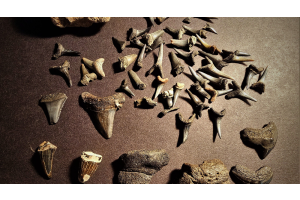
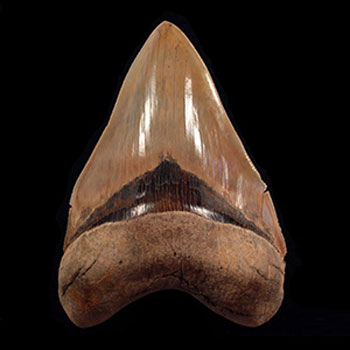
Megalodon teeth are massive, triangular, and serrated, designed for tearing through thick flesh and bone. They can exceed 7 inches in length, making them the largest known shark teeth in the fossil record. Because teeth are abundant and durable, they provide the primary dataset for estimating Megalodon’s body size.
Scientists have developed size estimates by comparing Megalodon teeth to those of modern great white sharks. Based on this, it’s believed that Megalodon could reach lengths of up to 60 feet, possibly longer. The size and shape of its teeth also reveal much about its prey. Whale bones with bite marks consistent with Megalodon teeth suggest it fed on large marine mammals.
The wear patterns and serrations on the teeth offer further insight into its feeding behavior. Heavy serrations indicate the ability to slice through tough muscle and bone, pointing to an aggressive, powerful predator capable of bringing down some of the largest animals in the ancient oceans.
Understanding the Megalodon Shark Jaw
One of the most iconic aspects of this prehistoric predator is its immense jaw. Reconstructions based on fossil teeth and comparison with modern sharks estimate the megalodon shark jaw to have spanned up to 11 feet wide. This jaw could house up to 276 teeth arranged in multiple rows. It was ideal for holding onto slippery prey and delivering devastating bites.
Such power isn’t just for show. Studies suggest Megalodon’s bite force could exceed 40,000 pounds per square inch, one of the most powerful of any known animal. This jaw strength, coupled with its size, placed it at the top of the food chain. No creature could match its dominance in the open ocean.
Vertebrae: Decoding Body Mechanics and Growth
Though rare, fossilized vertebrae have helped paint a clearer picture of Megalodon’s physical structure. A particularly famous vertebral column found in Belgium, with over 150 vertebrae, has been critical in estimating growth patterns and body length. These vertebrae show concentric growth rings, similar to tree rings, which allow scientists to determine age and growth rate.
These growth rings indicate that Megalodon had a fast early growth phase, enabling it to reach enormous sizes quickly. This was a clear evolutionary advantage in a world filled with large marine mammals. The size and spacing of the vertebrae also suggest a torpedo-shaped body, built for speed and efficiency in the water, much like modern-day mackerel sharks.
Why the Megalodon Ruled Prehistoric Seas
Size alone didn’t make Megalodon the ultimate predator. Its skeletal features point to a highly adapted hunter. The combination of strong jaw muscles, enormous teeth, a fast-swimming body, and a likely keen sense of smell created a formidable presence in the ocean.
Fossil records indicate a global distribution, with teeth found on every continent except Antarctica. This suggests Megalodon thrived in warm, shallow seas where prey was abundant. It likely targeted large whales, seals, and other sharks, reinforcing its role as an apex predator.
What the Fossils Don’t Tell Us
Despite what we’ve learned, there are still gaps in our understanding. Without a complete megalodon shark skeleton, some aspects, like exact body shape and behavior, remain speculative. Artists' renditions often rely on modern great white sharks as models, which may not be entirely accurate. Some researchers argue Megalodon may have had a broader body and a more powerful tail than depicted.
Also, there is still debate about its hunting strategy. Did it ambush prey from below like modern great whites, or did it rely on prolonged chases? The fossil record offers clues, but not certainty.
Ongoing Research and Fossil Collections
As more Megalodon fossils are discovered, scientists continue refining their understanding. Every new vertebra or tooth adds to the body of knowledge. Public interest has also driven the growth of fossil markets, where collectors can obtain genuine Megalodon teeth in a range of sizes, conditions, and price points.
At Buried Treasure Fossils, a wide selection of authentic Megalodon teeth is offered. Each listing includes detailed information on size, color, origin, and condition, helping collectors make informed decisions. These fossils not only hold scientific value but also serve as tangible connections to the ocean’s prehistoric giants.
Conclusion
The megalodon shark skeleton, while incomplete in the traditional sense, has still told us plenty about this incredible predator. Through its preserved teeth and rare vertebrae, we’ve learned how large it grew, how it fed, and why it dominated the seas. Every fossil reveals another piece of the puzzle, helping both scientists and collectors understand this extinct giant more clearly.
At Buried Treasure Fossils, we recognize the importance of making these specimens accessible to enthusiasts, researchers, and curious minds. Whether you’re studying the megalodon shark skeleton or simply fascinated by its towering presence in marine history, there’s still much to discover.
Explore our collection of authentic Megalodon teeth and own a piece of prehistoric history. Visit us today at Buried Treasure Fossils.