

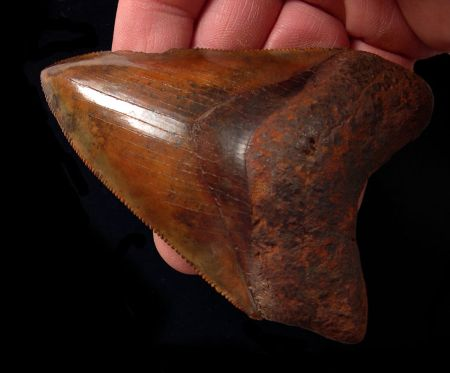
Megalodon teeth have long captured the imagination of fossil collectors, marine enthusiasts, and history lovers alike. Among the many varieties, copper‑red Megalodon teeth occupy a uniquely prized place in fossil collections. Their deep, fiery hue and geological mystery elevate them beyond mere specimens—they're artifacts of prehistoric power and aesthetic brilliance. As collectors, we often seek not just rarity, but resonance, and few fossils carry the visceral, visual impact of a copper‑red Megalodon tooth found in North Carolina.
Let’s explore what makes these fossils so captivating and why they continue to command such high demand.
A Vivid Legacy: The Origins of Copper-Red Coloration
The vibrant copper-red hue seen in these rare Megalodon teeth isn't a paint or polish—it's a result of millennia of mineral absorption. These teeth absorb iron-rich sediments from their burial environment, particularly from coastal riverbeds and fossil-rich banks. The iron oxidizes, creating the stunning copper tone that defines this variety.
Unlike typical grey, black, or brown fossil teeth, copper‑red specimens showcase an exceptional aesthetic. Their color can range from subtle amber glows to rich, burnished reds with glinting edges that reflect light in mesmerizing ways. The coloring is not just rare—it’s naturally sculpted, unpredictable, and deeply organic, which gives each specimen a one-of-a-kind identity.
North Carolina’s Fossil Goldmine
Many of the most breathtaking copper‑red teeth have been pulled from the rivers and coastal areas of North Carolina, a location long revered for its rich Megalodon fossil deposits. These teeth are often found in gravel beds that have remained undisturbed for millions of years, preserving the color intensity and enamel quality.
A copper‑red Megalodon tooth found in North Carolina isn’t just another fossil—it’s a geological story encased in enamel. The region's unique soil composition and sedimentation process contribute to this coloration, making North Carolina a dream destination for serious collectors seeking vibrant, high-quality teeth. Each discovery from this area contributes to a growing legacy of fossil finds that continue to captivate and inspire collectors worldwide.
More Than Color: Size, Shape, and Preservation Matter
While the copper-red color alone is enough to ignite interest, collectors evaluate these teeth based on a combination of traits. The most desirable specimens showcase a full, symmetrical blade, minimal root erosion, and intact serrations. When these features align with the coveted copper hue, the tooth ascends to elite collector status.
Larger sizes—often exceeding 5 inches—are challenging to find in copper-red coloration, which heightens the appeal for serious fossil hunters. A massive, well-preserved copper‑red specimen becomes more than a showpiece—it transforms into a cornerstone artifact of any high-end collection.
Provenance Adds Prestige
Collectors value story just as much as substance. A documented copper‑red Megalodon tooth found in North Carolina adds a layer of credibility, history, and intrigue. Provenance fosters trust and authenticity in collector communities, particularly when combined with detailed geological insights or underwater recovery documentation.
Knowing where and how a tooth was found adds depth to its display. It's not just a fossil—it’s a relic with a journey, a record of prehistoric motion that invites examination, respect, and admiration. Such context transforms a specimen from an isolated artifact into a meaningful chapter of Earth’s ancient narrative.
Rarity and the Rise in Value
As fossil beds in North Carolina become more regulated and less accessible, the supply of copper‑red Megalodon teeth is naturally shrinking. That scarcity directly influences their value. Collectors who acquire these specimens often hold them for years, not only for personal appreciation but as a wise investment.
A single copper‑red tooth in excellent condition can command a significant price, especially when it checks all the boxes—color, size, symmetry, and location. The scarcity of such teeth ensures that demand will remain strong among collectors who recognize their geological and aesthetic significance.
Why Collectors Seek Copper‑Red Over Other Variants
Megalodon teeth come in a range of tones—blacks, greys, browns, even blues—but none rival the magnetism of copper‑red. The visual impact is immediate, almost visceral. These teeth seem to radiate warmth and antiquity simultaneously, creating a visual contrast to the idea of a cold, marine predator.
For collectors who curate their displays with intentionality, a copper‑red tooth anchors the entire collection. It’s the kind of fossil that guests remember. It draws attention without needing explanation. It’s both an artifact and a work of art.
What Makes a Tooth Coveted Isn’t Just Aesthetic
Collectors aren’t just chasing beauty—they’re searching for connection. A copper‑red Megalodon tooth found in North Carolina represents more than color and age; it symbolizes the awe of deep time and the reverence for life that once ruled our oceans.
Holding a copper‑red tooth evokes a sense of scale—of how small we are next to the creatures that came before, and how enduring the Earth’s memory is, recorded not in books but in bone and enamel. That emotional resonance elevates these fossils far beyond the realm of simple collecting. They become touchstones to a lost world, bridging past and present in the palm of a hand.
Curating the Right Copper‑Red Tooth
Finding the right specimen isn’t just about availability—it’s about choosing with purpose. Collectors must consider enamel quality, root detail, edge sharpness, and authenticity when evaluating a piece. Relying on trusted fossil sources ensures each purchase holds both monetary and emotional value. These are not mass-market items.
Each copper-red Megalodon tooth is irreplaceable and is often recovered under challenging conditions. Their value lies not only in their rarity but in the powerful story they carry from the depths of prehistoric oceans. To collect one is to participate in the long continuum of history, geology, and marine legacy.
Conclusion: The Pinnacle of Fossil Elegance
Copper‑red Megalodon teeth are more than ancient fossils—they are natural treasures. Their vivid color, uncommon formation, and strong ties to places like North Carolina set them apart in the fossil world. A single copper‑red Megalodon tooth found in North Carolina speaks of a vanished era and a predator that once ruled the seas.
For collectors, these teeth represent more than rarity—they embody legacy. They spark conversation, capture attention, and connect us to Earth’s deep marine history. We’re not just collecting fossils—we’re preserving the bold beauty of ancient life.
Contact us to explore rare copper‑red Megalodon teeth and secure a fossil that adds legacy to your collection.






