

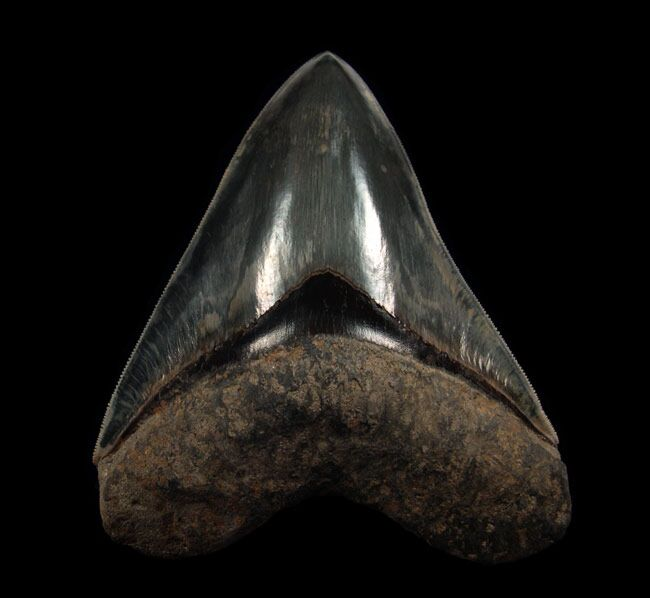
Like dinosaurs, Megalodon sharks are an ancient mystery to us. We know little about these massive ocean-dwelling creatures, but what we do know for certain is that they were the largest sharks to ever exist. Here at Buried Treasure Fossils, we’ve spent years sourcing and offering remarkable specimens like the Megalodon tooth found 10,000 years old, which offers a direct link to a time when these colossal predators roamed our oceans.
Their teeth, preserved across the ages, provide vital clues about their world. And among the most captivating of these relics are the black Megalodon teeth, fossils that have undergone an extraordinary transformation beneath the ocean floor. But what gives them their color? And how do you know when you’ve truly found a fossilized Megalodon tooth?
Let’s dive into the mystery of the black Megalodon tooth and uncover what makes it a truly prized fossil for collectors worldwide.
Why Are Megalodon Teeth So Widely Collected?
Megalodon sharks were apex predators with a jaw filled with roughly 275 serrated teeth. These teeth were arranged in multiple rows, and like modern sharks, they were frequently shed and replaced. Because of this natural shedding, countless Megalodon teeth found their way to the ocean floor, where some eventually fossilized over tens of thousands to millions of years.
While Megalodon teeth come in a range of colors, black teeth are especially sought after due to their striking appearance and rarity in certain locations. However, the color of a fossilized tooth has more to do with environmental factors than anything else.
What Causes a Megalodon Tooth to Turn Black?
Freshly shed shark teeth are white, just like our own. When they fall to the ocean floor and become buried under layers of sediment, the fossilization process begins. Over time, minerals in the sediment slowly seep into the pores of the teeth. This process, known as permineralization, replaces the organic material in the tooth with minerals such as silica or calcite.
The color a tooth turns depends entirely on the chemical composition of the surrounding sediment. A black tooth, for example, may result from the presence of iron, manganese, or other dark minerals. This transformation doesn't happen overnight. It can take over 10,000 years, and in some cases, much longer.
So, when you find a Megalodon tooth found 10,000 years old and it’s black, you’re not just holding a piece of an ancient predator. You’re holding a geological marvel that tells a story spanning millennia.
What Is Permineralization and Why Does It Matter?
Permineralization is the secret behind the preservation of these ancient teeth. Once a Megalodon tooth becomes buried in oxygen-poor sediment, bacterial decomposition slows dramatically. Over thousands of years, minerals suspended in groundwater begin to seep into the tooth, crystallizing and replacing its original materials.
This process keeps the shape and often the fine details of the tooth intact. In many cases, even the cutting ridges along the tooth's edge remain visible. This means when you examine a fossilized Megalodon tooth, you're often looking at an incredibly accurate physical representation of what it looked like millions of years ago.
How to Identify a Fossilized Megalodon Tooth
Finding a true Megalodon tooth requires a keen eye and an understanding of what sets them apart from other beach finds. While it’s easy to confuse them with dark-colored shells or rocks, there are some telltale signs to look for:
● Glossy Finish: Fossilized teeth, even after thousands or millions of years, often have a subtle shine. This luster is a result of the mineral crystallization that occurs during fossilization.
● Defined Edges: The serrated cutting edge of a Megalodon tooth is often still visible, even after fossilization. These ridges were used by the shark to bite through thick flesh and bone.
● Root and Crown: Some rare finds include a tooth with an intact root. While the crown is typically the glossy part, the root may be rougher and less shiny in comparison.
Why Black Megalodon Teeth Are Highly Treasured
At Buried Treasure Fossils, we’ve encountered teeth in many hues including gray, tan, brown, and even blue, but black teeth hold a unique allure. Their deep color, often paired with preserved structure and edge detail, makes them visually striking and emotionally powerful for collectors.
What makes a black Megalodon tooth even more meaningful is the mystery behind its formation. The mineral composition that caused the black color is specific to its burial environment. This means that no two black teeth are exactly alike. Each one is a unique product of both biology and geology.
Holding a black tooth is holding the result of an intricate process that began when a Megalodon shed it somewhere in a prehistoric ocean and ended after thousands of years underground, emerging as a fossilized relic of nature’s most formidable marine predator.
Can You Date a Tooth by Its Color?
Many people wonder if the color of a tooth reveals its age. While it’s tempting to think that a darker tooth must be older, that’s not how fossilization works. The color is determined primarily by the minerals present in the sediment surrounding the tooth during fossilization, not the length of time it was buried.
That said, we do know that fossilization takes a minimum of thousands of years. So, a Megalodon tooth found 10,000 years old is already a stunning testament to the passage of time, regardless of its specific shade.
What to Look for in a Quality Megalodon Tooth
When adding a Megalodon tooth to your collection, especially one that’s black and fossilized, here are a few things you might consider:
● Sharpness of the edges: Some teeth maintain their serrations, which is incredibly rare and desirable.
● Surface condition: A glossy, smooth surface indicates strong preservation.
● Root integrity: An intact root adds to the authenticity and value of the piece.
● Size and shape: While all Megalodon teeth are impressive, those that are symmetrical or unusually large tend to draw more attention.
At Buried Treasure Fossils, we’re proud to offer specimens that meet these standards and tell a captivating story from deep time.
Final Thoughts: More Than Just a Tooth
A fossilized Megalodon tooth, especially a black one, is more than just a collector’s item. It’s a connection to a world long gone, a reminder of creatures that once ruled the seas, and a physical representation of how nature preserves its history.
Whether you're adding your first tooth to your collection or expanding your existing display, a black Megalodon tooth serves as a powerful centerpiece and conversation starter.
Explore our collection at Buried Treasure Fossils and discover authentic fossilized treasures that have stood the test of time. Whether you’re searching for a Megalodon tooth found 10,000 years old or another fossilized marvel, we’re here to help you find something truly remarkable.
Disclaimer: This blog is intended for informational purposes only and does not constitute any professional advice. It does not encourage or endorse any unethical or illegal practices related to fossil collection. Please always adhere to local laws and regulations and practice environmental responsibility.






