

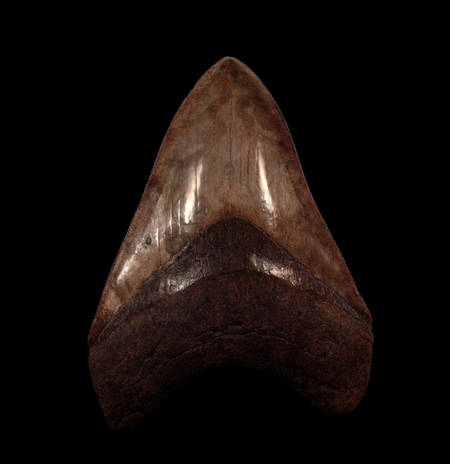
Collectors continue to search for Megalodon teeth with serious intent. These fossils carry weight, history, and demand. Their appeal rests not only in size but in origin and form. While some people chase after replicas, others seek authentic remains with clear features. Those who know what to look for often avoid disappointment. You do not need expert tools or expensive lab work to verify authenticity. Learn how to tell if a megalodon tooth is real by reading visible clues, examining the texture, and handling the tooth with careful attention.
Let’s explore more detailed information:
Study the Basic Anatomy of the Tooth
Authentic Megalodon teeth show distinct anatomy. A wide, dense root connects to a sharply pointed crown. You can observe fine serrations along both edges of the crown. These natural notches enabled the shark to slice through its prey. The enamel usually thins near the tip, giving the tooth a natural taper. It feels smooth but not glossy. Upon examining the root, you notice a porous texture that suggests fossilization. Authentic teeth show balance but never look too perfect. Each fossil bears its own unique form and finish, shaped by time and its environment.
Look for Real Fossil Colors
Authentic teeth never have a single flat color. Over time, minerals in the ground give the tooth its hues. Genuine specimens typically appear in muted shades, such as gray, brown, or black. These colors often shift from root to tip, revealing natural patterns. No factory can fake that kind of aging. If you spot a tooth with one bright, uniform color, take a closer look. That likely means someone used polish or artificial dye. Real teeth speak through subtle details. Color depth, streaks, and layering confirm a long journey underground.
Feel the Weight and Texture in Your Hand
Real Megalodon teeth feel solid. When you hold one, it carries weight that resin copies cannot match. This weight comes from the minerals that replaced the original material over millions of years. You do not need a scale. Trust your sense of feeling. If the tooth feels light or hollow, walk away. Authentic teeth also hold temperature longer. They feel cool at first touch. When tapped against another fossil, real teeth produce a deep tone. Replicas often ring with a high-pitched click. That sound gives away their synthetic core.
Examine the Serrations Closely
Use your eyes, not just your hands, to inspect the edge. Authentic teeth show fine, sharp serrations along the blade. These tiny notches have been worn down from feeding or time spent buried in sediment. You may notice dull spots, missing tips, or uneven patterns. That adds to the value. Fake teeth often skip this detail or mimic it poorly. They show serrations that look too smooth or too regular. Run your finger gently along the edge. The real ones feel slightly jagged, never plastic. That simple step confirms more than any label can.
Pay Attention to Natural Wear and Age Marks
Every real Megalodon tooth carries signs of use or burial. Chips near the tip, minor scratches, or surface cracks add character and value to the item. You will not find identical marks across different fossils. These features reflect millions of years underground or motion in water currents. Replicas lack this history. They often appear flawless or show fake wear that looks too deliberate. When you examine several teeth, you start to notice the difference. Genuine pieces show random imperfections, not repeating patterns. Each chip and scar tells a story no mold can copy.
Study the Root for Telltale Features
The root reveals a great deal about authenticity. Real roots appear thick and coarse. They do not shine or feel smooth like enamel. You can spot small pits, pores, and subtle fractures. These textures form as minerals seep through the root material over the course of centuries. Some sellers attempt to repair or rebuild damaged roots. They use filler that looks too perfect or smooth. That reduces the tooth’s authenticity. Always look for a clean separation between the root and crown. When roots show unnatural symmetry or glossy surfaces, approach with caution.
Focus on Enamel Texture and Feel
Authentic enamel feels strong yet aged. Run your fingers across the surface. You might find ridges, mineral streaks, or small veins within the enamel. These natural signs confirm the presence of a genuine tooth. One of the most effective ways to learn how to tell if a megalodon tooth is real involves examining these subtle textures. Real fossils do not reflect light uniformly. They reveal subtle depth under shifting angles. Replicas feel flat, both visually and physically. They often use polished finishes to mimic shine but lack natural variation. If a tooth feels too smooth or too clean, trust your instinct and investigate further.
Use Environmental Clues to Your Advantage
Megalodon teeth tell stories through sediment, stain, and wear. Teeth found in rivers often exhibit smoother surfaces due to the action of the current. Sediment-recovered specimens may display heavy mineral deposits or uneven coloration. These signs help you trace the tooth’s origin and support authenticity. Replicas fail to capture that variation. Even well-crafted fakes cannot reproduce sediment layers or organic stains. Real teeth sometimes carry embedded particles from their burial site. These inclusions often go unnoticed by sellers but are readily apparent to trained eyes. Learn to recognize these subtle cues for increased confidence.
Practice Field Tests for Instant Insight
You can test a tooth even during a show or sale. Start by checking the temperature. Fossil teeth retain their coolness longer than resin. Then, weigh it in your palm. Real ones feel heavy and balanced. Tap it lightly against another hard object and listen. The tone reveals more than the appearance alone. Compare it to other confirmed specimens if you can. Authenticity becomes easier to verify through a side-by-side study. Once you learn to trust your senses, you carry your own lab with you. These simple actions protect your investment and sharpen your knowledge.
Build Confidence Through Familiarity
You build your confidence by handling real specimens and learning from trusted sources. The more you see, the better your judgment becomes. Understanding what real teeth feel and look like gives you the tools to assess new pieces. Visual memory plays a role. Textural awareness adds support. No seller or certificate replaces your trained eye. Trust what you see, feel, and hear. That experience creates better decisions. Use that knowledge to build a collection based on genuine history. Authenticity earns respect and creates lasting value in every collection.
Final Thoughts
Collectors who learn to observe with care can quickly separate genuine from imitation. From weight to wear, from color to texture, each detail reveals part of the truth. You do not need lab tools or professional gear to make these judgments. You need patience, curiosity, and awareness. Once you understand how to tell if a megalodon tooth is real, you gain more than knowledge. You earn the confidence to buy, trade, or showcase a fossil that speaks for itself. Keep these signs close and let each discovery sharpen your eye for what matters.
Footnote
This guide offers accurate and field-tested methods for identifying genuine Megalodon teeth, utilizing hands-on experience, visual observation, and tactile awareness.






