

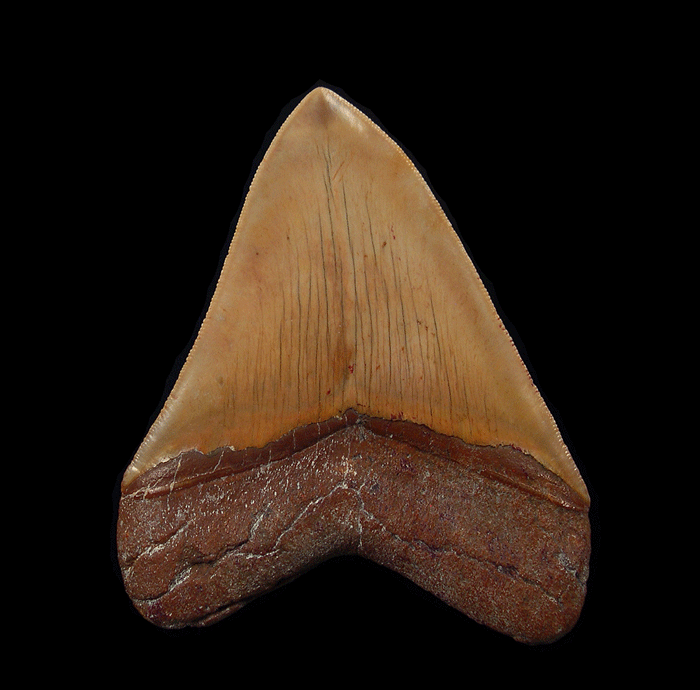
Long before humans measured time in calendars or built monuments to the sky, the oceans told their own tales—tales of giants, hunters, and deep silence. These seas, unbound by our understanding, were home to a creature so vast that even whales fled its path. It wasn’t fantasy, and it wasn’t myth. It was real. It was fierce. And today, its memory lingers not in bones or stories, but in the sharp, stone-hard glint of ancient teeth.
One of the most fascinating aspects of paleontology isn’t discovering new life—it’s unearthing the remnants of those long gone and realizing how much they still speak. In some of the most unexpected corners of the world, fossilized fragments of ancient marine life continue to surface. And among the most remarkable of these are the teeth of Carcharocles megalodon, a name that carries the weight of both scientific reverence and childlike awe.
As the wind sweeps over the parched landscapes of North Africa, it whispers secrets of ancient tides and long-lost giants. The Moroccan desert, though silent and dry today, was once submerged beneath vast, warm seas. This region now hosts some of the most prolific fossil sites known to collectors and scientists alike. With every careful dig and every tooth found, the story of an ancient predator inches closer to the surface.
From Ocean Depths to Desert Heights
The concept that an arid desert could once have hosted oceanic life seems improbable—until you step onto the fossil grounds of Morocco. Layer upon layer of sediment reveals a world entirely different. It’s a place where shark vertebrae, fish remains, and marine reptiles once ruled. But towering above them all, in scale and reputation, was the megalodon.
Estimates place this colossal predator at lengths of over 50 feet. Unlike modern sharks, its mouth could easily engulf a car, and its bite force dwarfed anything alive today. Morocco’s fossil-rich regions have become essential in preserving the physical legacy of this extinct species. Not only do they provide crucial insight for science, but they also allow enthusiasts around the globe to hold a tangible piece of deep time.
The teeth found in these regions come in various shapes and sizes, reflecting different life stages of the megalodon. Some are smaller, belonging to juveniles; others are larger, curved, and razor-edged, likely from fully grown adults. With hues ranging from soft grey to earthen brown, every tooth tells a slightly different story, shaped by the soil it lay in for millions of years.
The Art and Science of Fossil Recovery
Unearthing fossils is not a task of force—it’s one of patience. Fossils don’t shout to be found; they wait quietly, often covered by meters of stone and sand. In Morocco, local diggers and trained paleontologists work side by side to uncover these remnants with care. Every find is a delicate balance of observation, technique, and respect for what nature has hidden.
Fossil hunting in this region has become more than an academic pursuit. It’s a livelihood, a tradition, and in some cases, a form of artistic expression. Craftsmen prepare the fossils with techniques passed down through generations, ensuring the teeth remain intact, authentic, and as close to their original form as possible.
Collectors around the world seek Moroccan megalodon teeth not just for their rarity, but for the pristine conditions in which they’re often found. The sandy matrix preserves the sharp serrations and deep ridges that define these iconic fossils. These aren’t mere souvenirs; they are detailed records of life, motion, and extinction.
Understanding the Megalodon’s World
Though extinct for millions of years, the megalodon still sparks questions among scientists and enthusiasts. What caused its extinction? How did it grow so large? What role did it play in its ecosystem?
Moroccan fossil beds give partial answers. By examining teeth and associated marine fossils, researchers can piece together the dynamics of ancient oceans. Coexisting species reveal patterns of predation, competition, and migration. The fossil record here includes rays, prehistoric whales, and smaller sharks—all creatures that either lived in fear of or alongside the megalodon.
The teeth themselves provide valuable data points, including feeding habits, growth patterns, and even ocean temperatures, based on trace elements. Each specimen from Morocco contributes another piece to the puzzle. The size of the root, the sharpness of the blade, and the curvature of the enamel all point to a predator optimized for speed, strength, and precision.
Holding Time in Your Hands
There’s something inherently moving about touching a fossilized tooth that last saw sunlight millions of years ago. It’s not simply about the physical object—it’s about the time it represents. It connects us to a world where nature operates on different rules, where fear has a different face, and where survival means something entirely different.
Moroccan megalodon teeth offer more than academic value—they offer a sense of scale, of mystery, of awe. These fossils carry with them the weight of oceans and the silence of extinction. And yet, they endure, not as myths, but as stone-hard truth.
When properly sourced, each fossil represents a journey—from the ocean floor to desert sand, from a hidden layer to a museum shelf or a personal collection. For many, owning such a specimen serves as a poignant reminder of how little we know about the distant past and how much of it remains hidden beneath our feet.
Why Authenticity Matters
In the growing world of fossil commerce, authenticity is paramount. As demand rises, so does the temptation to reproduce, fake, or misrepresent fossil finds. This makes responsible sourcing essential—not just to protect the value of the fossil, but to honor the history it represents.
When you acquire a Moroccan megalodon tooth, you’re not purchasing an accessory. You’re stepping into a story. That story deserves care, transparency, and integrity. Reputable sellers offer detailed provenance and accurate representations, helping you make a connection rooted in science and wonder.
This connection is what separates a real fossil from a simple object. It gives the piece depth and meaning. Whether for display, study, or gifting, a genuine tooth carries more than beauty—it holds truth.
Echoes That Still Roar
Though it has been millions of years since the last megalodon swam the oceans, its echo remains strong. Its image appears in documentaries, its name in scientific papers, its legend in popular culture. But beyond the media and myths, the real story lies buried—waiting in the sands, in the stones, and in the hands of those who search with care.
In Morocco, these stories are still being unearthed. Each tooth, each fossil fragment, is a testament to an age we barely understand. The keyword Carcharocles megalodon - Morocco doesn’t simply name a species or a place—it captures an era, a creature, and the fragile threads that connect past to present.
Discover the Fossil That Speaks to You
You don’t need a lab coat or a degree to appreciate the value of something ancient. You only need curiosity. Let your imagination drift to prehistoric waters and feel the pull of deep time. Fossils are more than things—they are reminders. Of change. Of mystery. Of nature’s immense, intricate story.
If you're ready to bring one of these rare treasures into your life, explore responsibly sourced specimens that reflect the true spirit of discovery. Let your fascination lead you to a fossil that not only looks remarkable, but feels meaningful.
Explore the collection with Buried Treasure Fossils and find a fossil that tells your story.






