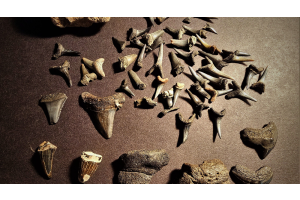
There’s something undeniably fascinating about relics from the past. Objects pulled from beneath layers of earth and sand—once forgotten, now treasured—tell tales that stretch back millions of years. Among the most intriguing of these relics is a single, sharp, fossilized tooth. But not just any tooth. This one belonged to the largest shark that ever lived on Earth.
Although it may not seem like it at first glance, the thrill of discovering a megalodon tooth fossil goes beyond collecting. It connects people to a world where colossal predators dominated the oceans, where every tooth hints at survival, power, and the sheer scale of life in ancient waters. The idea that you can hold a 20-million-year-old remnant in your palm is both humbling and electrifying.
But as with anything valuable, authenticity matters. For every real specimen on the market, there’s a crafted imitation ready to mislead. So how do you tell what’s genuine from what’s cleverly fake? Transitioning from curiosity to confidence requires knowing what to look for, how to test it, and where to place your trust.
Recognizing Ancient Characteristics
A real megalodon tooth has a weight to it—a presence. This is due to the fossilization process, in which the original tooth material has been replaced over time by minerals from the surrounding sediment. This transition takes millions of years and results in something much denser than a modern shark tooth or synthetic replica. When held in the hand, it feels firm, grounded, and slightly gritty, rather than slick or hollow.
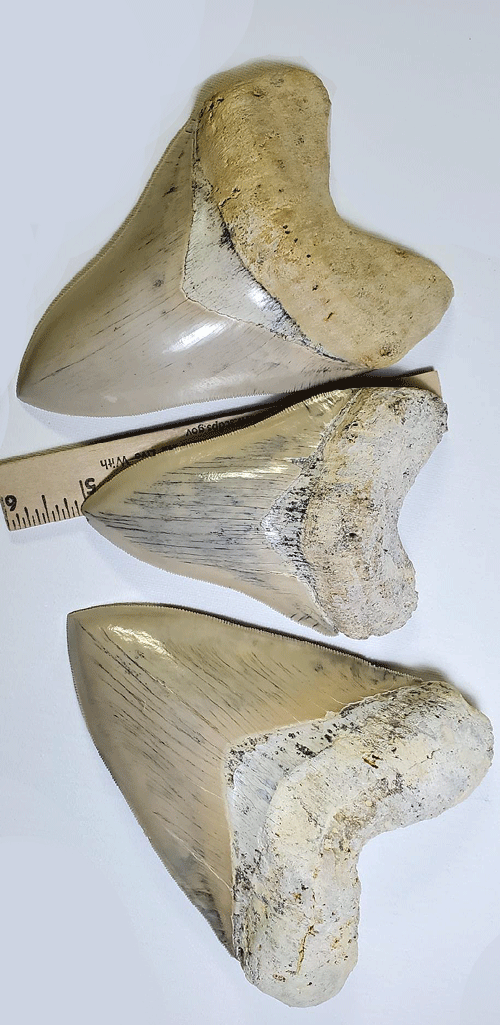
The shape of the tooth also carries essential clues. These teeth are broad and triangular, with thick roots and often slightly curved crowns. However, nature is never perfect. Real specimens usually display subtle flaws—such as chips along the edge, uneven serrations, or cracks in the enamel. These imperfections are not defects; they are signs of time and authenticity. Replicas, by contrast, tend to look suspiciously smooth and symmetrical.
Surface texture is another revealing factor. While polished teeth exist in the collector’s world, most unaltered fossils have a matte or chalky appearance, especially around the root area. If the entire tooth gleams unnaturally, that’s cause for a second look. Authentic enamel may reflect light softly, but it should never resemble plastic or porcelain.
The Importance of Weight and Density
Weight, as basic as it sounds, can be a giveaway. Fossilized teeth are heavier than modern ones because the organic material has been entirely replaced by minerals. If you pick up what appears to be a large, ancient shark tooth and it feels light or hollow, it may be a well-made fake. The heft of a genuine specimen can be surprising, especially when the tooth is small but dense in nature.
Even when viewed side by side, two seemingly identical teeth can feel completely different in the hand. That’s because authentic megalodon fossils vary depending on the conditions in which they were preserved. A tooth found in Florida may differ in texture and color from one discovered in Morocco. These differences, though sometimes subtle, create a world of distinction for seasoned collectors—and can offer helpful signs for beginners trying to evaluate authenticity.
The Truth Lies in the Edges
Serrations are one of the most overlooked yet essential features of a megalodon tooth. These tiny, saw-like notches enabled the shark to slice through its prey with excellent efficiency. On a genuine fossil, these serrations may be worn down, but they often remain visible. A completely smooth edge—especially one that looks too “clean”—may indicate that the tooth is a replica or has been over-polished.
Another feature worth examining is the transition between the crown and the root. In real fossils, this junction is typically well-defined. The enamel on the crown tends to differ slightly in color and texture from the root, forming a visible line where one ends and the other begins. This contrast is harder to reproduce convincingly in imitations, making it a reliable point of examination.
While these signs may not always be definitive on their own, together they form a compelling narrative. The more authentic details you spot, the more confident you can be in the fossil’s legitimacy.
Color Can Tell a Story
When teeth lie buried for millions of years, they absorb minerals from their surrounding environment. This process not only fossilizes them but also gives them their signature colors. Unlike modern shark teeth, which are typically white or off-white, fossilized megalodon teeth come in a variety of shades, including black, gray, brown, tan, and occasionally blue or green.
These colors don’t exist for aesthetic value. They’re geological fingerprints, showing the unique mineral content of the site where the fossil was discovered. This is why knowing the tooth’s origin can add credibility. Sellers who can provide location details often offer more trustworthy pieces than those who cannot.
Although color alone isn’t a guarantee of authenticity, a good understanding of regional variations helps collectors build trust in what they’re seeing. A genuine megalodon tooth from the rivers of South Carolina will likely have a very different hue than one pulled from the deserts of Peru, and that’s precisely what makes each one unique.
Tools and Techniques for Further Inspection
For collectors or hobbyists who want to explore in greater depth, modern tools can assist in confirming authenticity. A magnifying lens can reveal fractures, sediment residue, or naturally formed patterns that would be difficult to fake. Some even use ultraviolet light to check for modern glues or composite repairs. If the tooth glows under UV light, it may contain artificial substances not visible to the naked eye.
These small steps can make a big difference when you're investing in a piece of prehistoric history. A little patience and a lot of observation go a long way toward making sure your specimen is worth its weight in minerals.
Emotional and Educational Value
Beyond its appearance and weight, a megalodon tooth fossil holds profound educational and emotional value. It becomes a conversation starter, a family heirloom, or a valuable learning tool. Museums use them to engage young minds. Enthusiasts use them to fuel further exploration into Earth’s history.
There’s something quietly moving about holding a tooth that was once part of a creature spanning 50 feet or more, that ruled the oceans long before humans existed. It turns a simple object into a doorway to imagination.
This is what makes authenticity so important. A genuine fossil preserves the truth, while a replica merely imitates it. That distinction, once understood, makes all the difference for those who appreciate the story each piece holds.
Trust, Curiosity, and Collecting with Confidence
Whether you're collecting for science, education, or curiosity, your journey starts with knowing how to recognize what’s real. From the serrated edges to the earthy colors and dense structure, an authentic megalodon tooth fossil is more than an object—it’s a time capsule.
As you browse options and evaluate specimens, trust your instincts, conduct thorough research, and ask questions. Sellers who care about their fossils will be happy to explain their provenance, condition, and characteristics. And if something feels off, it’s worth exploring further before making a commitment.
Ready to Start Your Journey?
If you’re ready to begin or expand your fossil collection, there’s no better time to dive in. Whether you’re after a large display piece or a compact fossil to study and admire, let curiosity guide your steps and wisdom shape your choices.
Start your search with guidance from knowledgeable sources who prioritize authenticity and quality. You’re not just buying a fossil—you’re holding a piece of Earth’s deep history in your hand.
Explore genuine megalodon teeth and discover what it feels like to own something truly ancient with Buried Treasure Fossils.