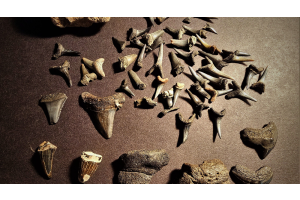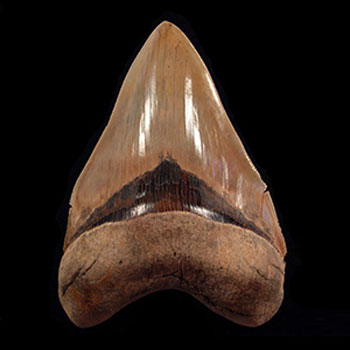
Long before humans walked the Earth, the oceans were ruled by giants. Among them was the megalodon, a shark that grew larger than a city bus and carried teeth as big as a human hand. Fossils of this prehistoric predator continue to spark curiosity, but what truly captures the imagination are the slightest traces of its beginning. A baby megalodon tooth, though rare, provides a glimpse into the early life of a creature that dominated the seas for millions of years.
These fossils are more than remnants of a past era; they are silent storytellers, offering pieces of a puzzle that scientists and collectors alike are still trying to complete.
The Significance of Early Fossil Finds
When people think of megalodon fossils, they picture massive triangular teeth with serrated edges, each one capable of slicing through bone and flesh. Yet, the smaller teeth reveal something equally fascinating. They represent a time when the shark was still growing, adapting, and learning to survive in a world of competition and danger.
Unlike the large specimens often displayed in museums, these smaller finds reveal that even as juveniles, these sharks had teeth designed for predation. The sharp edges and distinctive triangular shapes were already present, hinting at the design that would enable them to become apex predators as adults.
Evolutionary Clues Hidden in Fossils
Every fossil carries traces of the environment from which it originated. The mineral composition, coloration, and wear on a tooth all provide information about the waters in which the shark swam. A baby specimen tells even more—where nurseries may have existed, what food sources were available, and how these sharks grew during their earliest years.
Some paleontologists believe that shallow, warm waters served as safe zones for young megalodons, much like modern sharks utilize coastal nurseries. The discovery of smaller fossils in these areas supports the theory, suggesting patterns of survival that mirror the habits of their modern relatives.
Why Collectors Value Smaller Fossils
Collectors often chase the most significant and most dramatic fossils. However, those who understand the story behind smaller specimens know that rarity adds to their appeal. A juvenile fossil is less likely to survive the millions of years of geological changes that preserve larger teeth.
The presence of serrations on such a small piece makes them unique, offering a delicate version of the massive adult features. For collectors, it’s not about size—it’s about rarity, story, and connection to a period of natural history that cannot be repeated.
A Window into Prehistoric Oceans
Holding one of these fossils is like carrying a chapter of history in your hands. Imagine the prehistoric seas where giant whales swam, massive fish darted through the waters, and juvenile megalodons had to find their place among predators and prey. Each tooth is a fragment of that lost ecosystem.
Scientists studying these fossils often compare them with those of modern sharks. This helps in understanding how certain traits evolved over time. The similarities show that while species change, survival tools such as sharp, serrated teeth remain consistent in marine predators.
The Role of Geology in Preservation
The story of how a fossil survives is as captivating as the creature it belonged to. For a small shark tooth to remain intact over millions of years, conditions had to be precise. Sediment layers, mineral deposits, and geological shifts all worked together to transform fragile enamel into a durable fossil.
This transformation means that no two specimens are exactly alike. Some take on deep hues of black, others shades of grey, and some even retain earthy tones depending on the minerals present in the soil. Each fossil becomes a natural work of art shaped by time.
Collecting with Care and Respect
Fossil hunting has become more accessible, but it comes with responsibilities. Ethical collecting ensures that sites remain preserved and that fossils are obtained legally. Small specimens, especially those belonging to rare species, must be handled with respect—not only for their monetary value but also for their scientific importance.
Many collectors choose to display these pieces in protective cases, ensuring that the fragile edges and serrations remain intact. Whether displayed on a shelf or used as teaching tools, they remind us of the balance between nature’s fragility and resilience.
The Fascination of a Baby Megalodon Tooth in Collections
For those passionate about paleontology or fossil collecting, acquiring such a specimen is a way to connect with deep time. A baby megalodon tooth is not simply a fossil; it’s a bridge between the mysteries of the ocean’s past and the curiosity of the present.
Collectors often describe a sense of awe when holding one, realizing it once belonged to a predator that shaped marine ecosystems. Its size might be modest compared to the adult versions, but its significance is immense—it speaks of beginnings, survival, and the enduring story of life in Earth’s oceans.
How Fossils Spark Imagination
These fossils inspire more than scientific inquiry; they ignite creativity. Writers, artists, and storytellers often draw inspiration from ancient creatures. The megalodon, with its unmatched presence in prehistory, has fueled myths and stories across cultures. A smaller fossil adds another layer to this narrative—it tells the story of growth and the start of something immense.
Whether studied in classrooms, displayed in collections, or admired by hobbyists, these pieces remind us of the vastness of history. They carry with them a reminder that every giant predator began as something small.
A Symbol of Time’s Passage
Every fossil, large or small, represents a timeline that stretches back millions of years. The smallest fossils remind us that nature’s most formidable predators were once vulnerable, dependent on environments that nurtured their growth.
They also remind us of the slow passage of time. The oceans that once cradled megalodons have shifted, species have come and gone, yet their teeth remain—solid evidence of a world long gone but never forgotten.
Conclusion
From massive specimens to delicate juvenile finds, fossils tell the grand story of life’s resilience. Among them, the discovery of a baby megalodon tooth offers a rare and fascinating perspective on how even the mightiest creatures begin their journey. These fossils are small in size yet rich in meaning, holding within them echoes of oceans that no longer exist.
When we collect, study, or appreciate such pieces, we participate in preserving their story. And while their journey through time has already been remarkable, their place in our hands allows the story to continue.
If you are fascinated by the mysteries of prehistoric life, consider adding one of these rare finds to your collection. Explore, learn, and let the story of the megalodon spark your imagination today.