

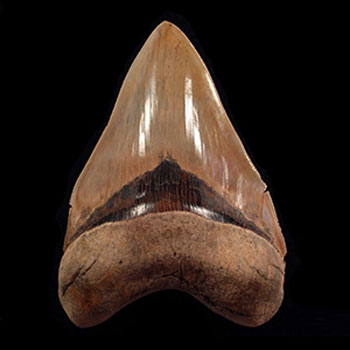
The ocean has always been a keeper of mysteries. From the soft ripple of waves brushing the shore to the deep abyss where sunlight fades, it holds a history longer than we can fathom. Among these hidden stories are remnants of creatures that once roamed the seas millions of years ago. Imagine the thrill of man finding a tooth from a megalodon, a predator so massive that it reigned as the ultimate ruler of the ancient oceans. A single fossilized tooth is not merely a relic; it is a direct connection to a time when giants thrived beneath the surface.
That discovery is more than an artifact—it is a story that links the present with a time when sharks grew larger than buses, and their teeth were as sharp as nature could create. Let’s take a journey through what makes such a find so extraordinary and why these fossilized treasures capture the imagination of people across the globe.
The Ocean’s Ancient Hunter
Megalodon was no ordinary shark. Scientists believe it lived approximately 23 to 3.6 million years ago, during a time when marine life was abundant and massive. With estimates suggesting lengths up to 60 feet or more, this shark ruled the oceans with unmatched dominance.
The most iconic remnants of this apex predator are its teeth—massive triangular fossils, often serrated like blades. These teeth grew continuously throughout the shark’s life, meaning one individual could have produced thousands during its lifespan. Today, these fossils are scattered across riverbeds, coastal cliffs, and ocean floors, waiting for an eager eye to uncover them.
Why a Tooth Matters So Much
It might seem surprising that a single tooth can carry such significance. Yet, unlike bones that often decay, shark teeth fossilize remarkably well due to their durable enamel. Each tooth tells a silent story of survival, feeding habits, and adaptation.
Finding one in excellent condition is like holding history in your hands. The size alone can leave people stunned, sometimes larger than the palm of a human hand. For fossil hunters, collectors, and casual explorers alike, the discovery brings both excitement and curiosity.
The Human Fascination with Ancient Fossils
There is something intensely captivating about discovering what nature has carefully preserved. Fossils bridge the gap between myth and science, giving us evidence of creatures that sound more like legends than reality. The fascination grows stronger when these finds are connected to the largest shark ever to have lived.
Collectors prize these fossils not only for their rarity but also for their beauty. The serrated edges, unique colors, and sheer size make them natural wonders. Some people display them as prized pieces in their homes, while others see them as investments that appreciate in value over time.
A Moment That Feels Like Time Travel
Imagine strolling along a beach or diving into shallow waters, unaware that history is only a few inches beneath your feet. Then, your fingers brush against a hardened triangular form, weathered yet intact. In that instant, time folds, and you’re connected to an era when colossal predators roamed freely.
That is the magic of when a man finds a tooth of megalodon—it is less about the fossil itself and more about the experience of discovery. It sparks imagination, awe, and the realization that life on Earth has always been far bigger and more mysterious than we tend to remember.
From Riverbeds to Display Cases
Today, some of the most incredible megalodon teeth are unearthed not in the open ocean but in rivers, cliffs, and even inland areas where oceans once existed. Fossil hunters often spend years refining their methods—scuba diving in fossil-rich waters, sifting through sediment, or scouring dried riverbanks.
Once discovered, these teeth can be carefully cleaned and preserved. Their natural colors range from jet black to deep browns, depending on the minerals absorbed during fossilization. Some collectors prefer raw, unpolished teeth, while others appreciate restored versions that highlight their sharp serrations and fine details.
The Value Beyond Price Tags
While some megalodon teeth can fetch impressive prices in fossil markets, their actual value often lies in what they represent. They are symbols of Earth’s history, a glimpse into evolution, and proof of how life adapts and changes through time.
Each fossil reflects a moment when a predator dominated the ocean, shaping ecosystems that we still study today. For scientists, these fossils help reconstruct past environments, offering clues about ancient marine life, temperatures, and global changes. For individuals, they are keepsakes of history that connect them to something far larger than themselves.
The Adventure of Fossil Hunting
For many enthusiasts, the journey to find fossils is as thrilling as the discovery itself. Fossil hunting requires patience, keen observation, and respect for natural environments. Each find is like solving a puzzle—where was it formed, how long was it buried, and what conditions preserved it?
When shared among families or friends, fossil hunting becomes more than a hobby. It becomes a story of adventure, teaching lessons of curiosity and perseverance. Children especially find it fascinating, as the idea of uncovering a giant shark’s tooth feels almost magical.
Ancient Stories in Modern Hands
It’s easy to forget how recent humans are in the timeline of Earth. When fossils like megalodon teeth are discovered, they remind us that our world has undergone immense changes. Once, seas teemed with predators far larger than anything alive today.
Holding such a fossil is like having a conversation with the past. It speaks silently of life cycles, predators and prey, and oceans that no longer exist. It makes us realize that while humans build monuments and machines, nature leaves its records in stone, sediment, and fossilized remains.
Collecting Fossils Responsibly
With the growing interest in fossils, it is essential to emphasize the importance of responsible collecting. Legal guidelines vary by region, and ethical practices ensure that critical scientific specimens remain available for research. Collectors are encouraged to respect protected sites, avoid damaging ecosystems, and appreciate fossils as more than decorative objects.
Responsible fossil hunting is about balance—cherishing the joy of discovery while ensuring these treasures remain part of Earth’s shared story.
A Legacy That Still Captures Imagination
Even though the megalodon vanished millions of years ago, its legacy endures. Stories of its sheer size and dominance still inspire movies, books, and endless fascination. Each time someone discovers one of its teeth, that legacy continues, reminding us of the giants that once ruled the sea.
Finding a fossil is not only about science; it is about imagination. It fuels curiosity about what else might remain hidden, waiting to be noticed. And every discovery makes the world feel richer, reminding us of the mysteries that lie just beneath our feet.
Conclusion: A Rare Encounter with History
The tale of when a man finds a tooth of megalodon is more than a casual headline. It is a story about connection, discovery, and the timeless appeal of the ocean’s mysteries. Whether found in riverbeds or coastal sands, these fossils are symbols of nature’s artistry and resilience.
For those who collect or admire them, each tooth is a reminder of the world’s vast history and the creatures that came before us. We may live far from the prehistoric seas, but holding such a fossil is like having a fragment of that ancient world.
If you’ve ever dreamed of bringing a piece of history into your life, now is the time to explore these remarkable fossils. They are more than artifacts—they are gateways to a world that continues to inspire awe and wonder.






