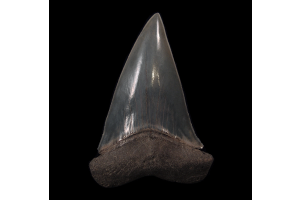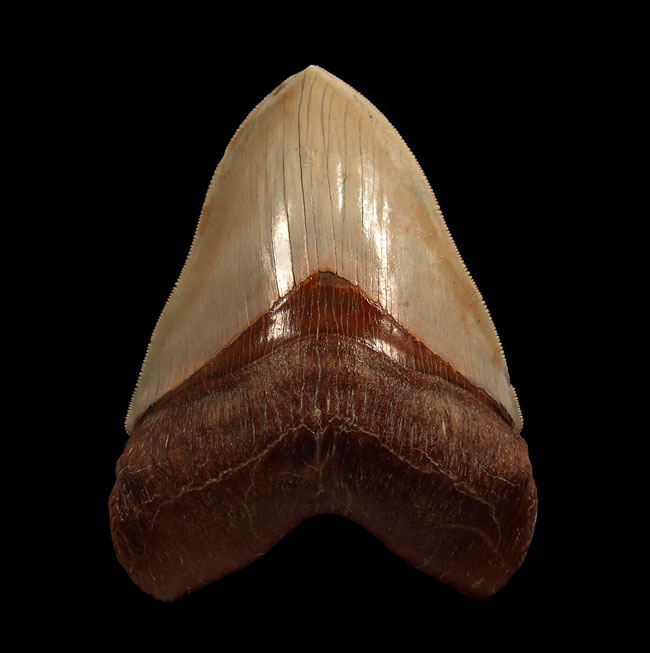
A single fossil can change everything. Not your day. Not just your collection. Everything. Case in point: a solitary tooth, pulled from the earth in coastal Chile, weather-worn but proud. Big. Heavy. Ancient. And sharp enough in form to command respect, even millions of years after its last bite.
This is not just a relic. It’s a conversation starter, a collector’s prize, a paleontological headline all rolled into one. And that’s why it now holds court as one of the most captivating specimens in our entire catalog of megalodon fossils.
While fossil hunters and shark tooth enthusiasts around the world continue to marvel at the staggering size and symmetry of the megalodon tooth found in Chile, we’ve quietly become the go-to curators of rare pieces like this. And today, we’re telling you exactly why. Let’s dig in, shall we?
What Makes a Megalodon Tooth More Than Just a Fossil?
Sure, all megalodon teeth are impressive—even the broken ones. But every so often, a specimen crosses your desk that makes you sit up straight. You don’t just glance. You linger. You whisper something like “Is that real?” before checking the size chart for confirmation. This Chilean tooth is one of those moments.
First, the sheer dimensions. A tooth like this suggests a creature at the top end of the size scale—possibly pushing past 60 feet in length. It’s not a stretch to say this shark made the great white look like a curious minnow. Then there’s the condition. Found lodged in the mineral-rich sediment of Chile’s coastal strata, this particular fossil retained much of its root integrity, enamel layering, and coloration—offering a nearly textbook specimen for display, study, or collection. It’s not just the stats that matter. It’s the story it tells.
Chile’s Rich History Beneath the Surface
When most people think of fossil sites, they often envision Utah, Wyoming, or perhaps Florida. But Chile? That’s a quieter secret among seasoned collectors.
And we love secrets.
The Andean nation is home to some of the most well-preserved marine fossil beds on the planet. Layers of oceanic sediment from epochs past stack along its coastline like pages in a forgotten book. But these pages don’t just contain trilobites and ammonites. They hold records of apex predators who once roamed the shallows, slicing through the water like torpedoes with teeth.
The specific megalodon tooth found in Chile that caught our eye came from such a site. And once it was gently excavated, cleaned, and verified, it quickly became clear that we were looking at something truly special.
The Collector’s Eye: Why We Knew It Belonged Here
We’ve seen a lot. We’ve handled thousands of teeth. Some polished, some raw, some just whispering of what they once were.
But this one had… presence.
It’s hard to describe unless you’ve spent as much time as we have surrounded by ancient remains. Some pieces sit quietly in their display cases. Others demand attention. This Chilean tooth did the latter. And we knew instantly: it was a fit for our lineup.
Why? Because we’ve always catered to collectors who know the difference. Who doesn’t just want a fossil—they want the one. The centerpiece. The wow factor. Something that makes their friends blink twice and lean in.
We’ve built our reputation on sourcing, curating, and presenting these pieces with the care and transparency they deserve. It’s not about volume. It’s about value, not just in dollars, but in depth.
From Earth to Display: The Journey of a Fossil
Before it ended up nestled in our private collection, this one-tooth wonder lived through a journey spanning millions of years and countless geological shifts.
First came the creature itself, tearing through prey in the Miocene or Pliocene oceans like a missile with a mouth. When it lost this particular tooth—a common occurrence, since sharks regenerate thousands over their lifetimes—it sank slowly to the ocean floor. Over time, layers of sediment buried it. Pressure mounted. Minerals replaced organic material, fossilizing it into stone.
And then, millions of years later, it was discovered.
But the journey doesn’t end with excavation. Once a specimen is removed from its resting place, it must be authenticated, categorized, gently cleaned, and carefully stored. The wrong brush stroke or humidity level can destroy what time has preserved.
We handle these fossils with reverence. We work with trusted field experts who follow ethical collection practices. We document everything, from GPS data to sediment layer context. When you purchase a tooth from us, you’re not just buying a fossil—you’re adopting its legacy.
Why One Tooth Can Speak for an Entire Species
We don’t get full skeletons of megalodons. Cartilage doesn’t fossilize the way bone does. What we do get are clues: teeth, vertebral centra, and sometimes impressions in rock.
That’s where teeth like this one become more than collectibles. They’re data.
The megalodon tooth found in Chile helps paint a picture of this prehistoric predator. Its size tells us how large the shark likely grew. The wear on the enamel suggests diet. The mineral composition reveals how long it lay buried, and what elements it absorbed over time. So yes, we display it with pride, but we also treat it like the biological treasure it is.
And if you’re the kind of person who sees more than a price tag when you hold a piece like this, then you’re exactly who we’re here for.
Let’s Talk Shape, Size, and Color
Collectors know: not all megalodon teeth are created equal. Some are triangular and broad. Others are narrow and curved. Colors can range from sandy beige to smoky gray to inky black, depending on the minerals present during fossilization. This Chilean tooth? A moody charcoal enamel, brushed with iron-rich red along the root edge. Classic serration patterns are still visible under magnification. And the curve? Subtle, but confident—like a saber.
It’s the kind of fossil you don’t forget.
We Don’t Just Sell Fossils—We Curate Stories
Anyone can toss a fossil on a website with a price tag. That’s not us. We research each specimen. We document the backstory, the excavation conditions, and the regional significance. And then we help you find the piece that speaks to your taste, your collection, and your curiosity. This is why our collectors come back again and again. Not just for the fossils. For the experience.
We know what it means to open a package and find not just a rock, but a relic. Something real. Something rare. Something with weight.
Why This Tooth Proves Our Reputation
There’s a reason collectors choose us when they’re looking for the best. Not the flashiest. Not the most hyped. The best.
The megalodon tooth found in Chile wasn’t sent to us by accident. It came through our network of field specialists and academic contacts who know we do things differently. Who know we’ll preserve it, represent it honestly, and place it in the hands of someone who understands what they’re holding. We’ve earned that trust, fossil by fossil, and we’re proud of it.
Thinking About Starting or Expanding Your Collection?
Here’s the thing about megalodon fossils: no two are the same. Each one comes with its personality, its journey, its imprint on time. You don’t need a shelf full to be a collector. You just need one piece that speaks to you. Whether it’s a Chilean giant like this one, or a smaller tooth with wild serrations from the East Coast, we’ll help you find it. We’re not just in the fossil business. We’re in the wonder business.
The Takeaway: One Tooth. One Legacy. One Choice.
Let’s circle back. The megalodon tooth found in Chile isn’t just a specimen. It’s a marker of time, a symbol of scale, and a reminder that the past still has plenty to teach us. It also happens to be stunning—and yes, slightly intimidating—in the best possible way.
We’re honored to be the caretakers of such rare finds, and even more honored to pass them on to people like you, who understand that collecting isn’t about filling drawers. It’s about filling your life with things that matter. So, if this story sparked something in you, that quiet thrill only a true fossil can bring, maybe it’s time to explore what else is waiting to be uncovered.
We’ll be right here when you’re ready.