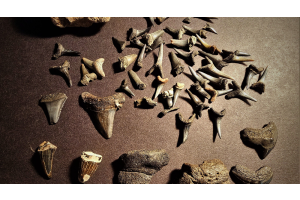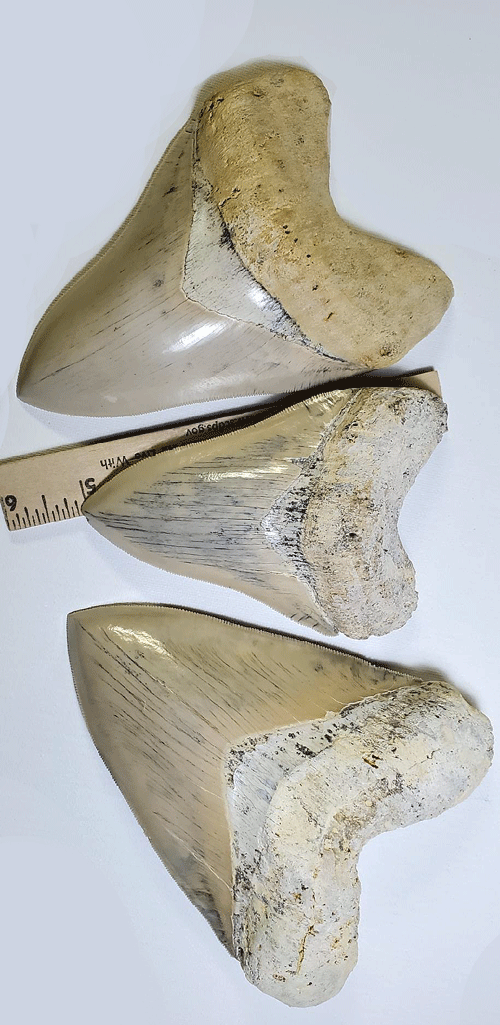
Megalodon teeth are among the most sought-after marine fossils in the world. With demand rising, so has the number of imitations flooding the market. As fossil collectors, hobbyists, and marine history enthusiasts look for authentic specimens, knowing how to tell a real fossil from a replica is critical. We offer reliable guidance and access to verified fossils, and understanding what sets an actual megalodon tooth apart from a fake can help collectors make informed purchases. Once you know what to look for, an actual megalodon tooth reveals clear signs of authenticity.
Why Are Megalodon Teeth Replicated So Often?
Megalodon teeth, especially those over 6 inches, can fetch a high price. This makes them attractive targets for counterfeiters. Replicas are often made of resin, plastic, or cast stone, shaped and painted to resemble real fossils. These artificial copies might look convincing to the untrained eye, but they lack the unique geological and physical qualities of an authentic specimen.
Weight and Density: The First Clue
One of the simplest tests is to examine the weight. An actual megalodon tooth feels dense and heavy due to the fossilization process, which replaces the original tooth structure with minerals over millions of years. Resin or plastic replicas, no matter how detailed, often feel noticeably lighter. If a tooth that looks large feels surprisingly light, it's a warning sign.
Surface Texture and Detail
A genuine fossilized tooth will show natural variations in texture. Look closely at the enamel. Real megalodon teeth often display a mix of smooth and weathered patches. There may also be minor chips, pitting, or sediment deposits trapped in crevices, indicating age and exposure to natural conditions.
In contrast, replicas typically have an overly smooth surface or artificial aging effects. Brush strokes or visible mold lines are common on mass-produced fakes.
Serrations: Sharp Evidence of Authenticity
One of the hallmark features of an actual megalodon tooth is its serrated edges. These tiny, saw-like notches were vital for the shark’s feeding. While not every real tooth retains perfect serrations due to age or wear, many specimens do preserve them to some extent.
Replicas often struggle to replicate this detail accurately. Their serrations may look too symmetrical, shallow, or uniform. This isn’t typical of authentic fossilized teeth.
Color Variations Tell a Geological Story
Another sign of an actual megalodon tooth is its coloration, which reflects the sediment and minerals where it was buried. Real specimens come in shades of black, grey, brown, tan, and even blue or olive hues, depending on the environment they fossilized in.
Fake teeth tend to have flat, uniform coloring that often appears too dark or unnaturally vibrant. Some are artificially dyed or painted to appear aged, but close inspection usually reveals inconsistencies.
An actual megalodon tooth often displays a gradual blend of colors across the enamel and root, which is hard to fake accurately.
Check the Root: Shape and Porosity
The root of a genuine megalodon tooth is often the best place to spot authenticity. It tends to be porous, sometimes grainy, and shows wear consistent with fossilization. Natural indentations, mineral veins, or minor erosion may be visible.
In replicas, the root may appear overly smooth or too clean. If the enamel looks convincing but the root is clearly manufactured, it’s likely a fake.
Examine the Overall Shape and Size
Megalodon teeth came in a variety of shapes depending on their position in the jaw. Upper teeth tend to be broad and triangular, while lower teeth are narrower and curved.
Fake teeth are often molded from just one "ideal" shape, usually a wide, symmetrical upper tooth, which ignores natural variation. Real teeth frequently show irregularities in symmetry, tip angle, and base contour due to their original location in the mouth and the effects of time.
Provenance and Seller Transparency
Authenticity isn’t just about physical inspection. Trustworthy sellers will provide provenance, including where and how the tooth was found. This might include the region, type of sediment, and context of discovery. A real seller will also disclose any restoration, repair, or stabilization work done on the fossil.
When in doubt, ask questions. Vague answers or hesitation from a seller about a tooth’s origin should raise caution. Documentation is especially important for high-value specimens.
Signs a Megalodon Tooth May Not Be Genuine
● No mineral deposits or variation in surface texture
● Too light for its size
● Shiny or plastic-like sheen
● No visible wear on edges or root
● Overly smooth or symmetrical serrations
● Identical duplicates for sale in bulk
● Paint or artificial aging is visible under magnification
An actual megalodon tooth rarely looks flawless. Age leaves marks, and wear is expected. If a specimen looks too uniform or “clean,” it’s likely not real.
How Magnification Can Help
Using a magnifying glass or macro camera lens, examine the tooth for micro-details. Look for:
● Micro-scratches from abrasion
● Mineral grains embedded in cracks
● Natural fractures
● Variations in luster and texture
These small imperfections provide clues that replicas usually cannot reproduce.
Why Authenticity Matters
Beyond monetary value, owning an actual megalodon tooth connects you to prehistoric history. It’s not just a fossil. It’s a relic of one of the most formidable predators Earth has known. Whether for education, collection, or display, ensuring authenticity adds meaning and credibility to your fossil investment.
When Restoration Is Acceptable
Some real teeth are repaired after excavation, especially those with cracked roots or broken tips. This doesn't make them fake, but honest sellers should disclose such details. If a tooth has been overly restored or filled with synthetic material, it may lower the value even if the original fossil is real.
Always ask if the tooth is 100 percent natural or has undergone stabilization. Understanding the difference will help guide your expectations.
Final Tips Before You Buy
● Hold the tooth if possible. The weight alone is often revealing
● Ask for high-resolution images and detailed descriptions
● Compare multiple specimens. Once you’ve seen real variation, fakes become more obvious
● Consult with experienced collectors or paleontologists if you’re unsure
● Read reviews or testimonials for fossil vendors before making a purchase
Conclusion: Trusting the Signs of Authenticity
Spotting the difference between a replica and an actual megalodon tooth requires a mix of observation, knowledge, and a bit of skepticism. While replicas may have a place as decorative items, authentic fossils carry historical, scientific, and collector value that cannot be imitated. If you're seeking a genuine specimen, choose vendors who provide transparency, documentation, and access to clear images and fossil history. We offer quality, authenticated specimens to help you build a collection you can trust.
For collectors looking to own a verified actual megalodon tooth, Buried Treasure Fossils remains a trusted source in the fossil community.
Have questions about authenticity? We offer expert support and genuine fossils. Reach out today to find the megalodon tooth you need.