

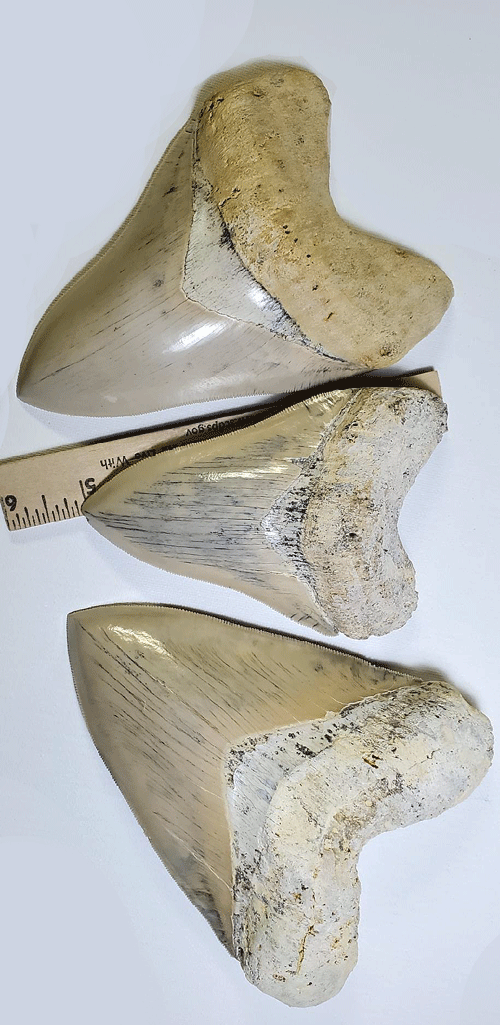
There’s something undeniably thrilling about holding a prehistoric shark tooth in your hand—whether it's the serrated edge of a Megalodon tooth or the sleek curve of a crow shark fossil. These ancient remnants offer a glimpse into the oceans of the distant past. But for fossil collectors and enthusiasts alike, one lingering question always floats to the surface: Is it real? We’ve seen it all—fossils that wow you at first glance, only to reveal their true nature as replicas. When you're investing time, money, and passion into a piece of natural history, confirming that it's an authentic megalodon tooth becomes essential.
Let’s explore how you can confidently tell the difference between a genuine prehistoric shark tooth and a modern reproduction.
The Appeal of Prehistoric Shark Teeth
Fossilized shark teeth have fascinated collectors for decades. The Megalodon, an apex predator that ruled the seas millions of years ago, left behind teeth that can measure over 7 inches. Holding one is like holding a piece of evolutionary power.
But not all shark teeth are created equal. Genuine specimens, particularly from species like Otodus megalodon, Carcharocles angustidens, and Squalicorax, carry distinct features that separate them from man-made counterparts. That distinction becomes even more critical when investing in high-value items like an authentic megalodon tooth.
Natural Characteristics vs. Manufactured Flaws
One of the first things to check is the texture. Real shark teeth fossils often display slight pitting, mineral veins, and an earthy, aged look. The surface isn't glossy like plastic—unless the tooth has been artificially polished (which is sometimes done but usually disclosed).
On the other hand, replicas made from resin or composite material often appear too smooth, too shiny, or too uniform in color. They might look impressive from a distance, but up close, their lack of detail is telling. You can often spot mold lines or unnatural symmetry, which are signs of casting.
Color Tells a Story
Authentic prehistoric teeth don’t all look the same—and that’s a good thing. Depending on the sediment they fossilized in, they can take on shades of black, brown, gray, blue, and even green. These colors result from the minerals present in the soil and water during fossilization. A replica typically features a flat, artificial hue—usually jet black or off-white—that lacks the natural variation seen in real teeth. So if a tooth appears to be painted, or looks too “new,” it may be a reproduction.
The Weight Test
Real fossilized shark teeth are heavy for their size. This density comes from the fossilization process, which replaces organic material with minerals. If you pick up an authentic megalodon tooth, it should feel solid in your hand. In contrast, resin-based replicas are noticeably lighter. If a tooth feels oddly hollow or flimsy, that’s a red flag. While weight alone shouldn’t be your only criterion, it’s a great supporting indicator.
Pay Attention to the Serrations
Megalodon teeth are famous for their serrated edges—sharp, powerful ridges that helped them tear through prey. In real teeth, these serrations are usually worn down slightly from age or ocean tumbling, but still distinct under close inspection. Replica serrations may look exaggerated or machine-perfect. They may be evenly spaced or feel “too sharp” to be real. Also, the enamel of a real tooth typically transitions naturally into the root, while fake versions often show a noticeable seam or edge between parts.
The Root: A Key Identifier
Don’t ignore the root of the tooth—it’s often where fakes are easiest to spot. Real roots are rugged and porous, usually darker than the enamel. They may show signs of wear, chips, or cracks that reflect their journey through time. Replicas often have smooth, rounded roots without the pitted texture. If it looks too clean or symmetrical, take a closer look.
Trust in the Source
Perhaps the most critical aspect of your fossil-buying journey is choosing a reliable source. Reputable fossil retailers provide detailed product descriptions, origin information, and high-resolution photos that let you examine the tooth before purchasing. Buried Treasure Fossils, for example, is known for offering a wide variety of authentic megalodon tooth specimens, complete with size, quality, and provenance data. Transparency is the foundation of trust in fossil sales.
What About Repaired or Restored Teeth?
Not every real tooth is sold in perfect condition. Some have been repaired—cracks stabilized, chips filled—to enhance display value. These should always be disclosed. Repairs don’t necessarily make the tooth fake, but they do affect its price and collectible status. The important thing is that the restoration work is done professionally and clearly communicated. A repaired real tooth is still far more valuable than a cast replica.
Common Replica Pitfalls to Avoid
Many replicas are sold online or in gift shops without clear labeling. Terms like “replica,” “model,” or “fossil casting” might appear only in the fine print. Don’t rely solely on images. If the price is unusually low for the size or species, there’s usually a reason. Before purchasing, ask questions: Where was it found? Is it repaired or restored? Can you see close-up photos? A trusted seller will answer with confidence and provide all the information you need.
Let’s Bring It All Together
Identifying a genuine prehistoric shark tooth requires a mix of observation, experience, and trust in your source. From texture and weight to coloration and serration patterns, there are many indicators that can guide your judgment. If you’re aiming to add an authentic megalodon tooth to your collection, it's not just about having a large, intimidating specimen. It’s about securing a real piece of prehistoric life—something that tells a story and holds historical weight.
And we understand. As longtime fossil enthusiasts, we know the joy of holding something ancient in your hand and knowing it’s the real deal.That’s why at Buried Treasure Fossils, every listing is crafted to help collectors make informed, confident choices.
Conclusion
Fossil collecting is more than a hobby—it’s a way to connect with Earth’s past. But the experience loses its meaning if you can’t trust the authenticity of your specimens. Whether you're just starting out or you're on the hunt for a showpiece, understanding how to distinguish a replica from the real thing is essential. Every genuine fossil adds depth, value, and credibility to your collection, making the pursuit all the more rewarding.
Investing in an authentic megalodon tooth means you're claiming a genuine chapter of oceanic history. And when you’re ready to make that leap, we’re here to help you make it with confidence.
We offer genuine prehistoric shark teeth for passionate collectors—discover, learn, and own a real piece of ancient ocean history today.






