

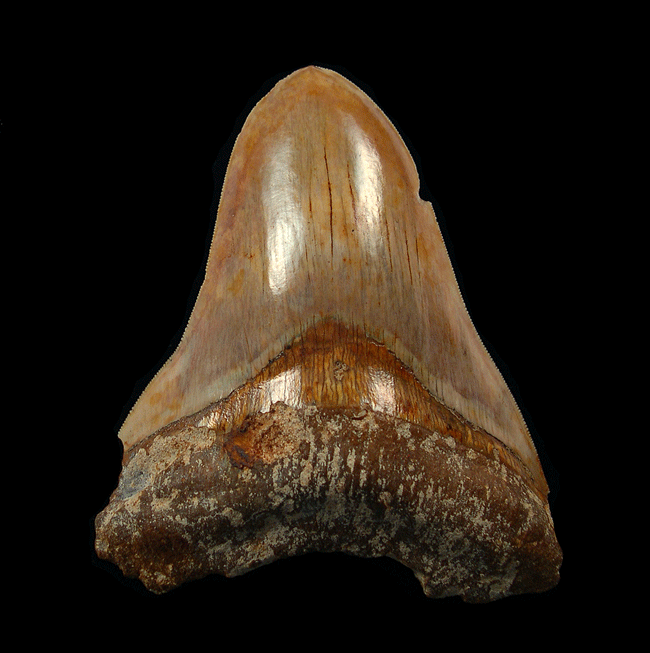
Few fossils evoke the awe and fascination of an authentic Megalodon tooth from Indonesia. These teeth are relics of a time when the ocean was dominated by the largest predator to have ever lived, the Megalodon shark. Unearthed primarily from the Miocene-aged fossil beds of West Java, these teeth are prized not only for their sheer size but for their remarkable preservation and distinctive coloration.
Among collectors and paleontologists alike, the quest to obtain and preserve a genuine Indonesian Megalodon tooth is a challenge compounded by the increasing number of replicas and restorations on the market.
This comprehensive guide will equip you with the knowledge to confidently identify and authenticate these biggest Megalodon tooth fossils ever found, ensuring your prized specimen is 100% genuine.
Why Indonesian Megalodon Teeth Are So Highly Valued
The fossil beds of West Java, Indonesia, are world-renowned for producing Megalodon teeth that are often considered the finest available. These teeth stand out due to their unique “spade-shaped” morphology, which is characteristic of lower jaw Megalodon teeth, as well as their stunning enamel coloration. Unlike many Megalodon teeth sourced from other parts of the world, Indonesian specimens often boast a deep brown crown with a golden brown bourlette — the thin band separating the enamel from the root. This combination gives the tooth a warm, earthy palette that collectors find irresistible.
More than aesthetics, these teeth reflect exceptional preservation conditions. The mineral-rich Miocene sediments of West Java allowed the teeth to fossilize with a dense, glossy enamel coating and razor-sharp serrations, offering a glimpse into the formidable biting power of the ancient Megalodon. Moreover, many Indonesian Megalodon teeth retain their roots with only minor natural pitting, a feature that reinforces their authenticity and geological origin.
Geological and Paleoenvironmental Context
Authentic Indonesian Megalodon teeth are rooted in a specific geological timeframe, the Miocene epoch, spanning to million years ago. During this era, the seas around Indonesia were warm and nutrient-rich, supporting diverse marine ecosystems, including the Megalodon. Understanding the fossil’s geological context is essential for verifying authenticity.
The mineral content of West Java’s fossil beds is unique. Over millions of years, tooth enamel was replaced and impregnated with minerals such as iron and manganese, imparting the characteristic brown and golden hues. This natural mineralization process cannot be easily replicated artificially, making coloration a key factor in authentication.
The sedimentary rock formations from which these teeth are excavated also influence their condition. Authentic specimens often show natural root pitting caused by microbial and chemical processes in the sediment, subtle but reliable indicators that a tooth has not been artificially reconstructed.
Morphological Characteristics That Confirm Authenticity
When evaluating a Megalodon tooth, several morphological features can confirm whether it’s a genuine Indonesian fossil:
1. Shape and Size
The shape of the tooth reveals much about its origin. Indonesian Megalodon teeth, especially those from the lower jaw, have a broad, spade-like form with a thick, robust crown. Their size varies but often reflects the Megalodon’s massive jaw structure.
2. Serrations
Perhaps the most iconic feature of a Megalodon tooth is the serrated edge of the crown. Authentic teeth have serrations that are sharp, fine, and somewhat irregular in spacing and size, reflecting natural growth patterns. These serrations were the shark’s cutting tools, allowing it to slice through prey with devastating efficiency. Inauthentic replicas often feature serrations that are too uniform or blunt.
3. Enamel Texture
The enamel on genuine Megalodon teeth is thick, smooth, and glossy. It should have a natural sheen, neither too dull nor artificially shiny. The enamel thickness varies across the crown, but it should feel substantial and solid to the touch.
4. Root Characteristics
The root provides some of the most telling clues about a tooth’s authenticity. In West Java specimens, roots often survive fossilization with minor natural pitting or porous areas. These marks are not defects but natural results of the tooth’s burial and mineralization history. Teeth with perfect, intact roots may be suspect, especially if other authenticity markers are absent.
Distinguishing Authentic Teeth from Replicas and Restored Specimens
The rising demand for the biggest Megalodon tooth fossils ever found has, unfortunately, led to a proliferation of fake or heavily restored specimens. These can deceive even experienced collectors if caution is not exercised.
Common Replication Materials: Plastic, resin, or cast composites are frequently used to create replicas. These materials often lack the weight and density of fossilized teeth and may feel unusually light.
Restoration Techniques: Real fossils that have been damaged during excavation or transport may be repaired using adhesives, fillers, or paint. While minor restoration is sometimes necessary, extensive repair diminishes value and authenticity. It is important to carefully inspect for subtle glue lines, color mismatches, or areas where texture suddenly changes.
Color and Finish: Authentic Indonesian Megalodon teeth have mineral-induced color tones that can vary naturally but will never look painted or artificially uniform. Look for natural gradation of brown shades and a golden bourlette that subtly contrasts the crown and root.
Serration Integrity: In some restored teeth, serrations may be filed down or replaced with artificial edges to hide damage, resulting in less sharp or inconsistent serrations.
Ensuring Authenticity Is the Ultimate Reward
An authentic Indonesian Megalodon tooth is far more than a collector’s item; it is a bridge across millions of years to a lost world. Identifying and preserving authenticity requires a blend of knowledge, careful inspection, and trust in reputable sources.
From evaluating the tooth’s coloration, serrations, and root condition to understanding its geological origin and avoiding fakes or repairs, the journey to authenticity is rewarding. The unmistakable brown crown, golden bourlette, and razor-sharp serrations are hallmarks that celebrate the natural artistry and ancient power of the Megalodon.
By following these guidelines, you can confidently acquire and preserve one of nature’s most remarkable fossils, a genuine Indonesian Megalodon tooth, guaranteed to stand the test of time.
Final Words: Ready to Own a Piece of Prehistoric Majesty?
If you’re inspired to add the biggest Megalodon tooth fossil ever found to your collection or are looking for expert advice on identifying genuine specimens, don’t settle for less. Reach out to us; we offer verified provenance and authenticity guarantees. Explore our collections backed by expert knowledge and bring home a true marvel of ancient oceans, secure, genuine, and ready to become the centerpiece of your collection.
Start your journey today and connect with the legacy of the Megalodon. Contact us now for authentic Indonesian Megalodon teeth and expert guidance you can trust.






