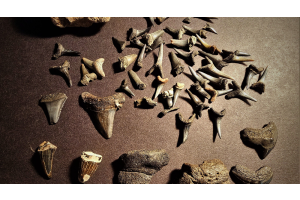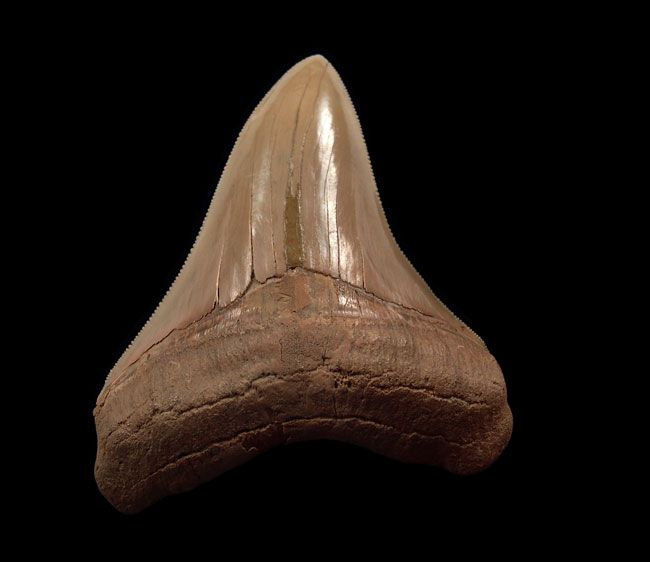
Few places in the world capture the imagination of young fossil enthusiasts quite like Maryland’s Calvert Cliffs. Along these towering Miocene-aged cliffs, discoveries of ancient marine life tell stories of a prehistoric ocean that once teemed with life—and a predator that ruled them all: the Otodus megalodon from Calvert Cliffs. These colossal shark teeth not only excite collectors and budding scientists but also offer a powerful way to teach kids about change, adaptation, and the ever-evolving story of life on Earth.
Discovering History in Every Tooth
When children hold a fossilized shark tooth for the first time, they’re literally holding millions of years of natural history. At Calvert Cliffs, erosion reveals layer upon layer of marine fossils, from tiny fish vertebrae to whale bones—and, if you’re lucky, the legendary Megalodon tooth. Each specimen reveals something about the animals that lived, hunted, and adapted long before humans walked the Earth.
At Buried Treasure Fossils, we’re passionate about helping people of all ages connect with these prehistoric treasures. Our authentic collection of fossils—including rare pieces like the Otodus megalodon from Calvert Cliffs—provides educators and museum guides with real, tangible tools to ignite curiosity and teach complex scientific ideas in accessible, memorable ways.
The Megalodon: Apex of an Ancient Ocean
Roughly 20 to 3 million years ago, during the Miocene and Pliocene epochs, the Otodus megalodon ruled the seas. Reaching an estimated 60 feet in length, it was one of the largest and most powerful sharks to ever exist. Its massive, serrated teeth—sometimes over seven inches long—were perfectly designed for tearing through thick whale blubber and bone.
The Megalodon’s reign wasn’t just a story of power—it was one of adaptation. Over millions of years, this species evolved from its smaller ancestor, Otodus obliquus, developing larger teeth and a stronger bite to survive in a changing marine ecosystem. These fossils remind us that adaptation is central to survival, a lesson that resonates deeply in both science and education.
A Living Lesson in Evolution
For science educators and museum guides, few fossils offer as vivid a teaching opportunity as the Otodus megalodon from Calvert Cliffs. By examining these ancient teeth, students can explore how predators adapt over time to changing prey and habitats. For instance, the Megalodon’s broad, serrated teeth evolved for slicing through large marine mammals—an adaptation to the rise of whales as a food source.
This simple observation opens the door to discussions about evolution, extinction, and environmental shifts. Kids learn that no species—no matter how mighty—is immune to change. When ocean temperatures dropped and food sources declined, even the great Megalodon couldn’t survive. Yet, its fossilized remains endure as a testament to nature’s incredible power to transform and renew.
From Fearsome Predator to Educational Treasure
It’s hard not to be amazed by the sheer scale of Megalodon fossils. Holding a tooth from this prehistoric giant sparks awe and curiosity. But what makes fossils like those from Calvert Cliffs truly special is how they bridge the gap between past and present learning.
In our work at Buried Treasure Fossils, we see fossils as far more than collectibles—they are educational artifacts. Teachers use them to illustrate natural selection, while museum guides turn them into conversation starters about climate change, evolution, and biodiversity. The Otodus megalodon from Calvert Cliffs offers a particularly vivid way to connect children to the concept of adaptation: a species’ ability to respond—or fail to respond—to environmental shifts.
Why Calvert Cliffs Is a Natural Classroom
Calvert Cliffs offers an exceptional outdoor classroom experience. Stretching along Maryland’s western shore of the Chesapeake Bay, the cliffs preserve one of the richest fossil deposits on the East Coast. Students exploring this site can find remnants of sharks, rays, whales, and sea turtles—all of which lived during the Miocene era.
For educators, the site provides a perfect opportunity to explain geological time, sedimentary layering, and fossil formation. Kids quickly grasp how erosion and time reveal Earth’s story layer by layer. And when they come across a fossilized shark tooth, the lesson becomes deeply personal. The ancient seas of Calvert Cliffs come alive through touch, imagination, and inquiry.
Teaching Change and Adaptation Through Megalodon’s Extinction
The story of the Megalodon’s extinction provides one of the most valuable lessons in natural history. Despite its size and dominance, the species couldn’t adapt quickly enough to drastic changes in ocean temperature and food availability. As whales migrated to colder waters, the Megalodon’s range shrank—and eventually, it disappeared entirely.
For children, this teaches a powerful truth: even the strongest must adapt to survive. It’s a story that mirrors the challenges all living things face in a constantly changing world. When educators use real fossils like those from Calvert Cliffs, kids begin to see adaptation not as an abstract concept but as a real, observable pattern in nature.
Hands-On Learning: How Fossils Inspire Curiosity
There’s something uniquely inspiring about hands-on learning. When kids hold a genuine Megalodon tooth, they’re no longer reading about prehistory—they’re experiencing it. They feel the weight, texture, and serrated edges that once cut through whale bone millions of years ago. That tactile connection transforms fossil study from passive learning into active discovery.
At Buried Treasure Fossils, we make that experience possible by providing genuine, legally collected fossils with full provenance details. Our specimens—from Megalodon teeth to ammonites and trilobites—are selected for both quality and educational value. Whether you’re an educator, museum guide, or simply someone who loves science, our fossils help turn lessons into lasting memories.
From Fossil Hunting to Critical Thinking
Exploring the story of the Otodus megalodon from Calvert Cliffs encourages children to think like scientists. They make observations, ask questions, and form hypotheses about how life evolves and adapts. Each fossil becomes a clue in a much larger mystery—a puzzle that spans millions of years.
Teachers can build on this curiosity with classroom activities such as:
● Comparative Anatomy: Comparing Megalodon teeth with modern Great White shark teeth to discuss evolutionary connections.
● Environmental Change Simulations: Demonstrating how temperature shifts affect ocean life and migration.
● Fossil Reconstruction: Encouraging kids to piece together how an ancient animal might have lived, moved, and hunted.
Such lessons nurture not only scientific understanding but also problem-solving, patience, and respect for the natural world.
Connecting Past Lessons to Modern Challenges
In an era of rapid climate change, fossils like the Megalodon’s remind us of nature’s resilience and fragility. For educators, this connection provides a meaningful bridge between prehistoric events and modern environmental issues. Students can reflect on how species today must adapt—just as ancient ones did—to survive.
At Buried Treasure Fossils, we believe fossils teach more than history—they teach perspective. Each specimen tells us that adaptation is not optional; it’s essential. When we encourage children to study these ancient remains, we’re helping them understand both the past and the urgent challenges of the present.
A Legacy Set in Stone
The Otodus megalodon from Calvert Cliffs is more than a relic—it’s a message carved in stone. It tells us about change, adaptation, and the ever-turning wheel of life. When children explore these fossils, they glimpse the story of survival, extinction, and evolution that defines our planet.
Through the collection and exploration of genuine fossils, we not only safeguard our planet's remarkable history but also ignite passion in future scientists, adventurers, and visionaries. Each tooth, shell, or bone holds a fascinating story ready to be discovered!
Conclusion: Learning from the Giants of the Past
Just as the Otodus megalodon from Calvert Cliffs once ruled ancient seas, it continues to command attention in classrooms and museums today. Through its story, we can teach kids the importance of adaptability, resilience, and curiosity—the same traits that drive both nature and science forward.
At Buried Treasure Fossils, we’re proud to make these extraordinary learning experiences possible. Each fossil we offer opens a door to discovery and helps educators bring prehistoric life to the hands and minds of future scientists. Explore our extensive collection, share these ancient wonders, and keep the spirit of exploration alive—one fossil at a time.