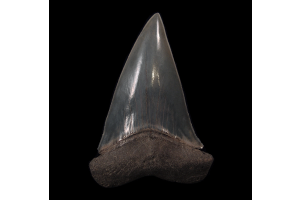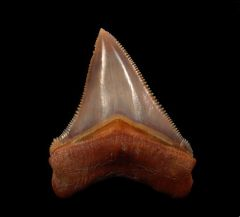
Sharks have ruled the oceans for hundreds of millions of years, and their fossilized teeth continue to provide fascinating windows into their evolutionary history. Among the most sought-after finds are those massive, serrated Megalodon tooth from Peru, which tell a story not just of a giant predator, but of how sharks adapted across dynamic prehistoric seas. At Buried Treasure Fossils, we are passionate about sharing these extraordinary specimens with fellow enthusiasts, helping collectors and students alike explore their scientific and historical importance.
The Fossil Treasures of Peru
Peru is one of the most remarkable localities for shark teeth fossils. Its coastal desert regions, including the Miocene Caballos Formation near Rio Ica and the Pliocene Pisco Formation near Sacaco, have yielded an incredible diversity of shark species. These formations span millions of years, from approximately 20 million years ago in the Miocene to around 3 million years ago in the Pliocene. The preservation quality of these specimens is stunning—often displaying rich coloration, sharp serrations, and intact roots.
A Megalodon tooth from Peru is particularly captivating because it highlights a critical chapter in shark evolution. These fossils represent a lineage of apex predators that refined their size, feeding strategies, and dominance across shifting marine ecosystems. Peru’s unique geology preserved these teeth in exceptional condition, making them not only scientifically valuable but also visually breathtaking pieces of natural history.
Megalodon: Apex Predator of Prehistoric Oceans
Megalodon, scientifically known as Otodus megalodon (formerly Carcharocles megalodon), reigned as the largest predatory shark to have ever existed. Estimates suggest adults could reach lengths of 50–60 feet, armed with jaws capable of exerting crushing force. The teeth, often up to 7 inches long, were perfectly designed for slicing through whale bone and thick prey tissue.
When studying a Megalodon tooth from Peru, paleontologists gain direct evidence of how this giant adapted to its environment. Serrated edges reveal its role as a hyper-efficient hunter of marine mammals that flourished during the Miocene. By the Pliocene, Megalodon faced competition and ecological pressures that eventually led to its extinction, but not before leaving behind a fossil record that continues to fascinate us today.
Evolutionary Lessons from Peruvian Shark Teeth
Peru’s fossil record preserves not only Megalodon but also its evolutionary relatives such as Carcharocles chubutensis and Carcharocles auriculatus. Together, these species represent transitional forms in the Megalodon lineage. By examining them, scientists can track evolutionary trends such as tooth size, serration development, and root morphology.
This evolutionary sequence shows a gradual adaptation to larger prey and expanding ocean habitats. For instance, the transition from auriculatus in the Eocene to chubutensis in the Miocene highlights increasing body size and efficiency in predation. By the time we reach Megalodon in the later Miocene and Pliocene, the shark had become the pinnacle of marine predatory design.
Owning a tooth from this region is more than holding a fossil—it’s holding a piece of evolutionary history that bridges millions of years of shark adaptation.
The Miocene Seas: Cradles of Diversity
The Miocene epoch (23–5 million years ago) was a period of extraordinary marine diversification. Warm seas teemed with early whales, seals, and giant fish, creating a buffet for predators like Megalodon. Peru’s Caballos Formation captures this era with fossils that highlight how sharks refined their hunting strategies.
A Megalodon tooth from Peru dating to this period reveals how the species evolved to dominate marine food chains. The robust enamel, thick roots, and sharp serrations demonstrate adaptations perfectly suited for ambushing and dismembering large prey.
The Pliocene Transition: Challenges and Change
By the Pliocene (5–2.5 million years ago), global cooling reshaped marine ecosystems. New predators emerged, such as early Great White Sharks (Carcharodon carcharias), which were smaller but highly agile. Marine mammals also diversified, adapting to shifting climates and food availability.
Peruvian Pliocene fossils provide evidence of this transition. The Pisco Formation showcases both Megalodon and modern shark ancestors, illustrating a fascinating overlap. A Megalodon tooth from Peru from this era shows us the last evolutionary stage before extinction, revealing the species’ persistence even as oceans changed dramatically.
The Scientific and Collector’s Value
For paleontology students, collectors, and science readers, Peruvian shark teeth offer dual value: they are both scientific specimens and works of natural art. Their size, coloration, and rarity make them prized among fossil enthusiasts worldwide. Yet beyond their beauty lies their scientific worth—they document shark evolution across two critical epochs.
At Buried Treasure Fossils, we specialize in offering authentic Peruvian fossils, from Megalodon tooth from Peru specimens to rarities like Carcharocles auriculatus. Because Peru no longer permits fossil exports, these pieces often come from older collections in the United States, making them increasingly rare and valuable. Each fossil we offer comes with guaranteed authenticity, ensuring that collectors can purchase with confidence.
Why Collect Fossils from Us
We understand that fossil collecting is more than a hobby—it’s a way to connect with prehistoric life. That’s why we offer:
● Authenticity you can trust: Every item is genuine, carefully sourced, and legally acquired.
● Educational depth: We provide historical and scientific context for each specimen, helping collectors appreciate its role in evolutionary history.
● Accessibility: From affordable entry-level fossils to museum-grade specimens, we make collecting approachable for everyone.
● Exceptional variety: Our catalog includes not only shark teeth but also dinosaur fossils, ammonites, trilobites, and even rare mammal fossils.
By focusing on both education and quality, we aim to create a community where science enthusiasts and collectors alike can celebrate these natural wonders.
The Enduring Fascination of Megalodon
There’s something profoundly inspiring about holding a Megalodon tooth from Peru. It bridges the past and present, reminding us of an era when oceans were ruled by giants. For paleontology students, such a specimen is a tangible lesson in adaptation and extinction. For collectors, it’s a breathtaking piece of natural history that carries both rarity and beauty.
As science continues to refine our understanding of Megalodon’s evolutionary story, these fossils remain invaluable. They not only represent the predator itself but also the ecosystems it dominated and the changes that ultimately led to its disappearance.
Conclusion: Bringing Prehistoric Oceans to Your Collection
The story of the Megalodon tooth from Peru is a story of adaptation, dominance, and eventual extinction across the Miocene and Pliocene. These fossils reveal how sharks evolved to master their environments and how global changes eventually reshaped their fate. At Buried Treasure Fossils, we take pride in making these rare treasures accessible, ensuring collectors and students alike can explore the evolutionary legacy of Earth’s greatest shark.
If you’re ready to add a specimen that embodies millions of years of natural history to your collection, explore our carefully curated selection of authentic Peruvian shark teeth and other extraordinary fossils. Each piece is a connection to the ancient seas, waiting to inspire curiosity, passion, and discovery.