

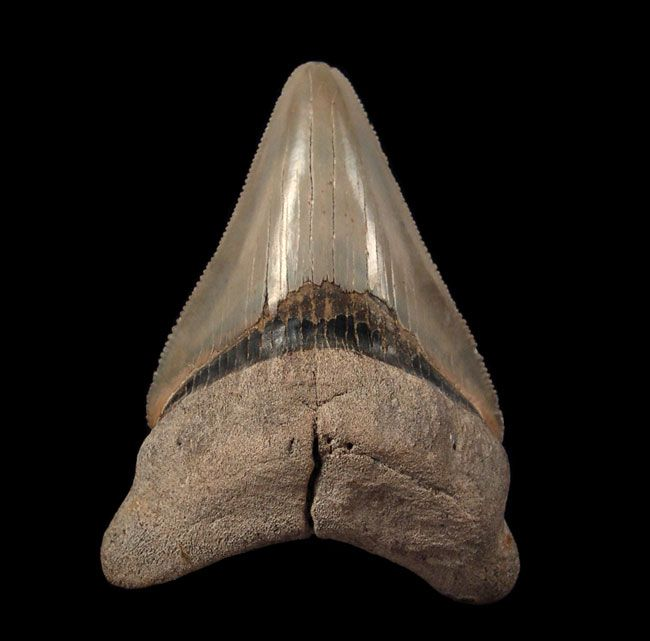
For centuries, humankind has been fascinated by tales of giant sea creatures lurking beneath the waves. From ancient myths about leviathans to modern speculation about sharks of unimaginable size, the ocean has always inspired curiosity and fear. The discovery of fossilized shark teeth, particularly those belonging to the mighty Otodus megalodon, has only fueled these theories. Among the most captivating finds is the Aurora Megalodon Tooth, a fossil that raises big questions: does it hint at the survival of a living sea monster, or is it simply a relic of the past?
A Glimpse Into the Past: The Megalodon Shark
The megalodon, meaning "big tooth," was a prehistoric shark that dominated Earth’s oceans roughly 23 to 3.6 million years ago. Estimated to grow as long as 60 feet, this apex predator had jaws powerful enough to crush whale bones. Unlike today’s great white sharks, the megalodon wasn’t just another ocean dweller — it was the ruler of its environment.
What makes the megalodon so fascinating is not just its size, but its absence. Fossil evidence suggests the species went extinct millions of years ago, likely due to climate shifts, reduced prey populations, and competition with emerging predators like the great white shark. Yet, every time a fossilized tooth surfaces, questions about its possible survival arise.
Why Teeth Matter More Than Bones
Sharks are composed mostly of cartilage, which doesn’t fossilize well. Because of this, nearly all evidence of megalodons comes from their massive teeth. These teeth are serrated, triangular, and often as large as a human hand. They can weigh over a pound and measure more than seven inches long.
The Aurora Megalodon Tooth is one such specimen. Found in North Carolina’s Lee Creek Mine — an area rich in marine fossils — this tooth reveals a story about life in the Miocene epoch, around 14.5 million years ago. Unlike bones that decay or vanish over time, these teeth endure as lasting proof of one of the ocean’s most powerful hunters.
What Makes the Aurora Megalodon Tooth Unique?
This particular specimen is classified as a lower jaw principal anterior tooth. It bears striking features:
● A tan-colored crown showing the wear and history of its prehistoric owner.
● A deep brown bourlette (the enamel-like band near the root), which remains largely intact.
● Serrations along the edges, sharp even after millions of years, though the tip was lost — likely during a feeding frenzy.
● A sturdy root with minimal cracks, marked by unique grooves.
These details are more than just physical traits; they’re clues to behavior. The broken tip, for example, suggests violent feeding habits, while the preservation of the serrations highlights how effective these teeth were in slicing through prey.
The Lee Creek Mine and Its Fossil Treasure
The Aurora site in North Carolina, once an active phosphate mine, is one of the most famous fossil-hunting grounds in the United States. Known for yielding an incredible range of marine fossils, including those of whales, dolphins, and giant sharks, the site has provided paleontologists with insights into prehistoric ocean ecosystems.
The Pungo River Formation, where the Aurora specimen was found, dates back to the Miocene epoch. It was once a shallow marine environment teeming with life, making it an ideal hunting ground for megalodons. Each fossil unearthed here offers a glimpse into that ancient world and helps us piece together the puzzle of the megalodon’s reign.
Could Megalodon Still Be Alive?
This is the question that captures the imagination of many. The size and condition of fossils like the Aurora specimen make some wonder whether megalodons truly disappeared. After all, the ocean remains largely unexplored, with vast depths hiding countless mysteries.
Supporters of the “living megalodon” theory argue that such a massive predator could have adapted to deeper waters, evading detection. Reports of giant sharks, blurred photos, and anecdotal sightings add to the intrigue. Documentaries and fictionalized accounts often present the possibility as though it were fact, reinforcing the myth of a surviving sea monster.
Yet, the scientific community is clear: megalodons are extinct. There are no reliable modern sightings, no fresh teeth, and no evidence of massive predatory activity consistent with a living population of such sharks. Fossils like the Aurora tooth date back millions of years, providing no indication that these giants roam the seas today.
Why the Myth Persists
So why do people cling to the idea of a living megalodon? Several reasons stand out:
● Human Fascination with Monsters
From Loch Ness to giant squid, myths about ocean monsters are deeply embedded in human culture. The megalodon fits perfectly into this narrative.
● The Ocean’s Mysteries
Scientists estimate that more than 80% of the ocean remains unexplored. This vast unknown leaves room for speculation about hidden giants.
● Pop Culture Influence
Movies, books, and TV shows continue to portray megalodons as lurking survivors, keeping the myth alive in public imagination.
● The Power of Fossils
Holding a massive tooth like the Aurora specimen makes it easy to imagine its owner still prowling the seas.
What Fossils Teach Us About Ancient Life
Instead of viewing fossils as signs of living monsters, it’s more valuable to see them as evidence of Earth’s incredible history. The Aurora Megalodon Tooth is a snapshot of a time when giant sharks hunted whales and dominated ocean ecosystems. Its preservation, sharp serrations, and strong root structure help researchers understand feeding habits, growth patterns, and evolutionary changes.
In a sense, fossils bring prehistoric creatures back to life — not as living beings but as scientific windows into the past. They tell us about environments that once existed, species interactions, and the fragility of ecosystems in the face of change.
Lessons for Today’s Oceans
The extinction of the megalodon also serves as a cautionary tale. Even the mightiest predator can vanish when environmental conditions shift. Modern sharks face threats from overfishing, habitat loss, and climate change. Studying extinct species like the megalodon helps us understand how delicate marine ecosystems can be and why conservation matters.
By appreciating fossils like the Aurora tooth, we’re reminded that today’s oceans — while still mysterious — hold life that must be protected. The survival of great whites, hammerheads, and countless other species depends on how responsibly we treat marine environments now.
The Fascination Lives On
Whether in museums, private collections, or fossil shows, megalodon teeth continue to inspire awe. Collectors prize specimens like the Aurora fossil for their beauty and rarity, while scientists value them as vital research tools. The story of the megalodon isn’t just about extinction; it’s about our enduring fascination with the ocean and its giants.
Final Thoughts
So, is the Aurora Megalodon Tooth evidence of a living sea monster? The short answer is no. It’s not a sign of survival, but a relic from a vanished predator. Still, it represents something equally powerful: the reminder that Earth’s oceans once housed creatures beyond imagination. While megalodons may no longer roam the seas, their legacy continues to spark curiosity, inspire research, and remind us of both the power and fragility of life on this planet.
In the end, the Aurora specimen doesn’t prove the existence of a living giant, but it does prove that giants once ruled the ocean — and that fact alone is enough to stir wonder.






