

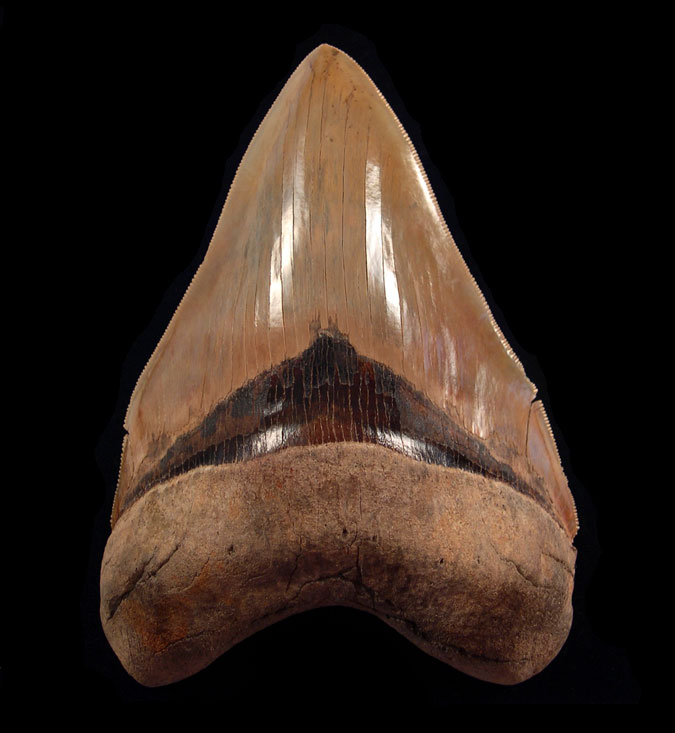
Collectors often chase size when it comes to Megalodon teeth. That makes sense. A massive fossil grabs attention right away. But here is the real question. Does a larger tooth automatically mean it holds more value or significance? Not exactly. Once a Megalodon tooth reaches 8 inches in length, the story changes. An 8 inch megalodon tooth does not just represent size—it marks a shift into a different category of rarity, science, and collector value. Size may spark the interest, but understanding the why behind it helps you collect with clarity and purpose.
Very few fossils make the 8-inch megalodon tooth jump
Most fossilized Megalodon teeth range between 3 and 6 inches. Many teeth over 6 inches already feel impressive. However, the number of teeth that exceed 7 inches drops fast. Now consider the jump from 7 to 8 inches. Very few fossils make that leap. Teeth that reach or exceed this size sit in a class of their own. That rare size reflects not just a larger shark, but also better preservation, geological fortune, and a far more challenging search for the collector.
Large teeth point to mature ocean hunters
A Megalodon needed to grow to full adulthood before developing teeth this large. That suggests the shark likely measured well beyond 50 feet in length. These massive predators dominated prehistoric oceans. Their teeth often reveal their strength, feeding behavior, and survival patterns. When you find an 8-inch megalodon tooth, you are not just holding a fossil. You are having a physical piece of an apex predator that lived longer, hunted harder, and evolved further than most of its kind.
Condition carries more weight at this level
Collectors pay close attention to condition just as much as they value size. A tooth may reach 8 inches, but if the root appears broken, the blade feels worn, or the serrations are faded, its appeal drops quickly. Many large teeth break during fossilization. Others suffer from poor handling or over-polishing that removes their natural detail. When collectors find a tooth of this size in nearly perfect condition, they know it belongs in a premium collection. That kind of preservation speaks for itself.
Rare environments preserve these fossils
Collectors categorize these teeth differently for good reason. These fossils stand out not just for their length, but for what they represent. Very few places in the world produce Megalodon teeth this large. The environmental conditions must align perfectly. Sediment must cover the tooth quickly, protect it from erosion, and preserve its original features. These factors rarely align. That makes every complete tooth of this size feel like a natural wonder and a collector’s dream.
Buyers rely on details beyond measurement
Buyers check for more than size when they evaluate large teeth. They often focus on the following:
● Symmetry in the root and blade
● Coloration that reflects the original mineral environment
● Visible, sharp serrations
● Enamel quality and surface texture
● Signs of restoration or polishing
These details indicate whether the tooth remained intact or underwent changes. A large tooth that preserves these traits commands respect. It stands out for more than just its scale.
Price moves with rarity and condition
Pricing rises rapidly when a tooth reaches the 8-inch range. A well-preserved 6-inch tooth may already bring in thousands. But collectors treat 8-inch teeth as a different category. An 8 inch megalodon tooth often commands premium attention due to its scarcity and visual impact. These fossils do not simply increase in price. They often leap. The combination of size, rarity, and condition creates strong demand. When a seller offers a genuine specimen of this scale and quality, buyers recognize the value. They know that these teeth are rarely available.
Top-tier fossils anchor serious collections
Most collectors already own Megalodon teeth. Some have dozens. But very few own one that reaches 8 inches in top condition. That makes these teeth special. They become the signature piece of a fossil display. They give collections weight and identity. Visitors remember them. Even among experienced collectors, a natural tooth of this size earns admiration. That kind of attention turns a fossil into a legacy piece.
Savvy buyers ask the right questions
Buyers who seek quality want more than just length. They ask the right questions. Where did the tooth come from? What layer of sediment protected it? How intact is the root? Did any restoration occur? What do the color and mineral lines reveal about the environment? Collectors who ask these questions know how to spot an actual specimen. They use insight, not impulse.
Large teeth support scientific discovery
Scientists also study the most prominent teeth to gain a better understanding of the Megalodon. Larger teeth help estimate the full size of the animal. They support theories about bite force, growth stages, and feeding behaviors. Each complete tooth adds information. Researchers can track fossil locations, compare mineral differences, and connect them to other marine life from the same layers. These fossils offer more than display value. They support ongoing learning.
Provenance adds value to every specimen
Buyers also care deeply about origin. The origin of a tooth influences its value. Some locations preserve fossils better than others. Mineral deposits in different regions affect color. A tooth from a known fossil bed often carries more value than one with no record of origin. The history of a tooth adds depth to its story. For an 8-inch tooth, that history carries even more weight.
Use these checks to evaluate authenticity
If you want to invest in a Megalodon tooth, learn how to evaluate what matters. Start by confirming the measurement from the tip of the crown to the longest root edge. Then check other essentials:
● Compare the root shape to known examples
● Examine the edges for clean, natural serrations
● Study the enamel for natural shine
● Ask about any restoration or filling
When you combine these checks with trusted documentation, you move closer to making a competent and confident purchase.
Final Words
Only a few people have ever owned a Megalodon tooth of this size and in this condition. These fossils represent the highest standard in collecting. They combine strength, beauty, and geological luck. When you hold a piece like this, you have something more than a fossil. You keep time itself. An 8 inch megalodon tooth reflects not only the sheer scale of prehistoric life but also the rarity that defines true collector pieces. It brings together everything collectors value. It stands tall as a reminder that not every discovery can be neatly categorized and stored on a shelf. Some belong in history.
Footnote
Experts consider large, intact Megalodon teeth over 8 inches rare and significant due to their combination of size, preservation, and limited global supply.






