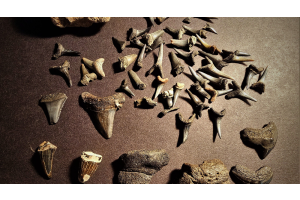
For fossil collectors, few discoveries hold as much significance as a Megalodon tooth. These massive relics of the largest shark in history inspire awe through their size and prehistoric origins. Yet with rising demand comes a growing market of replicas and altered specimens, making it vital to distinguish the authentic from the imitation. We understand the reverence of holding a true fossil, especially for those who have experienced the thrill of megalodon tooth hunting in Florida waters.
Let’s explore how you can separate the authentic from the artificial with confidence.
The Timeless Allure of a Genuine Fossil
A real Megalodon tooth carries the weight of millions of years. Unlike manufactured replicas, which may appear overly uniform or glossy, an authentic specimen exhibits the natural character of fossilization. Each tooth has survived a unique journey beneath layers of sediment and seawater, where minerals slowly replaced the organic structure.
This process creates subtle but unmistakable differences in texture, coloration, and density. Collectors often describe holding a genuine fossil as an almost sacred experience—an unbroken link between humanity and an ocean predator that once ruled the seas.
Enamel Texture: The First Sign of Authenticity
One of the most telling markers of a real Megalodon tooth lies in its enamel. Authentic specimens reveal a matte or satin-like finish rather than a reflective gloss. Under light, the enamel will display a subtle variation in tone, sometimes appearing slightly weathered or mineralized. Replicas, by contrast, often shine unnaturally and feel overly smooth, lacking the micro-textures that fossils acquire during their long preservation.
Another critical detail is the transition between the enamel and the root. In a genuine fossil, this border is distinct yet naturally worn, with mineral infill often present. Artificial pieces sometimes exaggerate this line or create a uniform bond that feels manufactured rather than organic.
Serration Patterns: Precision in Nature
Megalodon teeth are celebrated for their serrated edges, a feature designed by nature to shear through prey. Authentic fossils maintain these serrations, though often softened by time and erosion. In many cases, collectors will notice tiny, consistent serrations along the blade, each one formed during the shark’s lifetime.
Replicas frequently miss this nuance. Their serrations may appear too sharp, too symmetrical, or too shallow compared to authentic examples. Some forgeries even cast serrations from molds, resulting in repeated patterns that betray their artificial origin. Observing serrations under magnification can reveal whether the edges carry the irregular but purposeful marks of natural formation or the uniformity of modern reproduction.
The Root: Where Time Leaves Its Mark
The root of a Megalodon tooth often provides the clearest evidence of authenticity. In a real specimen, the root appears porous, textured, and sometimes weathered by sediment. This section, originally composed of softer material, fossilizes differently than enamel, leaving visible pits or mineral staining.
A fabricated piece, however, frequently struggles to capture this complexity. Replicas often feature overly clean or symmetrical roots, missing the natural imperfections that mark the passage of geologic time. Some sellers attempt to disguise artificial roots with artificial staining, but closer inspection reveals uniform coloring rather than the layered mineral deposits of a true fossil.
Coloration: Stories Written by Sediment
Color is one of the most captivating aspects of Megalodon teeth. Fossilization infuses each specimen with hues determined by the minerals present in its burial environment. Teeth discovered in riverbeds may display earthy browns or blacks, while those uncovered in coastal sediments can reveal blues, grays, or even striking tans. This natural palette is rarely uniform across a single tooth—shades often shift between enamel, root, and serrations.
Replicas, in contrast, often present flat or artificially applied color. Spray paints or dyes may create a surface-level sheen, but they cannot replicate the layered depth and mineral veining of authentic fossils. For collectors, color becomes not just an aesthetic but a window into the ancient seabed where the tooth lies hidden.
Common Red Flags in Online Listings
As interest in these fossils grows, so does the risk of encountering fraudulent listings. Some of the most frequent warning signs include:
● Unnatural uniformity: Genuine teeth rarely look identical. If multiple listings appear cloned, chances are they are mass-produced replicas.
● Excessive gloss: Overly shiny enamel often signals artificial finishing rather than true fossilization.
● Suspiciously low prices: Authentic Megalodon teeth command significant value, especially larger specimens with intact serrations. Bargain pricing can indicate replicas or heavily restored fragments.
● Vague sourcing: Reputable sellers provide detailed provenance, often noting the geographic location where the tooth was found. Listings without this information deserve closer scrutiny.
For collectors passionate about megalodon tooth hunting on Florida coastlines, knowing these signs can prevent disappointment when acquiring pieces online.
Restoration Versus Replica: Understanding the Difference
Not all altered Megalodon teeth are outright fakes. Many authentic fossils undergo restoration, where small chips or broken enamel are carefully filled or repaired. Restoration is widely accepted in the collector community as long as it is transparently disclosed. Such work preserves the integrity of the specimen while acknowledging its natural imperfections.
Replicas, however, differ entirely. These are artificially created objects, often cast from molds of real fossils. While replicas serve educational purposes in classrooms and museums, they do not hold collectible value in the same way genuine fossils do. Understanding this distinction allows collectors to make informed decisions and appreciate both categories for what they represent.
The Role of Weight and Density
Another subtle but telling feature of authenticity is weight. Real Megalodon teeth are mineralized fossils, meaning their organic structure has been replaced with stone-like material over millions of years. This makes them noticeably heavy for their size. Replicas, depending on the material used, may feel lighter or unnaturally balanced. While weight alone cannot guarantee authenticity, it provides one more data point in the collector’s evaluation process.
Provenance: The Collector’s Assurance
Perhaps the most crucial element in confirming authenticity is provenance. Knowing where and how a fossil was discovered not only authenticates its origin but also enriches its story. Collectors often value fossils from specific localities, whether they were pulled from South Carolina rivers, North Carolina coastal beds, or Florida dig sites.
This context connects the collector not just to a fossil, but to the narrative of Earth’s history. When acquiring specimens, especially in online marketplaces, requesting provenance documentation is a practice that protects against forgeries while preserving the significance of the find.
A Collector’s Perspective: The Balance of Passion and Precision
Collecting Megalodon teeth is not merely about ownership—it is about stewardship of Earth’s history. Each genuine specimen is a chapter in the story of a predator that once defined the ocean’s hierarchy. For collectors, the responsibility lies in honoring this legacy by seeking authenticity, practicing discernment, and cherishing fossils as artifacts of time.
The thrill of megalodon tooth hunting on Florida beaches captures the spirit of discovery, but the same passion should extend to careful evaluation when acquiring fossils from trusted sources. In doing so, collectors safeguard not just their own collections but also the credibility of fossil trading as a whole.
Conclusion
Distinguishing a real Megalodon tooth from a fake takes knowledge and respect for the history these fossils hold. From enamel texture to serrations, roots, and provenance, every detail tells a story millions of years old. Replicas may imitate appearance, but they lack the weight of time. As collectors, we carry the responsibility to preserve this legacy—whether in the excitement of megalodon tooth hunting on Florida coasts or adding to a curated collection—ensuring each fossil reflects both beauty and truth.
Begin your journey with authentic Megalodon fossils—explore, collect, and preserve history while honoring the ocean’s greatest predator today.