

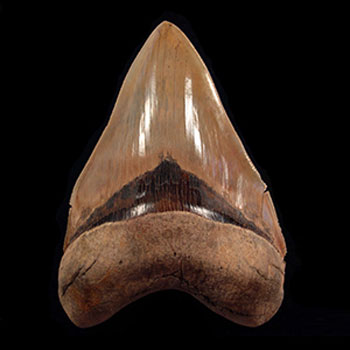
Buying a real megalodon tooth should feel exciting, not risky. This quick guide shows you how to spot fakes fast, then double-check with a few deeper tells. Every tip here aligns with what Buried Treasure Fossils sells and guarantees across its Megalodon category. They offer verified fossils from classic localities and even museum quality pieces with no restoration, so you have a solid benchmark to compare against.
The 60-Second Authenticity Check
Stand under natural light. Keep your phone flashlight handy. Then run through these rapid cues:
● Weight & “feel”: Real fossil teeth are mineralized. They feel dense for their size. Replicas often feel light or plasticky when tapped gently against a coin.
● Surface texture: Fossil enamel looks like stone. Slightly matte. Micro-pitted with age. Resin copies look too smooth or “glassy.”
● Serrations: Authentic Megalodon cutting edges show fine, evenly spaced serrations that taper toward the tip. Replicas often have soft, smeared, or repeating serrations from molds. High-grade, museum quality Megalodon teeth are “fully serrated with sharp tips”, a useful standard.
● Bourlette band: Look for the darker, triangular band between crown and root. On a real tooth, the bourlette shows natural wear and grain, not painted shading.
● Root vs crown contrast: Real roots have porous texture and natural micro-chips. The crown is denser enamel with color gradients from mineralization. Replicas blur this contrast or show air bubbles at the junction.
● Color and locality logic: Fossil colors reflect the site’s sediments, think Florida, Carolinas, Peru, or Sharktooth Hill tones. If a seller claims an odd color and a famous locality, ask for provenance. Buried Treasure Fossils lists locality clearly across the Megalodon category.
If a tooth passes these in a minute, continue with the deeper checks below. If it fails two or more, walk away.
What a Real Megalodon Tooth Looks Like
A genuine real megalodon tooth is heart-shaped with serrated edges and no side cusps. The largest examples can exceed 6 inches (7″ is exceptionally rare), and top pieces come fully serrated with sharp tips and intact bourlette. Buried Treasure Fossils specifically offers over-6″ teeth and clearly notes when a specimen is stand-worthy. That consistency helps buyers calibrate expectations about size, condition, and presentation.
Serrations: Nature’s Signature Edge
Serrations are your best friend. On authentic teeth, they’re fine, sharp, and diminish near the tip and shoulders in a natural way. On replicas, serrations often repeat in an identical pattern along the edge because the mold captured a section and duplicated it. Compare what you see to the “fully serrated” benchmark used on the Museum Quality Megalodon page; it’s a practical, real-world standard that correlates with the best preserved cutting edges.
Bourlette and Enamel: Two Honest Tells
The bourlette is a thin, often darker band between crown and root. In real fossils, it shows granular texture and subtle color transitions from mineral deposits. Resin can’t mimic that fine, layered look without appearing painted. The enamel on a real real megalodon tooth shows microscopic pitting and natural sheen changes; resin tends to be uniformly glossy or uniformly dull.
Root Texture and Micro-Damage
Roots fossilize differently than crowns. Expect porous texture, small root nicks, and rounded micro-chips. This is “good” wear and increases realism. By contrast, fake roots often have smooth, soap-like curves or visible casting seams. On top-tier pieces from trusted sellers, you’ll also see clear, well-photographed roots so you can examine these cues before you buy. Museum quality listings emphasize “exceptional condition” and “no repair or restoration,” which is exactly what you want.
Locality and Provenance Matter
Color and preservation tie closely to where a tooth was found, Florida, Georgia, the Carolinas, Peru, or Sharktooth Hill in California, among others. Reputable sellers label locality, and Buried Treasure Fossils organizes Megalodon teeth by location so you can learn the look of each site’s sediment-driven colors and textures. When a seller can’t state locality or provenance, that’s a red flag.
Size vs. Rarity: Calibrate Your Expectations
A 6″+ real megalodon tooth is rare and commands premium pricing. If a massive tooth looks “too perfect” at a suspiciously low price, especially with overly glossy surfaces, assume a replica until proven otherwise. Buried Treasure Fossils calls out its over-6″ teeth and “Best of the Best” standards on museum pieces, setting a realistic bar for condition and cost.
Natural Wear vs. “Artificial Aging”
Real fossils show honest wear: tip rounding, tiny enamel flakes, bourlette scuffs, and mineral staining. Fakes sometimes feature uniform scratching, sprayed “patina,” or paint lodged in pores. Use a magnifier: if you see pigment pooled in pits with no mineral gradient, be skeptical.
What’s Acceptable Among Repair and Restoration?
Some authentic fossils are repaired (broken parts reattached) or restored (missing bits filled and colored). Quality sellers disclose these details in the description. If a listing states “no repair or restoration,” that’s ideal for many collectors. Buried Treasure Fossils’ museum quality page explicitly defines top pieces as having “absolutely no repair or restoration,” which is a strong buying signal when you want a premium specimen.
Certificates, Photos, and Return Policies
Ask for clear, high-resolution photos from multiple angles, including macro shots of serrations and the bourlette. Check the seller’s guarantee and return policy. Buried Treasure Fossils repeatedly highlights authenticity guaranteed across its categories, aligning with best practice for fossil marketplaces.
Don’t Confuse Bulk Shark Teeth with Megalodon
“Bulk shark teeth” are great for classrooms, crafts, or starter collections, but they’re not Megalodon. Bulk lots usually include small species and mixed conditions. They’re perfect for teaching, hands-on activities, or giveaways, while a real megalodon tooth is the showpiece. Buried Treasure Fossils sells both, clearly separating bulk teeth from their single-specimen Megalodon listings.
Your Safe Path to a Real Megalodon Tooth
If you’re ready to buy, compare candidate pieces to the Megalodon category for realistic size, locality, condition notes, and pricing bands. For top-tier quality, use the Museum Quality page as your gold standard for serrations, enamel, bourlette, and the all-important “no repair or restoration” claim. With those as references, you’ll quickly develop a confident eye for authenticity, and land a real megalodon tooth you’ll be proud to display.






